US-Iran Talks: Stunning Failure and No Progress


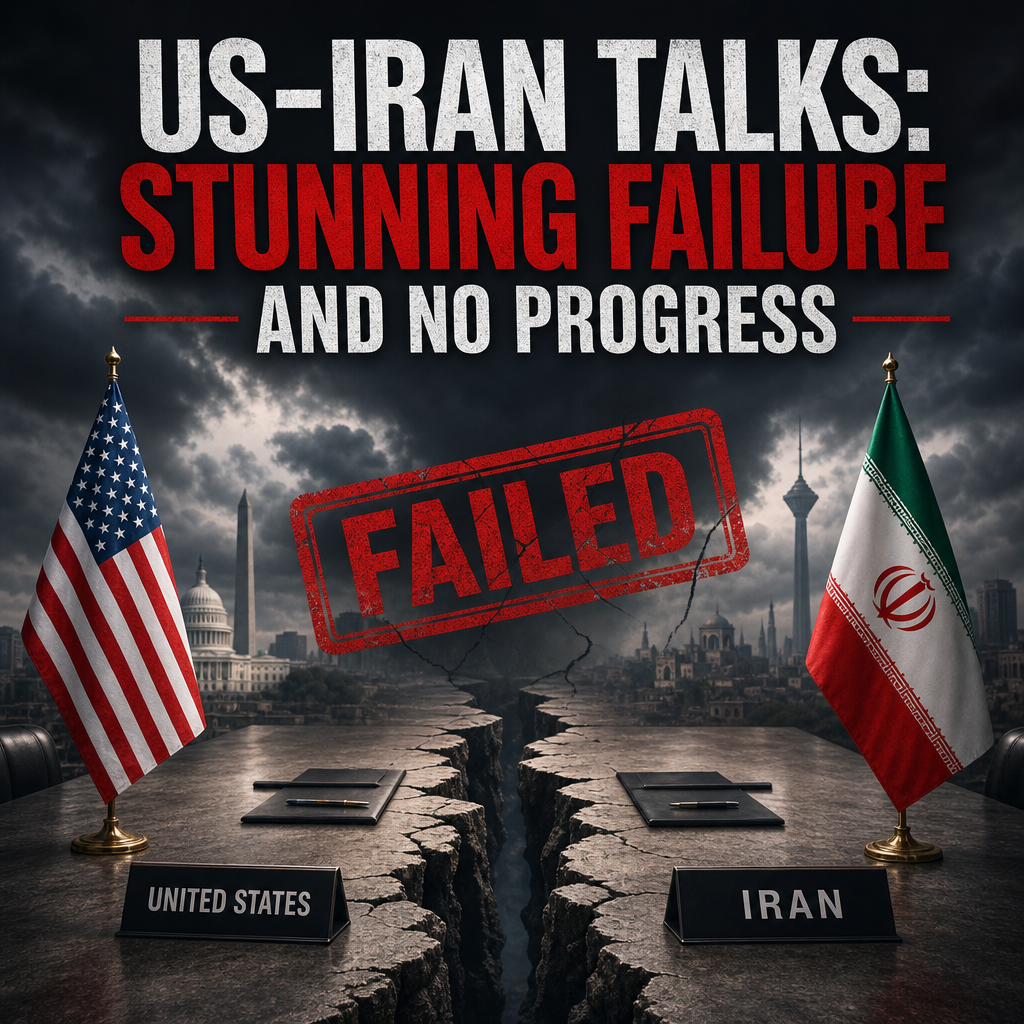
US-Iran talks have once again exposed how deep the gap remains between Washington and Tehran, with both sides showing little sign of compromise and even less trust in each other’s intentions. What is emerging from recent coverage across international outlets is not a dramatic diplomatic breakthrough, but a familiar pattern: hard positions, cautious language, and a growing sense that the process is stuck before it has really begun.
For all the talk of restoring dialogue, the latest round of public signals suggests that neither side is prepared to pay the political cost of a meaningful concession. That matters because these negotiations are not happening in a vacuum. They are shaped by sanctions pressure, regional conflicts, domestic politics in both countries, and an increasingly volatile Middle East where every failed exchange raises the risk of escalation.



Why the US-Iran talks are stalled
At the heart of the deadlock is a basic disagreement over sequencing and trust. Iran wants sanctions relief and guarantees that any deal will last, especially after the US withdrawal from the nuclear agreement in 2018 under President Donald Trump. The United States, meanwhile, continues to demand limits on Iran’s nuclear program and broader assurances about regional behavior before offering major relief.
That mismatch is not new, but the current climate appears more difficult than before. Reporting from different international outlets paints a picture of two governments speaking in the language of diplomacy while preparing for the possibility that talks may fail. RT’s framing has leaned heavily on the idea that the negotiations are “going nowhere,” reflecting a broader skepticism toward US commitments and a view that Washington’s pressure campaign has boxed both sides into rigid positions. Al Jazeera’s coverage, by contrast, tends to emphasize the regional and humanitarian consequences of prolonged stalemate, highlighting how sanctions and instability affect ordinary people as much as state strategy. Sky News often places the talks in a wider geopolitical context, stressing that any collapse could ripple across energy markets, security alliances, and fragile proxy conflicts in the region.




Taken together, those perspectives show that the failure is not just about one policy dispute. It is about the absence of a framework both sides can trust.
The nuclear issue remains central
The nuclear file is still the core of the dispute. Western governments want measurable limits and stronger monitoring. Iran insists its nuclear program is peaceful and argues that it has already made enough concessions in the past without receiving the promised economic benefits.
This is where optimism fades quickly. Even when negotiators keep lines open, the practical obstacles are considerable:
– Iran wants sanctions relief that is both immediate and durable.
– The US wants verifiable steps before easing pressure.
– Both sides fear looking weak at home.
– Regional allies and rivals influence the negotiating room from outside.
– Past failures make each new proposal harder to trust.
The result is a diplomatic trap. Iran cannot easily accept more limits without tangible relief. The US cannot easily offer relief without proof that Iran will comply. And because neither side believes the other will hold up its end, every proposal is treated as a potential tactic rather than a genuine compromise.
Beyond diplomacy: regional tensions and political calculations
The stalled talks are also inseparable from the broader security environment. The Middle East remains crowded with flashpoints, and Iran’s relationships with armed groups and governments across the region continue to shape how the West interprets its intentions. At the same time, Iranian leaders see US policy through the lens of regime pressure, not neutral diplomacy. That mutual suspicion makes every negotiation feel less like a path to settlement and more like a contest of endurance.
There is also a domestic political dimension on both sides. In Washington, any agreement with Iran can become a partisan target, especially if critics argue that Tehran will simply wait out the next administration. In Tehran, leaders must show that engagement with the US delivers real benefits, not just symbolic promises. That makes compromise politically fragile in both capitals.
Sky News’ broader international framing is useful here: even if the negotiations themselves are limited, the stakes are not. A breakdown can strengthen hardliners, deepen market anxiety, and increase the chance of miscalculation in the Persian Gulf or elsewhere. Al Jazeera’s reporting similarly underscores that the human cost of deadlock is often overlooked. When sanctions remain in place and diplomacy fails, ordinary Iranians feel the strain through inflation, restricted access to goods, and economic uncertainty.
What a fair assessment looks like
It would be too simple to call the talks a total failure if channels are still open. Diplomacy often moves in small steps, and public pessimism does not always mean private communication has ended. But it would be equally misleading to treat the situation as promising. The evidence points to a process that is alive in form but weak in substance.
A fair reading is that both sides are still trying to preserve leverage rather than build confidence. That may keep the negotiations technically alive, but it does not produce progress. And without progress, the risks keep growing.
The most realistic conclusion for now is uncomfortable: the talks have not collapsed, but they have not advanced either. That is a dangerous middle ground, because it can create the illusion of diplomacy while leaving the underlying tensions untouched. If neither Washington nor Tehran changes course, the next phase may not be a breakthrough at all, but a longer and more unstable stalemate.
For now, the lesson from these US-Iran talks is not that diplomacy is impossible. It is that diplomacy without trust, and without a willingness to make costly concessions, can quickly become a ritual of disappointment.