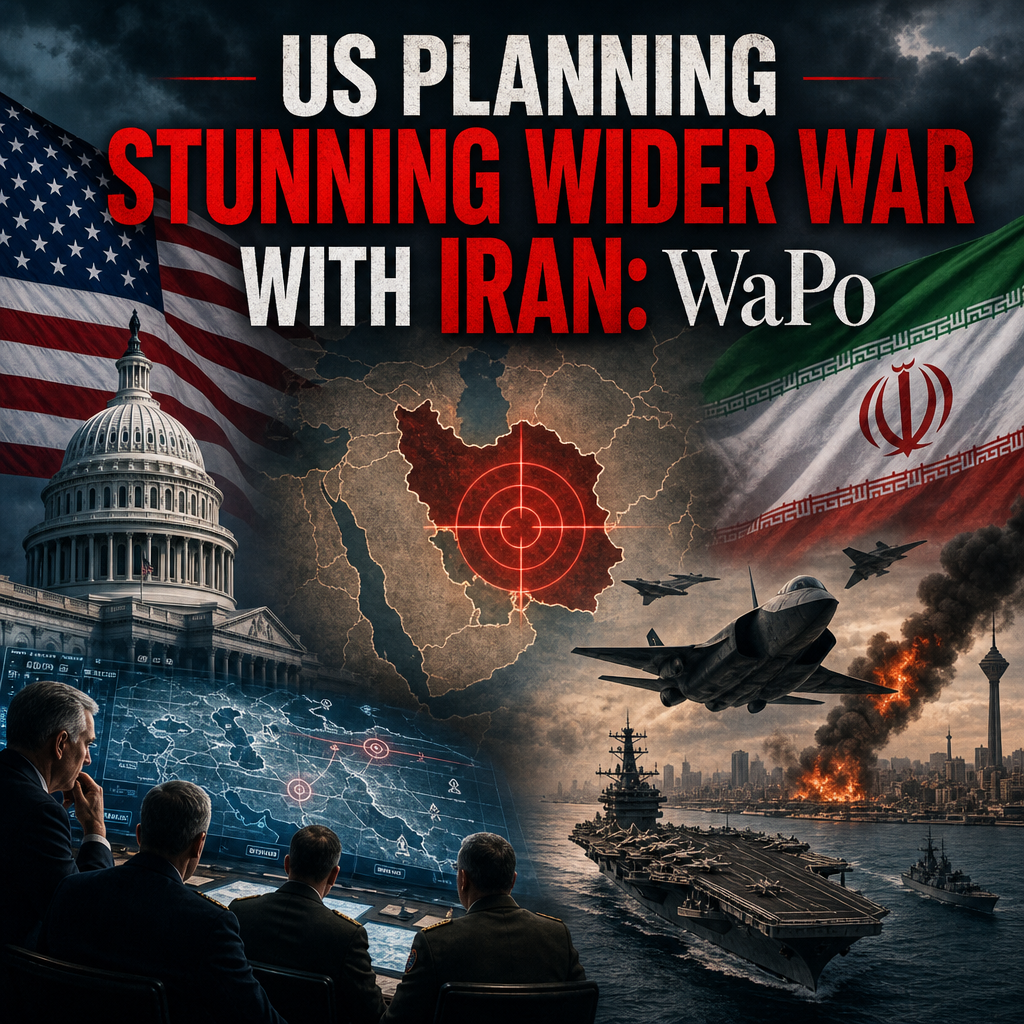
US Planning Stunning Wider War with Iran: WaPo


US planning wider war with Iran has become the latest flashpoint in a conflict already shaped by airstrikes, proxy attacks, diplomatic brinkmanship, and a deepening sense that the Middle East could tip into something much larger. The claim, tied to reporting around a Washington Post analysis, has prompted sharply different readings across international outlets: some see a deliberate U.S. escalation strategy, others frame it as deterrence amid rising threats, and still others warn that any misstep could turn a regional crisis into a wider confrontation.
What the reporting is really saying
At the center of the debate is whether Washington is preparing for a broader military campaign or simply positioning itself to respond to Iranian-backed attacks. That distinction matters. A planned offensive suggests intent; a defensive buildup suggests contingency.



RT’s coverage has pushed the more alarming interpretation, stressing the idea that the U.S. may be laying the groundwork for expanded war rather than merely containing one. That framing reflects a longstanding suspicion in Moscow-aligned media that Washington often presents escalation as stabilization. It also resonates with audiences already wary of the U.S. military footprint across the region.
Al Jazeera’s reporting, by contrast, tends to emphasize the human and geopolitical consequences of any widening conflict. Its coverage consistently places military developments alongside the civilian toll in Gaza, Lebanon, Syria, and beyond, highlighting how a U.S.-Iran confrontation would likely reverberate through already strained societies. In that context, the question is not only whether Washington is planning for war, but whether the region can absorb another one.




Sky News typically takes a more conventional security lens, focusing on the strategic risks to Western forces, shipping lanes, and allies. From that perspective, U.S. movements are often described as deterrence: extra assets, messaging, and readiness intended to prevent attacks rather than start them. That view does not rule out escalation; it argues that visible strength is meant to reduce it.
Taken together, the coverage suggests one important conclusion: there is no clear consensus that the U.S. is preparing a direct, deliberate war with Iran. But there is broad agreement that military signaling is increasing, and that the margin for error is shrinking.
Why the stakes are rising now
Several factors help explain why tensions are so combustible:
– Proxy warfare remains active. Iran’s relationships with armed groups across the region mean U.S. interests can be hit indirectly, even if Washington and Tehran avoid direct combat.
– Regional conflicts are overlapping. Gaza, Lebanon, Iraq, Syria, and the Red Sea are not isolated arenas; developments in one can trigger retaliation in another.
– Deterrence is fragile. When both sides try to avoid looking weak, they may escalate their posture even while insisting they want peace.
– Domestic politics matter. Leaders in Washington and Tehran both have audiences at home that can make compromise more difficult.
This is why the phrase “wider war” carries such weight. It does not necessarily mean full-scale invasion or conventional battlefield confrontation. It could mean something messier: a cycle of strikes, counterstrikes, cyber operations, maritime disruption, and proxy attacks that pulls more states into the blast radius.
US planning wider war with Iran or preparing to avoid one?
That is the key question, and the answer is not simple. The U.S. may be doing both at once: preparing military options while trying to deter Iran and its allies from broadening the conflict. That approach is not unusual in international crises. Governments often build contingency plans for the worst while publicly insisting they prefer de-escalation.
Still, the danger is that “preparing” and “planning” can look identical from the outside, especially when warships, air defenses, and strike groups are involved. To Iranian officials and their allies, such deployments may look less like caution and more like a threat. To U.S. planners, the same movements may look like prudent risk management.
That gap in perception is one of the most dangerous parts of the current standoff. If each side assumes the other is bluffing, testing limits, or hiding intent, then a local incident can quickly become a regional one.
What to watch next
The next phase will likely hinge on a few practical indicators rather than rhetoric alone:
– whether U.S. forces in the region are reinforced further;
– whether Iranian-linked groups scale back or intensify attacks;
– whether backchannel diplomacy resumes;
– whether shipping, bases, or border zones become new targets;
– and whether allied governments publicly support or distance themselves from Washington’s approach.
If the evidence points toward restraint, the story may end up being one of coercive diplomacy and managed escalation. If not, the alarm raised by the more hawkish readings will look less like speculation and more like warning.
A cautious conclusion
The most responsible reading of the available coverage is that the U.S. is operating in a high-risk zone where military preparedness and war planning can blur together. Some outlets interpret that as a sign of imminent conflict. Others see it as a deterrent posture meant to prevent one. Both interpretations have merit, and both may be partly true.
What is clear is that the room for optimism is narrow. When major powers increase their military presence while regional tensions are already elevated, even a defensive strategy can produce offensive consequences. The question is no longer just whether Washington wants a wider war with Iran. It is whether the current approach, regardless of intent, is making such a war more likely.