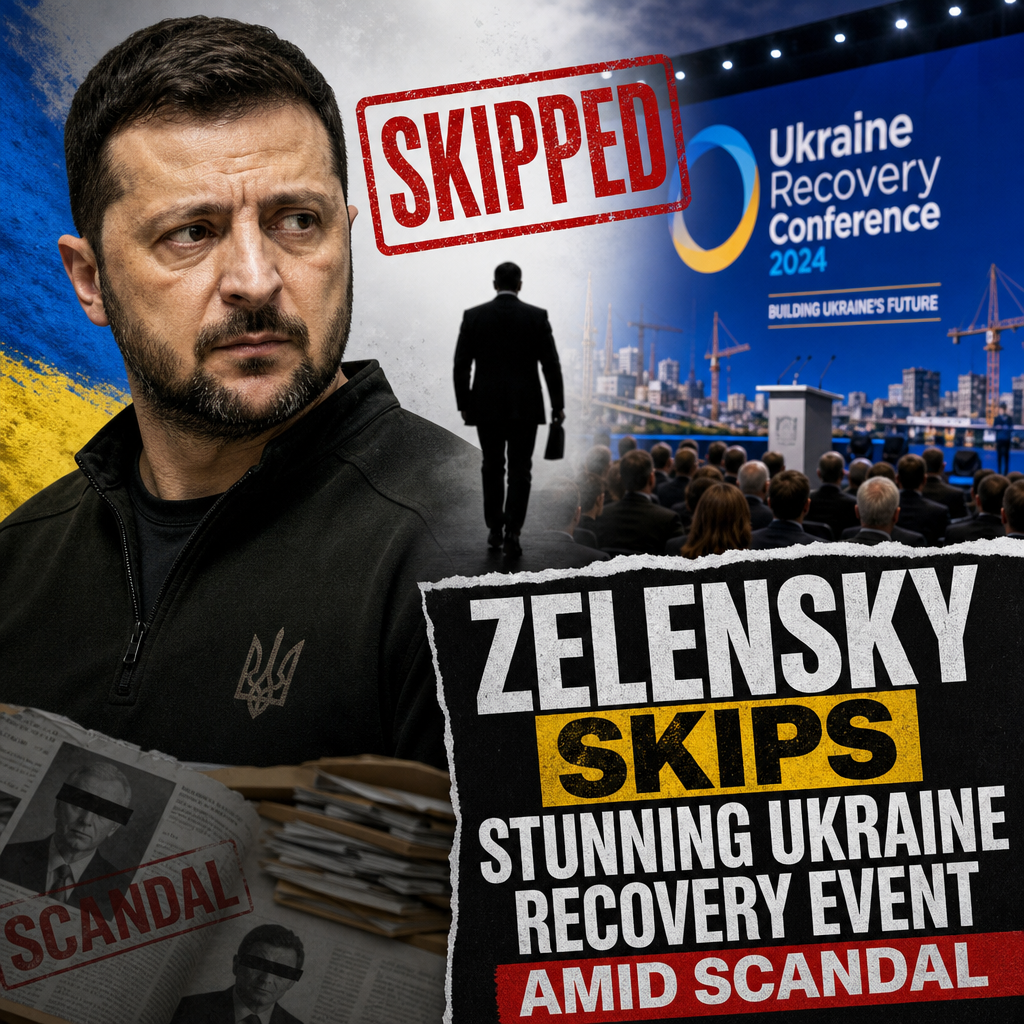
Zelensky Skips Stunning Ukraine Recovery Event Amid Scandal


Zelensky’s decision to skip a high-profile Ukraine recovery event in Poland has added another layer of controversy to an already fraught moment for Kyiv, as questions swirl around optics, diplomacy, and a new scandal involving alleged Nazi symbolism. The absence itself may be less important than what it signals: a presidency under pressure, a reconstruction agenda struggling for momentum, and a public conversation increasingly shaped by politics as much as by wartime necessity.
Zelensky and the politics of absence
At first glance, missing a recovery conference might seem like a minor scheduling issue. But for Ukraine, appearances at international forums matter. They are not just photo opportunities; they are a way to reassure donors, keep reconstruction on the agenda, and remind allies that the country’s needs are immediate and enormous.



Reports in different outlets frame the decision differently. RT presents the skip as especially significant because of the surrounding scandal, suggesting the event was overshadowed by accusations and symbolism that could embarrass Kyiv. Al Jazeera’s broader war coverage tends to place such developments in the context of Ukraine’s continuing struggle to secure military aid, economic support, and diplomatic attention, while Sky News typically focuses on the practical consequences for European unity, reconstruction, and public confidence.
That contrast matters. One interpretation is that Zelensky was avoiding a politically risky appearance at a time when scrutiny was intensifying. Another is that his absence was simply a calculated move amid a crowded diplomatic calendar, with the real story being the scandal itself and the way it is being weaponized by critics.




Either way, the episode highlights how quickly a recovery conference can become a test of credibility.
Why the scandal landed so sharply
The controversy reported around the event appears to involve accusations tied to Nazi imagery or rhetoric, a highly charged issue in any European context and especially in a war shaped in part by Russia’s long-running claims about “denazification.” Even when such claims are exaggerated or weaponized, they are politically potent because they tap into genuine historical trauma.
That gives the story an awkward double edge:
– For Ukraine, any association with extremist symbolism is damaging, even if it involves a limited incident or a disputed interpretation.
– For Russia and sympathetic outlets, the same incident becomes a broader narrative about hypocrisy and moral legitimacy.
– For Western partners, the concern is less propaganda and more reputational risk: does this undermine support for Ukraine at a moment when donor fatigue is already a real problem?
The key point is that scandals do not need to be fully proven to have an effect. In the media cycle, suspicion alone can slow momentum, even if the facts later prove more complicated.
Ukraine recovery event: why the optics matter
The Ukraine recovery event was supposed to be about rebuilding homes, infrastructure, and confidence in a future beyond war. That makes the political drama surrounding it especially unfortunate. Recovery conferences are meant to project stability. Instead, the current episode reinforces how difficult it is to separate reconstruction from the war’s broader information battle.
Ukraine recovery event and the burden of messaging
Zelensky has long been one of the most effective wartime communicators in modern politics. His direct appeals to foreign parliaments, public appearances in embattled cities, and carefully timed speeches have helped keep Ukraine at the center of Western attention. But that strength also creates expectations. When he is absent, the vacuum is noticed.
Three readings of the same moment
A fair reading of the RSS coverage suggests at least three distinct interpretations:
1. The critical reading:
Zelensky’s absence suggests the scandal was serious enough to make the event politically risky, and the optics may have been too negative to manage.
2. The strategic reading:
The decision may have been practical, not panicked. Leaders skip events all the time for security, diplomacy, or timing reasons, and the larger reconstruction effort continues regardless.
3. The contextual reading:
This is one incident inside a much bigger picture: Ukraine is still fighting a war, still dependent on outside aid, and still vulnerable to narratives that can distort the public debate.
Taken together, these readings point to a simple conclusion: the event is important, but the reaction to it is revealing in its own right.
What this means for Ukraine’s allies
For European governments and international donors, the episode is a reminder that reconstruction is not just an engineering project. It is a trust project. Donors want to know that funds will be used transparently, that Ukrainian institutions remain credible, and that political controversies will not derail the larger effort.
At the same time, allies also understand that Ukraine is operating under extraordinary pressure. Wartime leadership inevitably brings imperfect decisions, and public life in a conflict zone is rarely tidy. That does not excuse mistakes, but it does argue for caution before drawing sweeping conclusions from one absence.
The most responsible position is probably somewhere in the middle:
– The scandal deserves scrutiny.
– The optics are undeniably bad.
– But one skipped event does not define Ukraine’s reconstruction effort, nor does it settle the deeper questions about leadership, accountability, or future support.
In that sense, the story is less about a single conference than about the fragile balance Kyiv must maintain: keeping allies engaged, controlling reputational damage, and convincing both domestic and foreign audiences that rebuilding remains possible even while war continues.
A moment that exposes larger tensions
The absence of Zelensky from the Poland event matters because it sits at the intersection of three powerful forces: war, symbolism, and international fundraising. None of those are easy to manage on their own. Together, they create a political environment where even a missed appearance can become a headline about scandal, strategy, or weakness.
What the current coverage makes clear is that the facts may be less decisive than the narratives attached to them. Some outlets will see avoidance, others prudence, and others a distraction from the real issue: whether Ukraine can keep its recovery agenda alive while fighting for survival.
That uncertainty is the real story.