Trump Iran Deal: Stunning Failure for Israel Goals


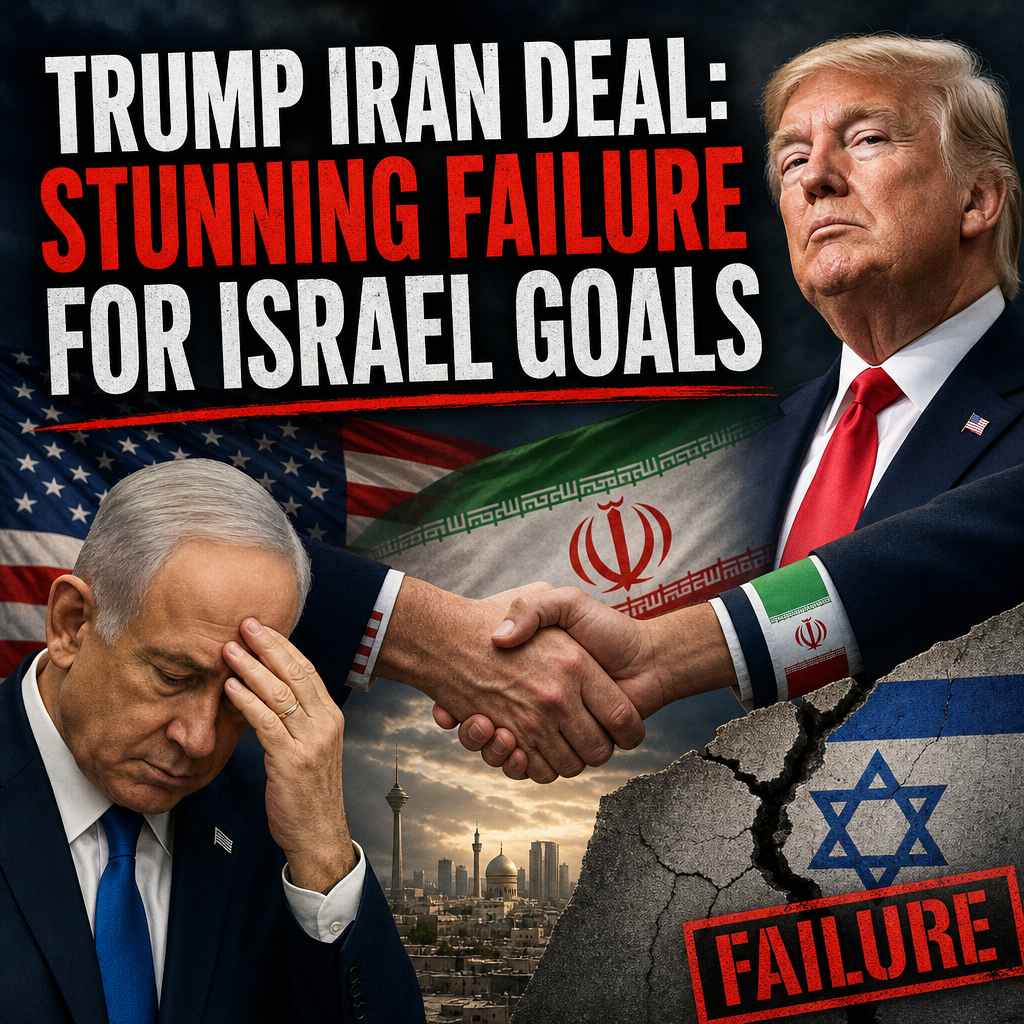
Trump Iran deal is being framed by critics and supporters as something far bigger than a single diplomatic agreement: a test of whether pressure, deterrence, and negotiation can be made to work at the same time. For Israel, the stakes are especially high. The debate sparked by comments from Israeli opposition figure Yair Lapid, alongside wider regional reporting from international outlets, suggests a familiar but unresolved problem — any U.S.-Iran bargain can look like a strategic setback in Jerusalem, even when Washington presents it as a way to reduce the risk of war.
Why the Trump Iran deal alarms Israel
From an Israeli perspective, the core worry is not just whether Iran gets sanctions relief or diplomatic recognition. It is whether any deal gives Tehran more room to preserve its nuclear expertise, finance regional allies, and wait out U.S. pressure. That concern has shaped Israeli policy for years, regardless of which party has been in the White House.



Lapid’s criticism reflects a broader Israeli skepticism that has crossed party lines. The fear is simple: if an agreement lets Iran keep key parts of its nuclear program intact, Israel may feel forced to live with a more capable adversary while being told the deal is “stabilizing.” In Israeli strategic thinking, that is not stability — it is delay.

That view also helps explain why some Israeli leaders react so sharply to any renewed U.S.-Iran engagement. They argue that Tehran has repeatedly used negotiations to buy time, improve its bargaining position, and advance technologically behind the scenes. Even supporters of diplomacy in Israel often want tougher verification, longer timelines, and a stronger enforcement mechanism than previous agreements delivered.




But there is another side to the argument. Israel’s most vocal critics of confrontation note that military threats and isolation have not solved the problem either. Iran’s nuclear activity has continued despite sanctions, cyber operations, covert actions, and repeated warnings. From this angle, a deal — even an imperfect one — may slow escalation more effectively than endless brinkmanship.
What the broader regional coverage suggests
Coverage from international outlets paints a picture of a Middle East still trapped between deterrence and diplomacy. Al Jazeera’s reporting on regional dynamics often highlights how any U.S.-Iran arrangement is viewed not only through the lens of nuclear nonproliferation, but also through the long-standing rivalry between Tehran and its opponents across the Gulf and Levant. That matters because Israel is not alone in fearing that Iran’s influence could grow under a softer diplomatic posture.
At the same time, regional audiences are not unified. Some governments and analysts see negotiations as the least bad option, especially if the alternative is another cycle of strikes, retaliation, and maritime disruption. Others worry that a deal could normalize a status quo in which Iran remains influential but constrained only loosely. In that sense, the argument is less about trust and more about whether containment can be made durable.
Sky News’ international framing tends to emphasize how such negotiations play into broader global concerns: oil markets, shipping lanes, nuclear proliferation, and U.S. credibility. That wider lens is important. A U.S.-Iran agreement is never just a bilateral matter. It affects European allies, Gulf states, and the calculations of military planners across the region. For Israel, that means its objections must compete with the view that diplomacy, however frustrating, may be preferable to open-ended escalation.
Three competing judgments are emerging
The current debate can be reduced to three serious, and partly competing, assessments:
– Israel’s hardline view: Any deal that leaves Iran with a pathway to nuclear capability is a strategic loss.
– Diplomats’ view: A flawed agreement can still reduce danger if it caps enrichment, restores inspections, and buys time.
– Regional pragmatists’ view: The real danger is not a deal itself, but a collapse into escalation that no actor can fully control.
Each position has merit. Israel’s caution is not irrational; its security environment is unusually exposed, and its leaders are judged on worst-case planning. Diplomats are also not naïve for seeking a negotiated ceiling on Iran’s program. And regional pragmatists are right that the absence of an agreement does not create safety by default.
A stunning failure for Israel goals — or a warning that the goals were unrealistic?
If the phrase “stunning failure for Israel goals” sounds severe, that may be because Israel’s preferred outcome has always been difficult to achieve in practice. Jerusalem’s ideal result would be a deal that permanently blocks Iran’s nuclear capacity, weakens its regional proxies, and keeps sanctions pressure high. In reality, those goals are hard to reconcile with any agreement Iran would sign.
That mismatch matters. If Israeli leaders define success as total rollback, then almost any negotiated settlement will look like defeat. But if the standard is something more modest — preventing rapid nuclear breakout, preserving international oversight, and avoiding war — then a deal may still count as a partial success, even if it disappoints Israeli hawks.
The more honest assessment is that this is not a simple victory or failure story. It is a clash between different risk tolerances. Israel tends to prefer maximum pressure and minimum ambiguity. The United States, especially when acting as an intermediary, often seeks an arrangement that can be sold as containment. Iran, meanwhile, wants relief and recognition without surrendering its deterrent value.
That is why reactions are so polarized. For critics like Lapid, the deal may look like Washington repeating old mistakes: rewarding Iran before securing ironclad guarantees. For others, it may be the only path that prevents a far worse outcome — a region pushed closer to confrontation, miscalculation, and possibly open conflict.
The bigger question: what happens after the headlines fade?
The real test of any Trump Iran deal is not the announcement itself, but enforcement. Will inspections be credible? Will violations trigger consequences quickly enough? Will Israel trust the process, or act independently if it does not? And will Iran believe the agreement is durable enough to keep its commitments?
Those questions remain unresolved, and that uncertainty may be the most important conclusion of all. Israel’s concern is understandable, but so is the argument that diplomacy is not the same as surrender. A deal can be both unsatisfying and useful. The challenge is making it strict enough to matter, and realistic enough to survive.