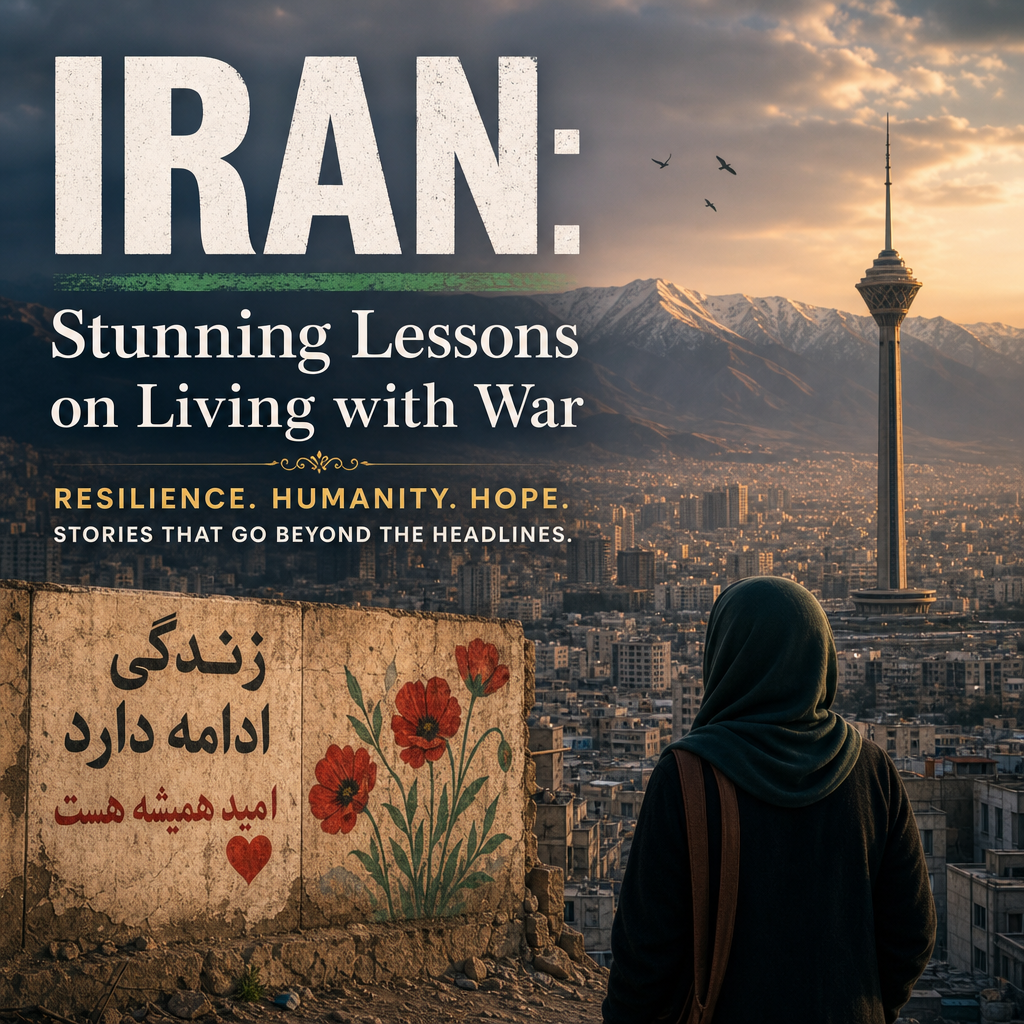
Iran: Stunning Lessons on Living with War


Iran has learned that living with war is often less about dramatic battlefield scenes and more about daily habits shaped by fear, preparation, and endurance. As regional tensions flare and foreign headlines focus on missiles, diplomacy, and retaliation, the harder truth is that ordinary people in and around Iran often have to plan around uncertainty long before any strike is launched.
Iran and the new normal of insecurity
Across recent reporting from outlets with very different editorial instincts, a common thread emerges: the Middle East’s crises are no longer neatly separated events. One story about diplomacy in Gaza can quickly turn into a wider debate about Iran’s role in regional conflict; a report on air defenses can become a warning about escalation; a piece on sanctions can read like a preview of long-term social strain.



Al Jazeera’s coverage tends to emphasize the human and political context behind these tensions, especially the way civilians absorb the cost of confrontation. That lens matters, because “living with war” is not just about military readiness. It means families deciding whether to travel, businesses stocking up on supplies, schools rehearsing emergency procedures, and communities learning to read the political weather as carefully as the actual weather.
RT’s reporting often places more weight on strategic confrontation and the language of deterrence, framing Iran as a country that has adapted to pressure from abroad rather than passively endured it. From that angle, the lesson is not only resilience but habituation: a state and society under constant external scrutiny can become unusually skilled at managing risk, messaging resolve, and treating crisis as a permanent condition rather than an exception.




Sky News, meanwhile, usually approaches the region through the practical consequences of conflict for international security, energy markets, alliances, and civilian safety. That perspective is useful because it reminds readers that what happens around Iran is never only “about Iran.” Disruption in the Gulf affects shipping lanes, oil prices, regional diplomacy, and the calculations of governments far beyond the Middle East.
Taken together, those viewpoints suggest that the real lesson is not that war has become normal, but that instability has become routinized.
What “living with war” actually looks like
There is a tendency in outside commentary to imagine wartime life as constant explosions and visible chaos. In reality, the more common experience is subtler and more exhausting. People live with:
– uncertainty about travel, work, and school routines
– rising prices and economic pressure
– periodic bursts of fear followed by long stretches of tense waiting
– political messaging that can sound reassuring one day and ominous the next
– the psychological burden of never fully relaxing
That burden matters. Even when violence is not immediately present, the expectation of violence changes behavior. It influences how long people stay in a city, what money they keep on hand, whether they trust official assurances, and how they interpret every new headline.
Iran’s resilience is real, but it should not be romanticized
It is tempting to describe Iran’s response to external pressure as heroic resilience. There is truth in that, but it can become a simplification if pushed too far. Endurance is not the same as wellbeing.
A society can become highly adaptive and still be deeply worn down. People may develop routines that make danger manageable without ever making it disappear. In that sense, “stunning lessons” are often painful ones: how to read threat quickly, how to stay calm when institutions are under strain, how to keep family life functioning while politics feels permanently unstable.
This is where the different media perspectives become especially important. Reporting that focuses only on state power can miss the quiet damage done to citizens. Reporting that focuses only on civilian suffering can miss the strategic realities that keep the crisis alive. The most accurate picture sits in between: Iran is both a geopolitical actor and a society living inside a long, unresolved security dilemma.
The broader regional lesson
If there is one conclusion that emerges from comparing these sources, it is that the region has entered a cycle where escalation and adaptation feed each other. Governments prepare for the possibility of conflict, and those preparations can make conflict easier to imagine, discuss, and even justify. Meanwhile, civilians adapt because they have no choice, and that adaptation can conceal the depth of the damage until much later.
This is why quick judgments are rarely helpful. It would be too simple to say Iran is merely defiant, or merely threatened, or merely isolated. It is all three, depending on the angle from which you look. The country’s politics, economy, and public mood are shaped by external pressure, internal divisions, and the constant possibility that the next regional crisis could cross a threshold.
What stands out across the coverage is not certainty but fragility. The Middle East’s conflict map is interconnected, and Iran sits near the center of that web. For ordinary people, the lesson is brutal in its simplicity: once war becomes part of the background noise, peace is no longer something to be assumed. It becomes something to be guarded, negotiated, and, if possible, rebuilt one unstable day at a time.