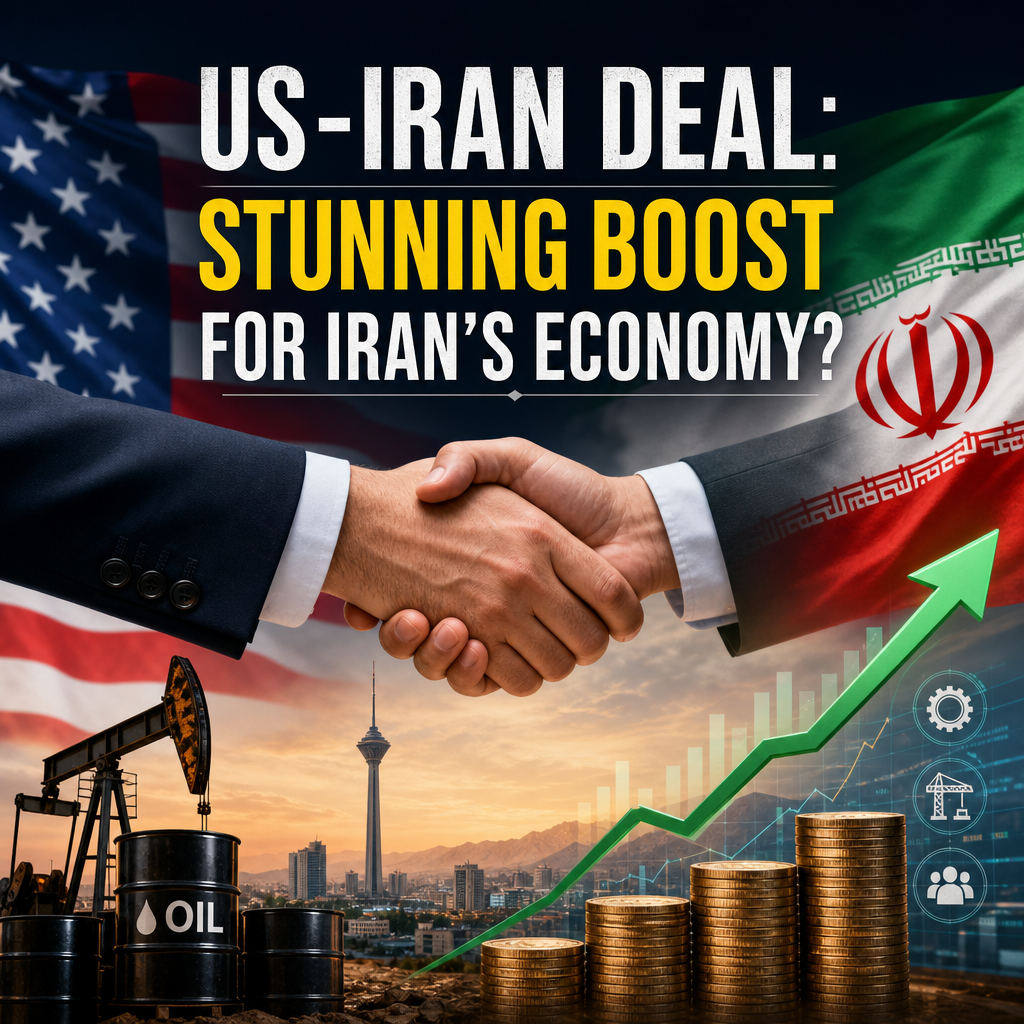
US-Iran Deal: Stunning Boost for Iran’s Economy?


US-Iran deal talk has revived a big question in global markets and Middle East politics: could a breakthrough between Washington and Tehran deliver a genuine lift to Iran’s battered economy, or would the damage from sanctions, mistrust, and political risk still outweigh the promise?
For years, Iran’s economy has been trapped between sanctions pressure, inflation, currency weakness, and limited access to international finance. Any sign of a diplomatic opening naturally raises hopes inside the country, especially among businesses and households that have watched purchasing power erode. But the picture is far more complicated than a simple “deal equals recovery” story. The most realistic answer is that a US-Iran agreement could help Iran economically, but only if it is broad, durable, and credible enough to survive political shocks on both sides.



Why a deal would matter so much for Iran’s economy
A US-Iran deal would matter first and foremost because of sanctions relief. Iran has long faced restrictions that limit oil exports, international banking, insurance, shipping, and foreign investment. Even when some trade continues through workarounds, those channels are costly, uncertain, and vulnerable to enforcement action.
If a deal led to sanctions easing, the immediate gains could include:




– higher oil exports and better access to hard currency
– reduced pressure on the rial
– lower import costs for food, medicine, and industrial inputs
– greater confidence among local firms and foreign investors
– more room for the government to fund public services and infrastructure
This is the economic logic behind the optimism often seen in regional coverage. Iranian officials and supporters of engagement argue that sanctions have distorted normal commerce and blocked the country from fully using its energy wealth and industrial base. From that perspective, a deal is not a luxury; it is a release valve.
There is also a psychological effect. Even before major policy changes take hold, markets often respond to expectations. If traders believe sanctions may ease, the currency can strengthen, importers may gain confidence, and some companies may prepare for a more open environment. That said, these early gains can disappear quickly if negotiations stall or if the agreement looks fragile.
Why the boost may be real but limited
Skepticism is warranted. Many analysts, including those often featured in Western and Gulf media coverage, would argue that Iran’s economic troubles are not caused by sanctions alone. Domestic policy problems matter too: high inflation, state intervention, corruption concerns, weak transparency, and uneven investment conditions all complicate any recovery.
Even if sanctions were reduced, Iran would still face hurdles:
1. Trust is the biggest constraint
Investors do not just need access; they need confidence that access will remain. Iran’s past experience, especially after the collapse of earlier nuclear diplomacy, has made many companies wary of returning. They fear getting caught between US policy changes, snapback sanctions, and legal exposure.
2. A narrow deal may not be enough
A limited agreement could ease some pressure, but not create a full economic turnaround. If the deal only addresses a narrow issue while leaving major sanctions in place, Iran may see modest relief without the deeper normalization needed for long-term growth.
3. The benefits may not reach ordinary people quickly
Even when export revenue improves, the effects on daily life can lag. Iran’s households are still likely to feel pressure from prices, wage weakness, and the time it takes for government revenues to translate into better services or cheaper imports.
Sky News-style coverage of the geopolitical angle often emphasizes this uncertainty. From that lens, the key question is not whether a deal could produce a short-term market bounce, but whether either side can sustain a compromise long enough for real economic rebuilding to begin.
A political deal, not just an economic one
One reason the debate remains so unsettled is that the future of Iran’s economy is tied to politics at multiple levels. A US-Iran agreement would not exist in a vacuum. It would be shaped by domestic critics in both countries, regional security tensions, and the broader rivalry involving Israel, Gulf states, and proxy conflicts across the region.
That matters because economic improvement depends on predictability. If shipping lanes, regional conflict, or nuclear concerns flare up again, businesses will hesitate. If lawmakers or hardliners in Washington or Tehran portray the deal as too soft, they could undermine it before investment flows arrive.
RT’s generally more anti-Western framing of the issue often highlights the idea that sanctions themselves have been a form of economic warfare and that Iran’s resilience has been underestimated. There is truth in that view: Iran has developed adaptation strategies, including trade rerouting and a larger informal economy. But resilience is not the same as prosperity. Working around sanctions is costly, inefficient, and rarely enough to generate sustained growth.
So, stunning boost or cautious step forward?
The fairest conclusion is that a US-Iran deal could be a meaningful boost for Iran’s economy, but “stunning” would only be accurate under the most optimistic scenario. A narrow or temporary agreement might improve sentiment, weaken the sanctions chokehold a bit, and create a short-lived rally in parts of the economy. A broader, verifiable, and durable deal could do much more: restore trade flows, stabilize the currency, and open a path to gradual reintegration with global markets.
Still, even the best-case scenario would not magically fix structural problems inside Iran. The country would need not just diplomatic relief, but also policy reforms, investment certainty, and a lower-risk environment for long-term business activity. Without those, any rebound could remain partial and uneven.
In other words, a US-Iran deal could be the beginning of economic recovery, not the end of the story. The real test would not be the announcement itself, but whether both sides can keep the agreement alive long enough for Iran’s economy to feel the difference.