Hormuz Transit Toll: Stunning US-Iran Clash Explained


Hormuz Transit Toll is more than a headline-grabbing phrase; it captures a real and recurring fear in global energy markets, where a dispute between the US and Iran can quickly spill into shipping lanes, oil prices, and regional security.
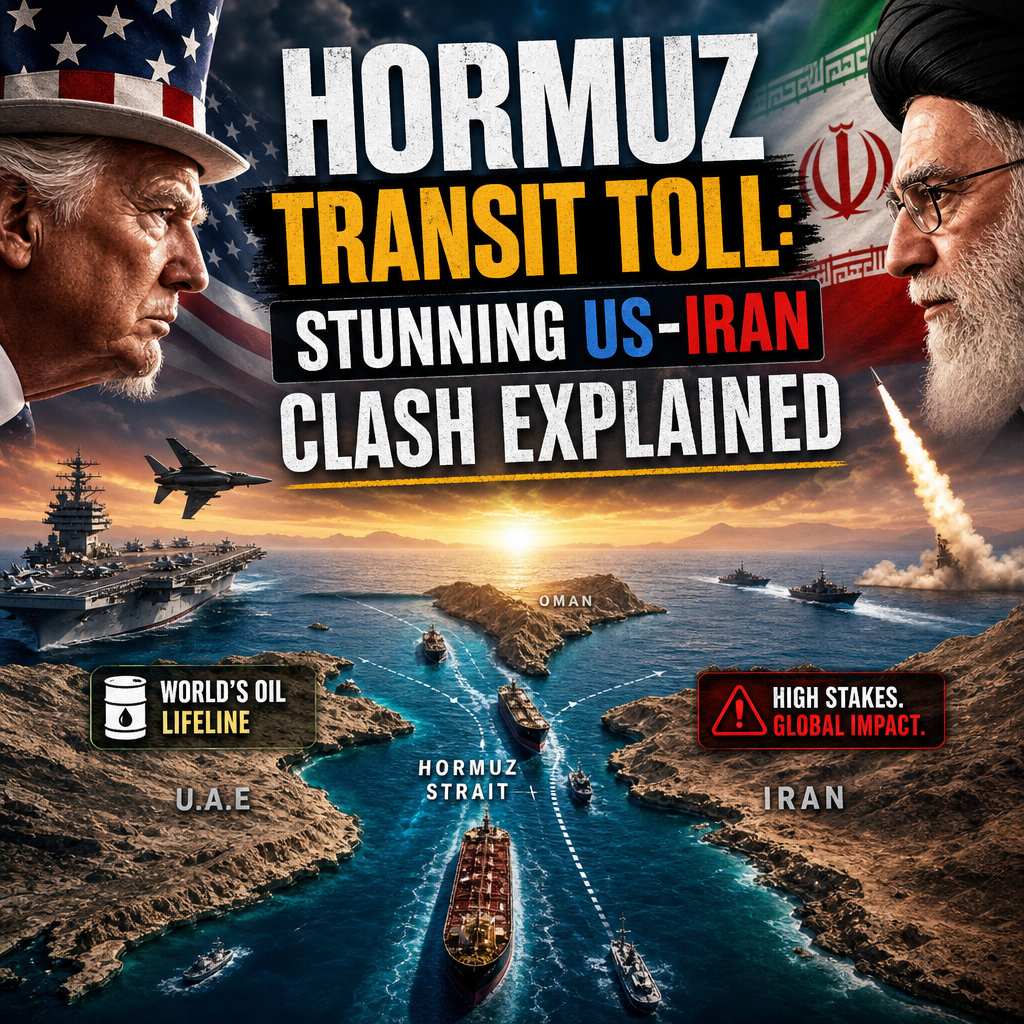
The latest flare-up around the Strait of Hormuz has revived a familiar question: how much leverage does Tehran really have over one of the world’s most important waterways, and how far is Washington willing to go to prevent it from using that leverage? Reports across different outlets point to the same core problem, even if they frame it differently. The strait is narrow, heavily trafficked, and vital to the movement of oil and liquefied natural gas from the Gulf. That makes it both a strategic chokepoint and a political pressure valve.



At the center of the dispute is a clash of interests. Iran sees the strait as part of its immediate security environment and a place where it should not be bullied by foreign powers. The US and its allies, by contrast, view any threat to free passage as an unacceptable risk to global trade. In practice, that means each side treats the same waters as evidence of the other’s aggression.
What the Hormuz Transit Toll debate is really about
The “toll” in this context is not only a literal fee. It is also the cost of deterrence, military patrols, insurance premiums, rerouted cargoes, and the ever-present danger of escalation. Even when no ship is actually stopped, the political noise alone can raise shipping costs and unsettle energy markets.




Several reporting angles make clear that the argument is not new. RT’s coverage tends to emphasize the confrontation between Washington and Tehran, often presenting the issue as another chapter in a long-running standoff shaped by sanctions, military pressure, and accusations of coercion. Al Jazeera usually places the same tension within a broader regional frame, highlighting how a move against shipping would affect neighboring states, civilian economies, and efforts to avoid a wider war. Sky News, meanwhile, often focuses on the immediate consequences for Britain, Europe, and global markets: higher fuel costs, insurance concerns, and the possibility that an incident at sea could drag in outside forces.
Taken together, those viewpoints show why the dispute is so hard to contain. This is not only about two governments exchanging threats. It is about a chokepoint that carries a large share of the world’s energy exports and about the ripple effects that would reach far beyond the Gulf.
Why the strait matters so much
The Strait of Hormuz is only a few dozen kilometers wide at its narrowest point, yet it connects major producers in the Gulf to customers in Asia and beyond. That geography gives Iran a degree of strategic influence, but it also gives the US and its partners a reason to maintain a heavy naval presence.
A disruption there would likely hit several areas at once:
– oil and gas prices could jump quickly
– tanker insurance costs would rise
– shipping companies might delay or reroute cargoes
– regional states could face pressure to choose sides
– diplomatic talks could become harder, not easier
That’s why even rhetorical escalation matters. Market participants often react before a single vessel is turned away. In that sense, the “transit toll” is already being paid in uncertainty.
The US-Iran clash is real, but the risks are not symmetrical
One of the clearest lessons from the current tension is that both sides have incentives to project strength while avoiding a full-scale confrontation. Iran wants to signal that pressure has limits. The US wants to show that it can protect shipping and deter disruption. Neither side benefits from a direct war, but both may benefit domestically from looking resolute.
That makes the situation unstable. Small incidents can be interpreted as tests of will. A warning from Iranian officials may be read in Washington as preparation for disruption. A US naval deployment may be read in Tehran as provocation. In a narrow waterway, the margin for error is thin.
Still, the risks are not identical. Iran’s economy is already under intense strain from sanctions and isolation, so a serious disruption could bring harsher retaliation and deeper hardship. The US and its allies, on the other hand, have broader military reach and more diplomatic room to mobilize partners. That does not mean they can solve the problem easily, only that their leverage comes from different sources.
What the mixed media coverage suggests
The different editorial lenses matter because they shape how audiences understand the conflict.
– RT’s framing often underscores US hypocrisy and portrays Iran as responding to external pressure.
– Al Jazeera tends to highlight the humanitarian and regional stability angle, including the danger to ordinary people far from the decision-makers.
– Sky News frequently stresses the economic and strategic implications for Western governments and consumers.
None of these perspectives is wrong on its own, but none is complete by itself either. The more careful conclusion is that the dispute is best understood as a cycle of action and reaction, not a simple case of one side threatening innocent commerce.
That said, the evidence supports one firm judgment: any attempt to turn Hormuz into a bargaining chip would be reckless. The immediate gains would likely be small, while the broader costs could be severe and unpredictable.
A measured conclusion
Hormuz Transit Toll may sound like a provocative phrase, but it points to a serious global vulnerability. The real issue is not whether one side can “win” a confrontation there. It is whether enough restraint exists on both sides to prevent a symbolic clash from becoming a strategic accident.
For now, the most plausible outcome is continued brinkmanship rather than outright closure or open conflict. But that is hardly reassuring. The strait remains a place where politics, commerce, and military power meet in a very small space. When relations worsen, the risk is not just that ships face delays; it is that the world discovers how expensive instability can be.