Zelenskyy Praise: Stunning Trump Remarks on War


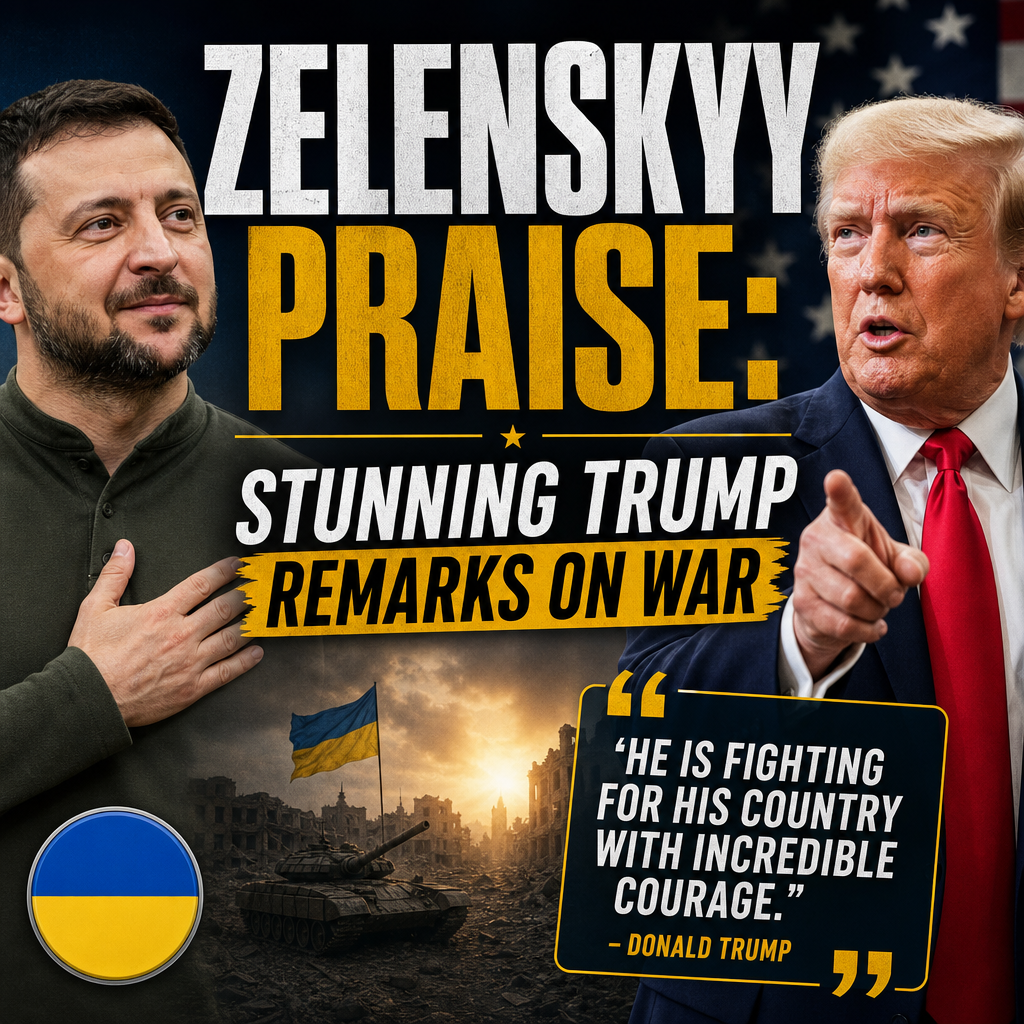
Zelenskyy praise from Donald Trump has added a fresh layer of unpredictability to the debate over Ukraine’s war effort, because the comments came from a politician who has often mixed admiration, criticism, and strategic ambiguity when speaking about Kyiv and Moscow.
Speaking recently, Trump described Volodymyr Zelenskyy as “courageous” and said the Ukrainian president was doing “pretty well” in the war against Russia. The remark stood out not just for its tone, but because it landed in a political moment where every public signal from Washington is being parsed for what it might mean for future U.S. support, ceasefire talks, and the wider balance of power in Europe.



Why Zelenskyy Praise Matters Now
At first glance, the comment may look like a simple compliment. In reality, it carries more weight because it cuts against the familiar narrative that Trump has often used to frame the war: that the conflict would not have escalated the way it did under different leadership, and that the fighting is draining U.S. resources without a clear end in sight.
Sky News’ reporting on the remarks emphasized the unusual warmth of Trump’s language toward Zelenskyy, especially given the strained history between the two men. That history has included public pressure on Kyiv, skepticism toward long-term military aid, and repeated hints that Trump would prefer a fast negotiated settlement over an open-ended war. Against that backdrop, calling Zelenskyy courageous is more than a throwaway line; it suggests Trump is still keeping multiple political doors open.




There are at least three ways to read the comments:
– As a genuine acknowledgment of Ukrainian resistance under extreme pressure
– As a tactical shift aimed at broadening Trump’s appeal before a potential return to the White House
– As a calculated way to keep leverage over both Kyiv and Moscow by staying hard to predict
The uncertainty matters. Trump’s past messaging has often blended praise with pressure, making it difficult to know whether he is signaling policy change or simply repositioning himself in the public conversation.
How Different Outlets Frame the War
Al Jazeera’s war coverage generally places these remarks in the larger human and geopolitical context: the destruction inside Ukraine, the strain on civilians, and the political stakes of any possible diplomatic settlement. From that perspective, praise for Zelenskyy can be seen as useful but insufficient. Words may matter, but what ultimately matters to Ukrainians is whether outside support continues, and whether any negotiation respects Ukraine’s sovereignty.
That perspective contrasts sharply with the tone often found in RT coverage, where the war is frequently framed through a Russian lens that emphasizes NATO expansion, Western escalation, and the idea that Moscow is fighting a defensive struggle. From that viewpoint, Trump’s praise for Zelenskyy could be interpreted less as a shift toward Ukraine and more as evidence of political performance designed for domestic audiences in the United States. RT’s framing tends to cast Western leaders as inconsistent or manipulative, and Trump’s comments fit neatly into that narrative.
Taken together, the contrast is revealing. Sky News highlights the political surprise. Al Jazeera emphasizes the war’s human and diplomatic stakes. RT pushes readers to question the sincerity of Western rhetoric altogether. None of those frames is complete on its own, but together they show why a short quote can generate outsized attention.
What Trump May Be Signaling
The key issue is not whether Trump is suddenly pro-Ukraine in a traditional sense. It is whether he is testing a language that lets him sound supportive of Ukrainian courage while still preserving his broader argument that the war needs an end.
That balancing act has real consequences. If Trump is trying to position himself as someone who respects Zelenskyy while favoring negotiations, he may be attempting to reassure both Republicans who want a tougher stance on U.S. spending and international observers who fear a dramatic break in support for Kyiv.
At the same time, the remarks do not resolve the larger uncertainty around Trump’s approach:
– Would he continue military aid at current levels?
– Would he push Ukraine toward a settlement under pressure?
– Would he try to force Moscow into talks through economic or diplomatic leverage?
– Or would the language of support fade once campaign politics move on?
Those questions remain open, and they matter more than the praise itself.
The Bigger Picture Behind the Soundbite
The most responsible reading of Trump’s comments is that they reflect a blend of admiration, political calculation, and strategic ambiguity. Zelenskyy’s leadership has undeniably become symbolic of Ukrainian resistance, and even critics of his government generally recognize the personal risk and burden he has carried since Russia’s full-scale invasion.
But praise alone does not answer the central question of the war: what kind of peace, if any, is realistically achievable without rewarding aggression or abandoning Ukraine’s future security? That is where the sources diverge most clearly. Some coverage treats Trump’s words as a potentially encouraging sign. Others see them as just another example of how great-power politics can shift around individual personalities while the battlefield realities stay grim.
In the end, the remarks are notable not because they settle anything, but because they expose how unsettled the debate still is. Trump’s praise for Zelenskyy may be sincere, strategic, or both. What is clear is that the war in Ukraine remains a test not only of military endurance, but of political consistency, diplomatic honesty, and the willingness of major powers to match words with action.