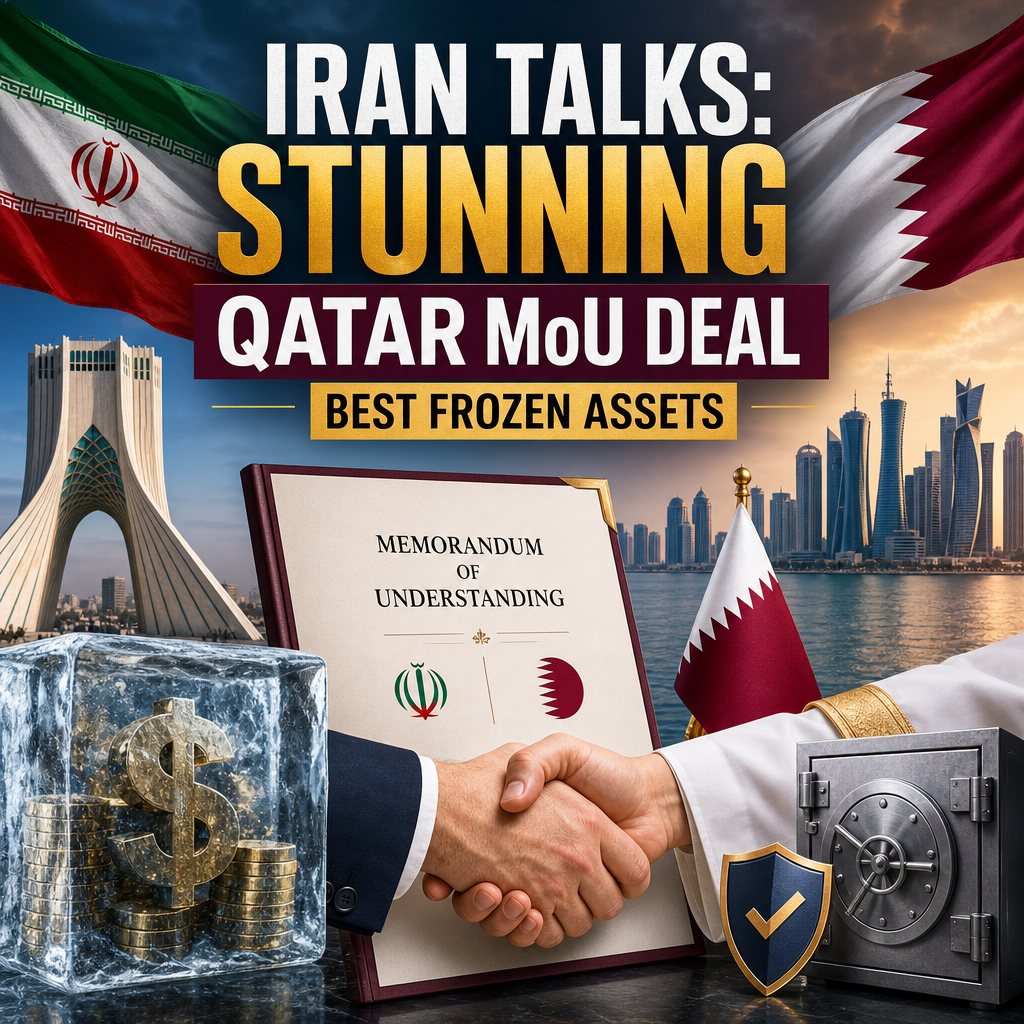
Iran Talks: Stunning Qatar MoU Deal, Best Frozen Assets


Iran talks with Qatar over a memorandum of understanding tied to US-frozen assets have put a familiar Middle East pressure point back in the spotlight: diplomacy moving forward just as distrust, sanctions and regional rivalries keep the ground unstable.
What makes this round of discussions notable is not simply that they are happening, but where they sit in a much larger web of bargaining. Qatar has long acted as a mediator in sensitive regional files, and the idea of a framework linked to frozen Iranian funds suggests a practical, if limited, attempt to keep channels open. Yet the news also lands at a moment when public statements from Washington, Tehran and regional capitals continue to pull in different directions. That tension is exactly why this story matters.



Iran talks and the Qatar channel
Across the reporting, one theme is clear: Qatar remains one of the few actors trusted enough to host or facilitate difficult conversations. That role is not new. Doha has repeatedly positioned itself as a bridge between adversaries, whether over humanitarian exchanges, financial arrangements or broader security issues. In this case, the reported memorandum of understanding appears to be less about a grand breakthrough and more about creating a workable mechanism around assets that have been restricted under US pressure.
That distinction matters. A memorandum of understanding does not automatically solve the underlying political dispute. Instead, it can provide a technical or diplomatic lane for discussing how funds might be handled, monitored or partially released under agreed conditions. Supporters of that approach see value in pragmatism: even limited agreements can reduce risk, build habits of communication and keep tensions from escalating.




But critics would argue that asset-linked diplomacy often creates headlines without changing the deeper structure of confrontation. Iran has long argued that frozen funds are its own money and should not be treated as leverage. The US, meanwhile, frames sanctions and asset controls as part of broader pressure over Iran’s nuclear program and regional activity. That means any Qatar-brokered deal is likely to be judged by each side less as a diplomatic victory than as a tactical move.
What the different news angles suggest
The three source perspectives point to a useful contrast.
– Al Jazeera’s framing places the emphasis on diplomacy, mediation and the practical mechanics of the talks. The focus is on how a Qatar channel could help move a sensitive financial issue forward.
– RT’s broader style of coverage on Iran-related issues often highlights sanctions pressure, Western double standards and Tehran’s resistance to coercion. That angle tends to stress Iran’s grievance that frozen assets are a political instrument.
– Sky News’ international reporting typically situates these developments within wider geopolitical risk, often asking whether such talks can genuinely affect security tensions, energy markets or the chances of escalation.
Taken together, the reporting suggests that the story is not really about money alone. The frozen assets are a symbol of larger disputes over sovereignty, sanctions and trust. Qatar’s involvement matters because it offers a rare route through an otherwise blocked diplomatic landscape, but the route is narrow.
Why frozen assets remain such a sensitive issue
At the heart of these talks is the question of leverage. Frozen assets are not just an accounting issue; they are a negotiating tool with political consequences. For Iran, access to these funds can be framed domestically as a matter of justice and economic relief. For the US and its allies, any movement on those assets is usually tied to safeguards, oversight or other concessions.
That creates a dilemma:
1. If the money stays frozen, pressure remains high, but so does resentment and mistrust.
2. If some funds are released, it may ease immediate tensions, but critics fear it could be interpreted as rewarding hardline behavior.
3. If Qatar mediates a compromise, both sides gain a face-saving path, but the deal may be fragile and limited in scope.
In that sense, the best outcome may not be a dramatic agreement but a managed one. Sometimes the most realistic diplomacy in the Middle East is not about resolving everything at once. It is about preventing the next crisis from becoming worse.
A cautious reading of the Qatar MoU
The strongest case for optimism is that these talks show the persistence of backchannel diplomacy at a time when open confrontation would be easier. Qatar’s willingness to engage reflects a broader truth: regional stability often depends on states that can speak to both sides without demanding immediate ideological alignment.
Still, it would be a mistake to overstate the significance of a reported memorandum. There is no guarantee that a framework on frozen assets will lead to broader détente, nuclear de-escalation or a meaningful shift in US-Iran relations. The current evidence points more toward incremental management than transformation.
That may sound underwhelming, but in this arena incrementalism is not trivial. Even small steps can reduce miscalculation, create room for humanitarian or financial arrangements, and signal that diplomacy has not fully run out of road.
The bigger picture
The lesson from the latest Iran talks is that diplomacy in the Gulf often advances in narrow corridors rather than broad breakthroughs. Qatar’s role underscores how much regional mediation now depends on trust, discretion and the ability to separate technical bargaining from ideological confrontation.
For now, the reported MoU is best understood as a test case: can frozen assets become a manageable issue instead of a permanent flashpoint? The answer remains uncertain. But the very fact that the conversation is happening suggests that, even amid entrenched hostility, the diplomatic door is still ajar.