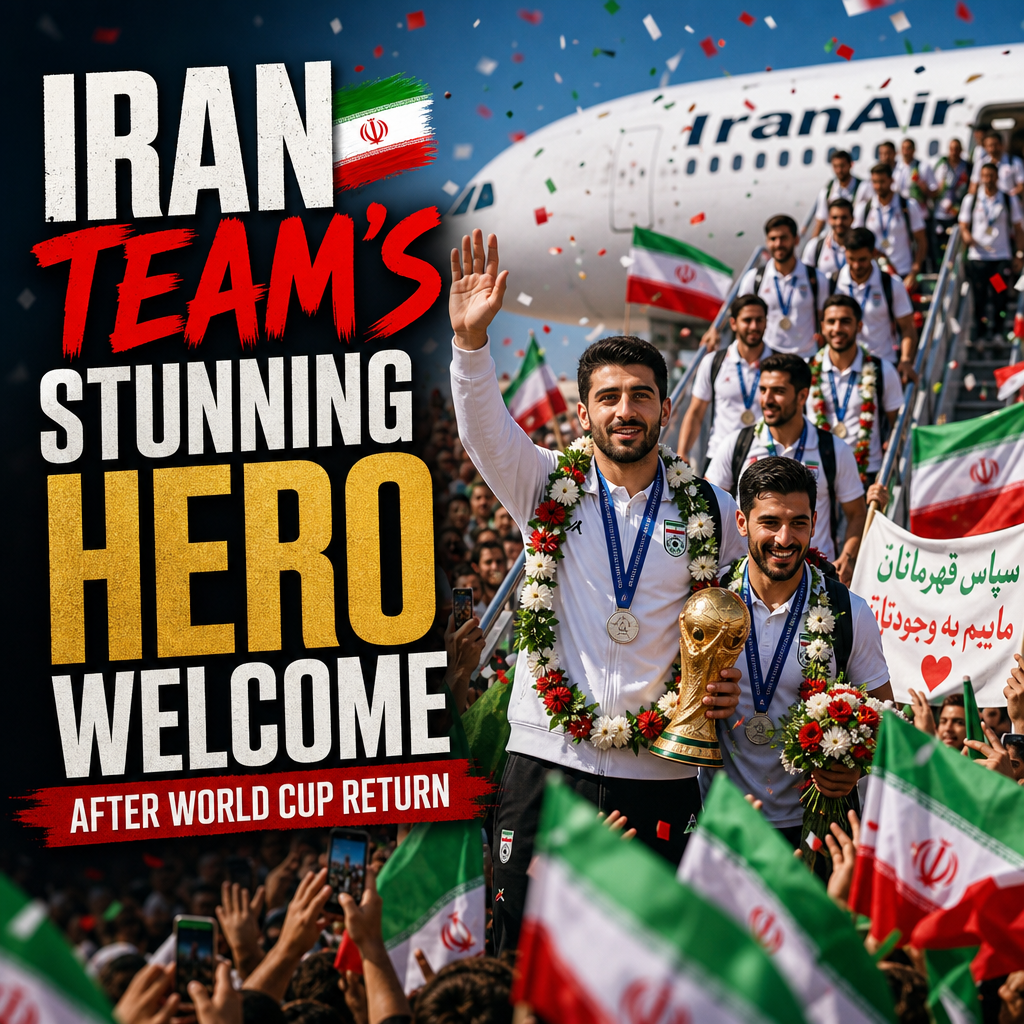
Iran Team’s Stunning Hero Welcome After World Cup Return


Iran team returned to a scene few expected: thousands of fans, public officials, and intense emotions all colliding in one powerful homecoming that said as much about national identity as it did about football.
The welcome offered to the squad after its World Cup exit was more than a routine airport reception. It became a public moment of release, pride, and debate. For some, the players were simply national representatives who had competed under enormous pressure and deserved applause. For others, the homecoming was harder to separate from the political atmosphere surrounding the team, especially given the wider social tensions in Iran at the time. That contrast is what made the reaction so striking: the same event could be read as celebration, symbolism, or both.



Iran team welcome: football, identity, and politics
The most visible part of the story was the scale of the reception. Reports described crowds turning out to greet the players after their tournament return, with supporters treating the squad as a source of national pride despite the team’s exit from the competition. In any country, a large public welcome for a World Cup team is not unusual. What made this case notable was the emotional weight attached to it.
Football in Iran has long carried more than sporting meaning. The national team is often expected to represent unity, resilience, and prestige on the world stage. That expectation becomes even sharper when the country is under strain. In that context, a warm return can be read as a public desire for something uncomplicated and positive—an excuse to cheer, to gather, and to momentarily step outside daily anxieties.




At the same time, it would be a mistake to flatten the reaction into pure celebration. Some observers viewed the reception through a political lens, asking whether a visible show of support for the team also served broader state messaging. Others pointed out that public enthusiasm does not automatically equal endorsement of everything happening around the team. In other words, people can admire the players while still holding deep frustrations about the country’s political direction.
That ambiguity is important. It explains why coverage from different outlets tends to emphasize different aspects of the same scene. A sports-focused view highlights resilience and fandom. A politics-focused view highlights symbolism and control. A people-centered view sees ordinary Iranians expressing joy in the only way available to them: by turning out in huge numbers for a team that gave them a shared moment.
What the return revealed beyond the pitch
The Iran team’s homecoming also drew attention because World Cup football is rarely “just football” in a country where every public image is scrutinized. The tournament itself had already put the squad in the middle of larger debates about national representation, individual expression, and how sports teams should behave when the public mood is charged.
Several layers of interpretation emerged:
– Supporters saw pride: Many fans focused on the effort, discipline, and visibility the team brought to the tournament. For them, a strong welcome was overdue recognition.
– Critics saw symbolism: Some questioned whether the event was being used to project normalcy or unity at a moment when the country was facing deeper unrest.
– Neutral observers saw complexity: International coverage often treated the welcome as a reminder that sport can unify people without erasing disagreement.
That range of reactions matters because it prevents a simplistic reading of the event. A big crowd does not settle the political questions, and political questions do not erase genuine emotion. Both can exist at the same time.
There is also a broader lesson here about how international sports stories are framed. Outlets such as Al Jazeera, Sky News, and RT often emphasize different dimensions of a single event: human interest, geopolitical context, or the clash between public sentiment and official narrative. When those angles are viewed together, the picture becomes less tidy but more honest. The Iran team’s return was not a clean victory parade, nor was it a purely orchestrated spectacle. It was a public moment shaped by real affection, real division, and a national appetite for meaning.
Iran team and the challenge of reading public emotion
The strongest takeaway is probably not that Iran’s fans were unified, but that they were visibly engaged. In countries where public expression can be politically loaded, even a football welcome can become a kind of social barometer. Crowds can signal pride, frustration, hope, or defiance depending on who is looking and what they want the moment to mean.
That is why the return resonated far beyond sports pages. It reminded international audiences that the World Cup is never insulated from the world around it. Players step onto the pitch carrying more than tactical plans; they carry expectations from people who may disagree with one another on nearly everything except the desire to be seen and respected.
The most balanced interpretation, then, is that the welcome was both heartfelt and complicated. It was a genuine show of support for the team, but also a reflection of the tensions that frame Iranian public life. Those two truths do not cancel each other out. They coexist.
In the end, the Iran team’s return became memorable not because it resolved anything, but because it exposed how much a football squad can mean to a nation. For a few hours, the players were not just athletes coming home from a tournament. They were a mirror for a country’s pride, strain, and unresolved questions—all visible in the same cheering crowd.