
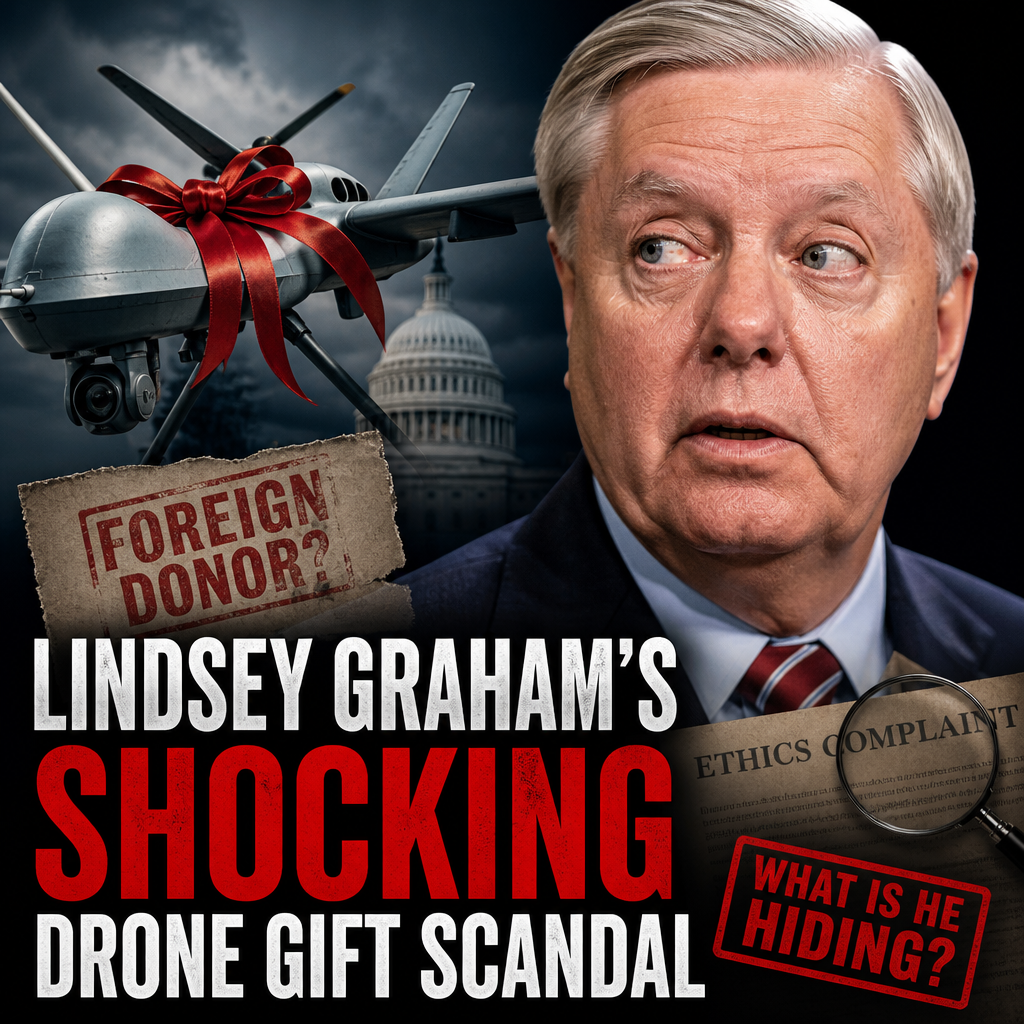
Lindsey Graham’s Shocking Drone Gift Scandal


Lindsey Graham’s shocking drone gift scandal has become another reminder of how quickly symbolic gestures in the Ukraine war can turn into political flashpoints in Washington and beyond.
At the center of the controversy is a simple-looking object with outsized meaning: a drone presented as a gift, then interpreted through very different political lenses depending on which outlet is telling the story. RT framed the episode as an embarrassing or provocative moment involving the U.S. senator and Ukrainian political messaging. Meanwhile, broader coverage from Al Jazeera and Sky News on the war in Ukraine, Western military aid, and the politics surrounding it suggests the deeper issue is not the drone itself, but what it represents: the blurred line between support, symbolism, and political theater.



Why the drone gift matters beyond the optics
The immediate reaction to any story involving a public figure like Lindsey Graham is often driven by the image rather than the policy. A drone handed over as a gift may sound minor, even odd, but in the context of the Ukraine war it carries real political weight. Drones are not neutral objects anymore. They are associated with surveillance, battlefield strategy, and, increasingly, the future of modern warfare.
That is why the controversy has traveled so quickly. Supporters of strong U.S. backing for Ukraine may see the gift as a symbolic acknowledgment of military solidarity. Critics, however, can interpret it as evidence of how normalized the conflict has become in elite political circles—so normalized that even lethal technology can be wrapped in ceremonial language.




RT’s framing leans heavily into that skepticism, emphasizing awkwardness and perceived contradiction. Other outlets, including Sky News and Al Jazeera in their broader war coverage, tend to place these moments within a wider story: Western leaders are still searching for the right balance between helping Ukraine defend itself and avoiding the appearance of escalating the conflict for political gain.
The political symbolism is doing most of the work
What makes the episode newsworthy is not only who received the gift, but what the gesture implies.
– For Ukraine’s allies, it can signal gratitude and urgency.
– For critics, it may look like performative politics.
– For undecided observers, it raises a harder question: when does support become spectacle?
That ambiguity matters. In a deeply polarized U.S. environment, Lindsey Graham is not just another senator; he is one of the most visible Republican voices on foreign policy and Ukraine. Any controversy involving him is likely to be filtered through domestic partisan debate as much as through foreign affairs.
What the coverage reveals about the wider Ukraine debate
The sources together show a familiar pattern: one event, multiple interpretations. RT tends to highlight inconsistency and embarrassment among Western politicians. Al Jazeera’s reporting on the broader conflict often focuses on humanitarian cost, geopolitical stakes, and the strain of prolonged war. Sky News typically centers the human and strategic dimensions while also tracking how battlefield developments affect political support in Europe and the U.S.
Taken together, those perspectives suggest that the drone story is a proxy for a much larger argument. Should Western leaders keep emphasizing military aid as the main path forward? Or are symbolic gestures and highly public alliances creating an atmosphere where policy is driven more by messaging than by realistic strategy?
There is no clean answer. Ukraine still needs weapons, funding, and diplomatic backing to defend itself. At the same time, the optics of public gifts, staged visits, and political applause can make that support look less like sober statecraft and more like a media performance. Both things can be true at once.
Three takeaways from the controversy
The scandal is worth watching for at least three reasons:
1. It exposes the fragility of political messaging.
What one side sees as solidarity, another sees as propaganda.
2. It reflects the normalization of war technology.
Drones are no longer abstract tools; they are symbols of a conflict that has reshaped global security.
3. It keeps Ukraine policy tied to domestic U.S. politics.
Graham’s role ensures that any controversy is immediately read through partisan and electoral lenses.
The result is a story that is bigger than the gift itself. It is about the difficulty of maintaining moral clarity in a war that has dragged on long enough to become politically routine, but not long enough for the stakes to feel any less serious.
A fair reading of the scandal
The most responsible conclusion is not that the drone gift proves corruption, nor that it is merely harmless theater. It is evidence of a political culture in which war, diplomacy, and image management now overlap so tightly that even a ceremonial object can trigger controversy.
A fair reading also requires caution. The most sensational version of the story may overstate what can be proven from the available reporting. It is possible to criticize the symbolism without claiming more than the facts support. That distinction matters, especially when sources bring strong editorial perspectives of their own.
In the end, the episode says less about the drone than it does about the political environment surrounding Ukraine. Western leaders are under pressure to show resolve, Ukrainian officials are trying to sustain international attention, and critics are looking for signs of hypocrisy or overreach. Lindsey Graham, because of his visibility and vocal support for Ukraine, lands squarely in the middle of that triangle.
That is why the story resonates. It is not just a scandal about a gift. It is a snapshot of a larger conflict over how the West talks about war, how it signals support, and how easily the language of solidarity can slide into something that looks, to many observers, uncomfortably performative.

























