Iran Launches Stunning Surprise Attack on US Bases


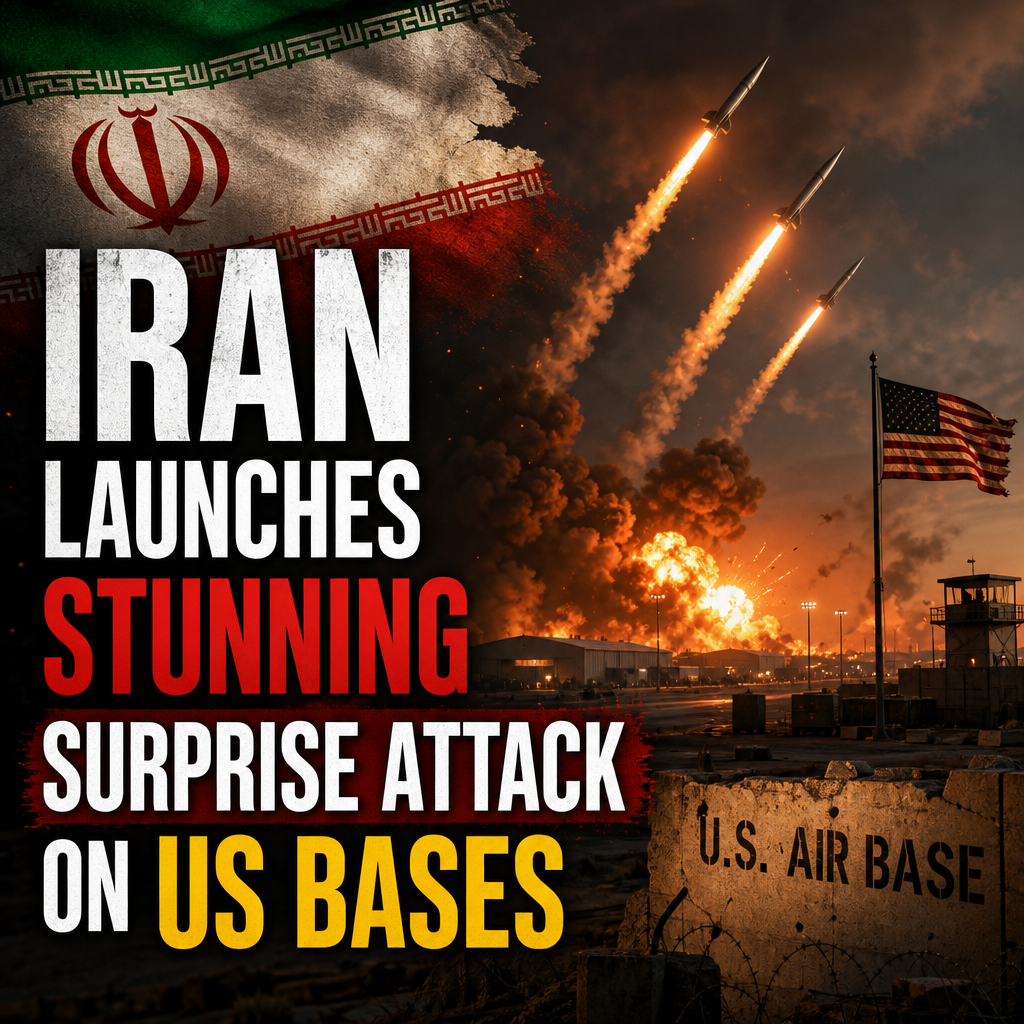
Iran launches surprise attack on US bases, and the reaction to it has once again exposed how quickly the Middle East’s shadow conflicts can spill into open confrontation.
What makes this episode so politically explosive is not just the strike itself, but the uncertainty around attribution, intent, and next steps. Some outlets framed the attack as a direct Iranian move, while others emphasized the role of Iran-aligned militias operating across Iraq, Syria, and Jordan. That distinction matters. A direct attack by Tehran would represent a major escalation; a strike carried out by a proxy network still raises the same strategic problem for Washington, but leaves more room for deniability and calibrated response.



The broad picture from the reporting is consistent: US forces in the region have become a frequent target amid rising anger over American support for Israel and the wider regional fallout from the Gaza war. What remains less certain is whether this latest strike signals a carefully measured warning, a miscalculated provocation, or the beginning of a new cycle of retaliation.
What the strike tells us about the regional balance
Across the coverage, one theme stands out: the attack was shocking less because it was unimaginable and more because it highlighted how exposed US bases remain in a crowded conflict zone. Sky News and Al Jazeera coverage of similar regional incidents has repeatedly shown that American installations are vulnerable to drones, rockets, and missiles launched from several directions, often by groups with overlapping political loyalties and military capabilities.




That is why analysts tend to focus on two questions after any such attack:
– Was this a direct Iranian operation, or carried out by a group aligned with Tehran?
– Was the goal to cause casualties, send a message, or force Washington into a broader response?
The answer is often complicated. Iran has long cultivated a network of allied militias that can pressure US forces without forcing Tehran to claim responsibility. RT’s framing leaned toward the idea of a dramatic surprise strike, while Al Jazeera’s more regional lens typically places these attacks within the wider pattern of proxy warfare and deterrence messaging. Sky News, meanwhile, has tended to emphasize the security implications for Western forces and the risk of escalation.
Taken together, the sources suggest an important reality: whether or not Iranian commanders ordered the strike directly, the attack fits Iran’s broader strategic posture. Tehran benefits when US troops feel under threat, because that pressure can be used to deter Washington from deeper involvement in the region. But that same pressure can also backfire if it produces a stronger US military response.
Iran launches surprise attack on US bases: direct war or proxy warning?
This is where the reporting becomes more nuanced. A headline that names Iran as the attacker may capture the shock value, but it can flatten the political complexity. In practice, Iran often operates through a spectrum of influence rather than simple command-and-control. That means the line between “Iran” and “Iran-backed forces” is not always easy to draw.
From a security standpoint, that ambiguity is part of the strategy. It gives Tehran leverage while allowing room to deny direct responsibility. From a journalistic standpoint, though, it also means audiences should be cautious about treating every attack linked to Iranian interests as proof of a formal state decision.
There are three plausible interpretations of the event:
1. A direct warning to the United States
If the attack was coordinated or sanctioned by Tehran, the message would be blunt: US military presence in the region remains a target, and escalation will be met with force.
2. A proxy action aimed at pressure, not war
More likely in many past cases, the strike could have been launched by an allied militia seeking to demonstrate resolve without triggering a direct Iranian-American war.
3. A dangerous miscalculation
Even if the attackers intended only symbolic pressure, the result could still be a serious escalation if US personnel were killed or if Washington decides the attack crossed a red line.
Al Jazeera’s regional reporting has often stressed the human and diplomatic toll of such incidents, especially for Iraq and Jordan, which find themselves caught between powerful external actors. That perspective is important because these countries are not just backdrops; they are sovereign states struggling to prevent their territory from becoming a battlefield.
The US response will matter more than the headline
The most important part of any attack like this is often what happens next. Washington has several options, each with different risks:
– Limited retaliation against militia sites or weapons depots
– Diplomatic pressure on Iran and regional governments to curb attacks
– Force protection measures such as base hardening and troop repositioning
– A broader military response if American casualties are significant
Sky News and other international outlets have consistently highlighted that the US faces a difficult balancing act. Respond too weakly, and deterrence erodes. Respond too aggressively, and the conflict could widen into something far more dangerous.
That tension is why many analysts see the current phase as a classic deterrence test. Iran and its allies appear willing to push boundaries, but not necessarily to ignite a full-scale war. The United States, for its part, wants to defend its forces without becoming trapped in a wider regional conflict. Those goals are compatible in theory, but in practice they clash constantly.
The bigger lesson here is that the Middle East remains governed by a fragile logic of managed escalation. Both sides send messages through force, but neither side fully controls how the other interprets them. That makes every strike inherently unstable.
A fair reading of the event
The most responsible conclusion is also the least dramatic one: this was a serious attack with potentially wide consequences, but the exact meaning depends on facts that may still be contested. It is fair to say Iran’s strategic ecosystem was involved, whether directly or through allied forces. It is also fair to say the United States will likely treat the attack as part of a broader campaign against its regional footprint.
What is less fair is reducing the event to a simple headline about one country “launching” an attack without acknowledging the proxy networks, regional grievances, and strategic calculations behind it. In a region where deniability is often a weapon, precision matters.
For now, the most realistic view is that the strike reflects a dangerous but familiar pattern: Iran-linked forces testing US resolve, Washington weighing retaliation, and neighboring states hoping they do not become the next target. The headline may promise clarity, but the situation itself is far messier—and far more volatile—than any single frame can capture.