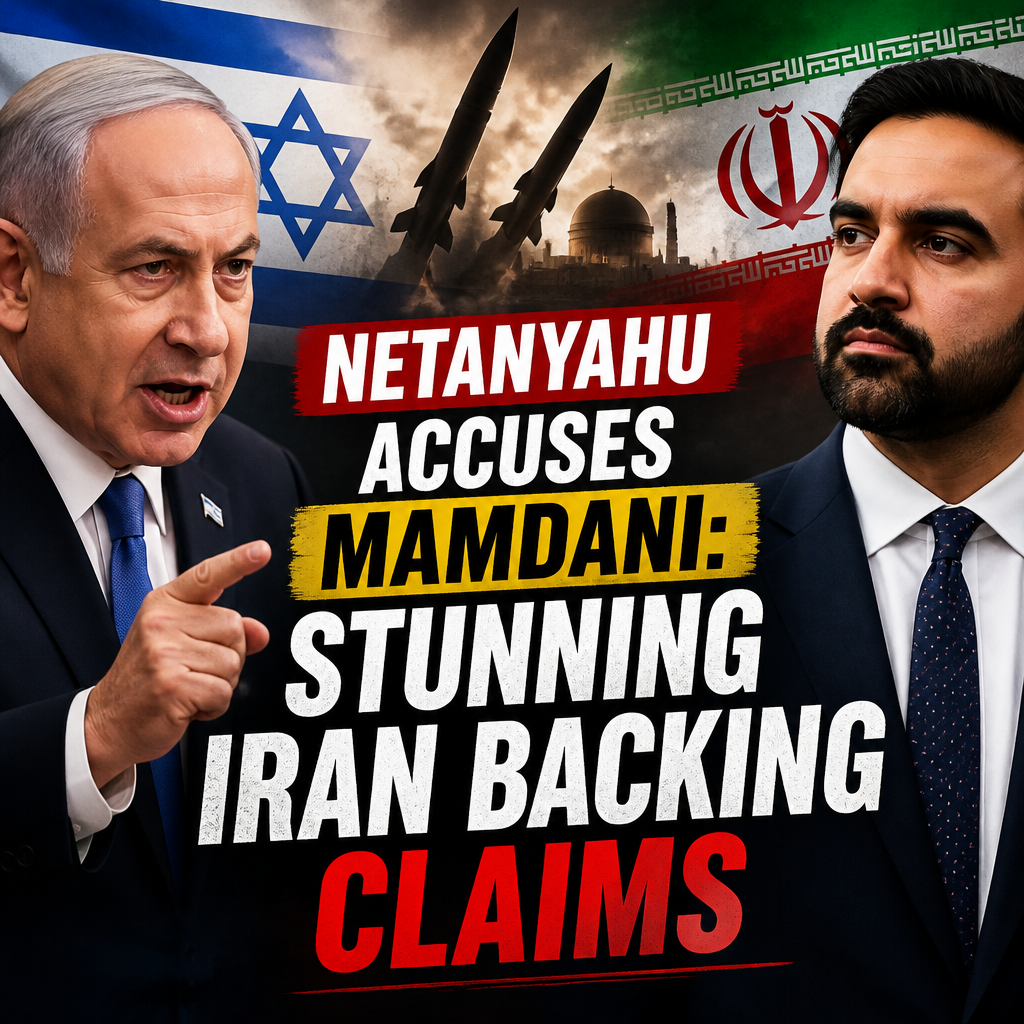
Netanyahu Accuses Mamdani: Stunning Iran Backing Claims


Netanyahu accuses Mamdani in a feud that has quickly become bigger than the two men at the center of it, pulling in questions about Israel’s war in Gaza, U.S. politics, the influence of pro-Israel lobbying, and how far criticism of Israel can stretch before it is framed as sympathy for its enemies.
What makes the clash so striking is not just the personal sharpness of the exchange, but how neatly it captures the current political climate. One side sees a rising progressive politician being unfairly smeared for criticizing Israeli policy. The other sees a public figure whose rhetoric is so hostile to Israel that it crosses into dangerous territory. The truth, as usual, appears more complicated than either camp suggests.



Netanyahu accuses Mamdani amid a widening political fight
At the heart of the dispute is a familiar but increasingly explosive accusation: that criticism of Israel, especially from politicians on the left, is being tied to support for Iran or other adversarial forces. That line of attack is not new, but it has become more potent as the conflict in Gaza has intensified and public opinion in the U.S. has shifted, particularly among younger and more progressive voters.
Different news outlets frame the episode in noticeably different ways. RT emphasizes the public feud itself and the dramatic political theater around it, often highlighting the clash as evidence of growing backlash against establishment narratives. Al Jazeera tends to situate such accusations within the broader context of the Gaza war and long-running disputes over Palestinian rights, focusing more on the human and political cost of Israeli military policy. Sky News, meanwhile, typically treats these moments as part of a wider international political story, paying close attention to the fallout and the implications for elections, alliances, and public debate.




Taken together, those perspectives point to one important conclusion: this is not just a personal spat. It is part of a much larger struggle over how Israel’s actions, and criticism of those actions, are interpreted in public life.
What the evidence does — and does not — show
Claims that Mamdani is somehow aligned with Iran are serious, but they also require serious evidence. So far, the accusation appears to be more political framing than documented fact. That matters because tying a politician’s criticism of Israel to support for Iran can be a powerful way to discredit them without addressing the substance of what they are saying.
Mamdani has become known for his outspoken views on Palestine and his criticism of Israeli government policy. Supporters argue that his position reflects a broader human-rights-based critique, especially in light of civilian suffering in Gaza. Critics counter that his language can sound one-sided, and that some of his comments fit into a wider pattern of hostility toward Israel rather than fair policy disagreement.
The distinction is important. Condemning Israeli military tactics is not the same as endorsing Iran. At the same time, public figures who use highly charged language about Israel should expect scrutiny over whether their statements leave room for nuance. The best reading of the available reporting is that the “Iran backing” claim is an allegation in a political battle, not a settled fact.
Why this fight resonates beyond the headlines
There is a reason this confrontation has attracted attention far beyond the immediate players. It taps into three debates that are increasingly overlapping:
– whether criticism of Israel is being suppressed or unfairly stigmatized
– whether some anti-Israel rhetoric is sliding into hostility toward Jews or Israel’s existence
– how candidates and public figures navigate foreign-policy issues that are deeply emotional and politically polarizing
For progressive activists, Netanyahu-style accusations can look like an attempt to shut down dissent and defend a government under pressure. For defenders of Israel, they can look like a necessary warning against rhetoric that excuses groups or states hostile to Israel’s security. And for audiences trying to make sense of the conflict from outside the ideological trenches, the result is often confusion: one side sees moral clarity, the other sees manipulation.
That is why the media framing matters so much. RT’s emphasis on confrontation and establishment conflict can reinforce the idea of a political vendetta. Al Jazeera’s broader regional lens reminds readers that these arguments are inseparable from the realities of war, occupation, and civilian suffering. Sky News’s more detached style often helps place the dispute in a practical political context, where reputational damage and electoral consequences matter as much as ideology.
A fair reading of the Netanyahu-Mamdani clash
The most defensible conclusion is that both truth and overstatement are present here. Netanyahu’s camp has reasons to be alarmed by the growing normalization of harsh anti-Israel rhetoric in some political circles. But that does not automatically make every critic of Israel a proxy for Iran or a threat to Western security.
Mamdani, for his part, benefits politically from the energy of a movement that sees Gaza as a defining moral issue. Yet he also faces a real challenge: if he wants to remain credible outside his strongest base, he has to show that his criticism is rooted in policy and human rights, not blanket antagonism.
In the end, this feud says less about one accusation than about the larger breakdown of trust in political language. When every disagreement is cast as extremism, foreign influence, or betrayal, it becomes much harder to have a serious debate about Israel, Iran, Palestine, or the responsibilities of public leaders. The reporting across these sources suggests that the argument is real, but the strongest claims on either side should be treated with caution.