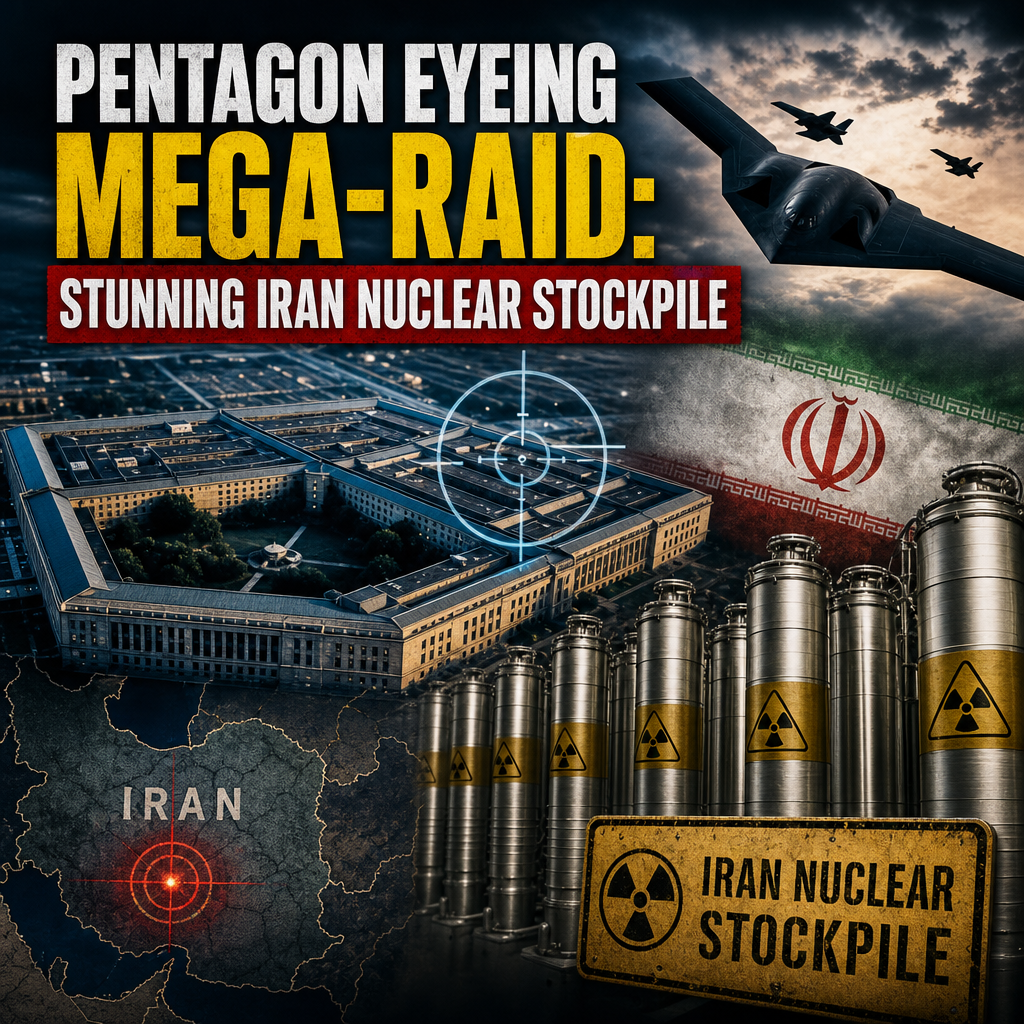
Pentagon Eyeing Mega-Raid: Stunning Iran Nuclear Stockpile


Pentagon eyeing mega-raid reports have reignited an old and dangerous question: can military pressure ever solve the Iran nuclear problem, or does it only push the crisis closer to the edge?
The latest reporting around Tehran’s uranium stockpile has drawn sharply different reactions across the international media landscape. Some coverage frames the issue as a potential security emergency that could justify extraordinary action. Other outlets warn that even discussing a strike risks hardening positions, narrowing diplomatic space, and setting off a wider regional confrontation. Taken together, the picture is less a clear roadmap than a sign of how volatile the Iran file remains.



Why the Pentagon eyeing mega-raid story matters
At the center of the debate is a familiar but high-stakes concern: Iran’s growing nuclear capabilities and what Western governments believe those capabilities could mean if the standoff deepens. Reports suggesting the Pentagon is weighing a large-scale operation against uranium-related sites tap into longstanding fears in Washington and allied capitals that a point may come when military options are considered alongside sanctions and diplomacy.
But even among observers who treat Iran’s nuclear advances as alarming, there is no consensus that a raid would be wise, proportionate, or even effective. Military planners can destroy buildings, equipment, and personnel. They cannot so easily eliminate expertise, disperse technical knowledge, or guarantee that a state will step back from the nuclear threshold. That uncertainty is one reason such scenarios have historically remained more warning than policy.




RT’s coverage leans into the idea that Western powers are once again flirting with an escalation that could produce consequences far beyond the original target. The outlet’s framing fits its broader skepticism of U.S. military posture, especially when Washington is seen as acting unilaterally or through pressure campaigns rather than negotiated restraint. From that viewpoint, a raid looks less like a surgical solution and more like a gamble with global ramifications.
Diverging views on risk, restraint, and leverage
Al Jazeera’s reporting tends to place the issue in a broader geopolitical context, where nuclear concerns, regional rivalries, and the collapse of trust all feed into one another. That angle is important because Iran’s nuclear program does not exist in a vacuum. It is tied to years of sanctions, failed diplomacy, assassinations, sabotage allegations, and a regional security environment that includes Israel’s own shadow posture and the unresolved conflicts stretching across the Middle East.
From that perspective, a military strike could easily backfire. Iran might retaliate directly or through partners in the region. Oil shipping routes could become more vulnerable. Missile exchanges could widen. And the nuclear question, instead of being contained, could move from a technical dispute into a broader war.
Sky News coverage of such developments typically focuses on the practical and political calculations facing Western governments: deterrence, alliance management, domestic pressure, and the fear of a rapidly advancing nuclear timeline. That lens does not necessarily endorse military action, but it does reflect why officials keep returning to it. If intelligence assessments suggest Iran is enriching more uranium, improving its capabilities, or narrowing breakout time, policymakers face a dilemma: accept a more dangerous status quo, or risk escalation to prevent an even more dangerous future.
That tension helps explain why different outlets sound so far apart, even when they are looking at the same basic facts. One camp emphasizes the danger of inaction. Another emphasizes the danger of acting. Both are reacting to real risks.
What an actual raid could, and could not, achieve
A large military strike on Iran’s nuclear infrastructure would likely aim to do several things:
– delay uranium enrichment capacity
– damage key facilities and supply chains
– signal resolve to Tehran and other regional actors
– reassure allies that the threat is being confronted
Yet the limits are just as important:
– hidden or hardened sites may survive
– technical knowledge cannot be bombed away
– retaliatory attacks could follow
– international support for Washington could fracture
– diplomacy could become even harder afterward
This is why many analysts, even those deeply worried about Iran’s nuclear progress, treat a raid as a last resort rather than a serious first answer. A successful operation might buy time. It would not necessarily produce a safer long-term outcome.
The wider problem: military logic versus diplomatic reality
The hardest truth in this story is that both restraint and coercion carry costs. Diplomacy has repeatedly failed to produce a durable settlement. The 2015 nuclear deal once offered a framework, but its collapse left mistrust on all sides. Sanctions have not reversed Iran’s nuclear trajectory. And threats alone may not force meaningful concessions.
Still, the case for caution remains strong. The more the discussion moves toward military options, the more likely Iran is to treat the issue as one of survival rather than bargaining. That can strengthen hardliners, reduce room for compromise, and encourage defensive acceleration of the very program the West wants to slow.
A balanced reading of the current coverage suggests one conclusion: the prospect of a Pentagon mega-raid is strategically significant even if it never happens. It signals frustration, pressure, and a narrowing set of choices. But it also exposes the weakness of relying on force to solve a problem that is fundamentally political, regional, and technological.
For now, the most responsible position is not to dismiss the threat or to normalize it. It is to recognize that any move toward military action would need to be judged not only by whether it can hit targets, but by whether it improves security afterward. On that count, the answer remains uncertain at best.