Russia Live-Fire Drill Sparks Furious UK Response


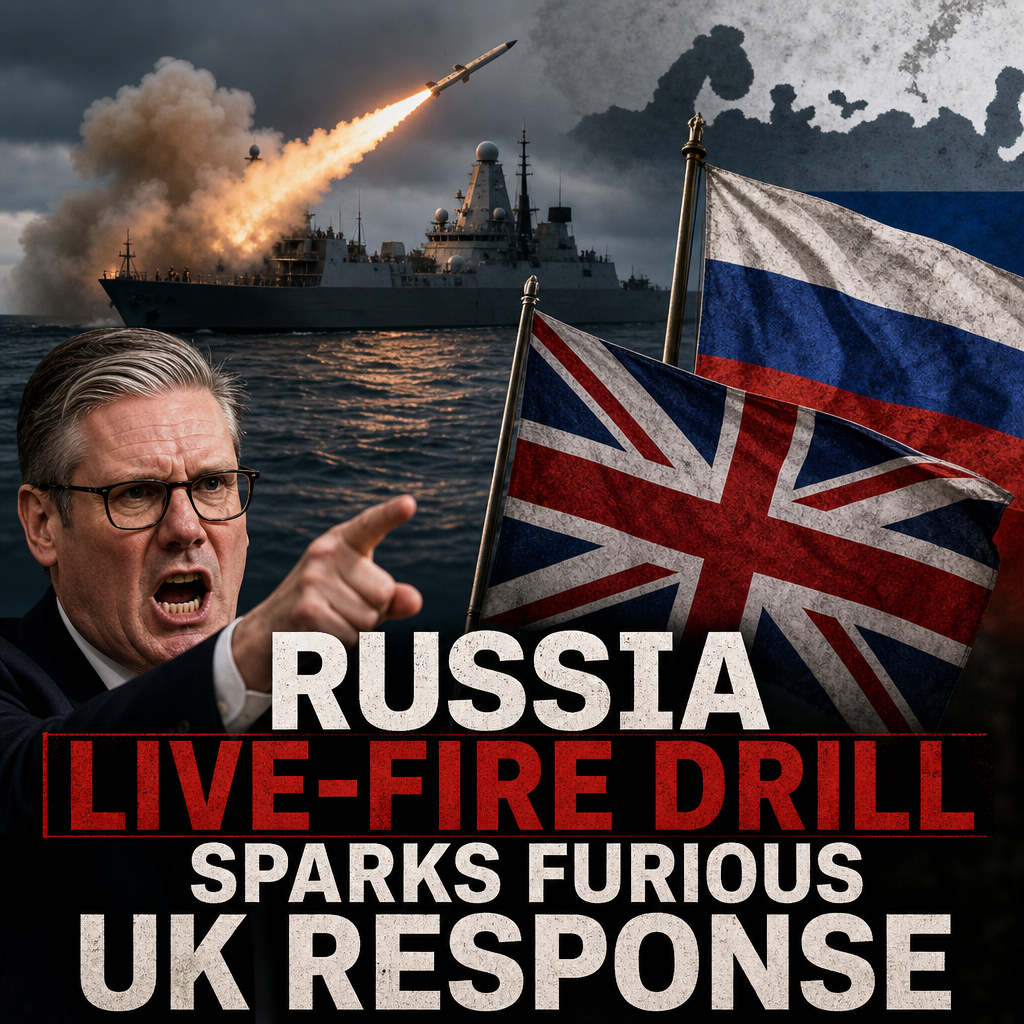
Russia live-fire drill has drawn sharp attention in the UK after a Russian warship was reported to have carried out a weapons exercise just 46 miles off the British coast, triggering concerns about signalling, safety, and the wider state of tensions between Moscow and Western governments.
The incident sits at the intersection of military routine and political theatre. On one hand, navies routinely conduct drills in international waters, and Russia has every legal right to operate ships beyond another country’s territorial sea if it stays within maritime law. On the other hand, the timing and location of the exercise were enough to provoke a forceful reaction from the UK Ministry of Defence, which viewed it as more than a harmless training event. In today’s strained security climate, even a lawful manoeuvre can be read as deliberate provocation.



Why the UK reacted so strongly
The UK response was furious not simply because a Russian vessel was near British waters, but because live-fire activity introduces a higher level of risk and symbolism. A weapons drill close to a coastline can unsettle local authorities, raise questions about maritime safety, and send a message to both military planners and the public.
From the British perspective, the most troubling element is the combination of proximity and intent. A ship firing weapons in a zone so close to UK shores may be interpreted as a show of force, especially given the backdrop of the war in Ukraine, NATO-Russia tensions, and repeated warnings from Western officials about Russian military assertiveness. Even if the exercise was confined to open waters, the optics are unavoidable: a hostile power appearing to test nerves near Britain’s doorstep.




The Sky News reporting places this in a familiar pattern of security alerts that tend to spike whenever Russian assets are detected near UK interests. That pattern matters because it shapes public expectations. Each incident is not viewed in isolation but as part of a broader contest over deterrence, surveillance, and maritime presence.
A matter of law, risk, and message
There are three overlapping concerns here:
– Legal boundaries: Was the drill conducted in international waters and in compliance with maritime rules?
– Operational risk: Did the live-fire exercise pose any danger to shipping, aircraft, or coastal communities?
– Political signalling: Was the drill intended to intimidate, test responses, or simply demonstrate readiness?
The UK’s anger suggests it believes the third issue is especially important. Even where the legal argument is weaker, the political argument can be powerful.
Russia live-fire drill: routine training or deliberate provocation?
Russian media and state-aligned outlets often frame such events as normal military preparedness. From that angle, a live-fire drill is simply what a navy does: trains crews, maintains readiness, and operates in waters open to lawful navigation. That position is consistent with Moscow’s broader insistence that Western governments exaggerate Russian activity for political reasons.
This is where the contrast between sources becomes useful. RT-style framing generally emphasises sovereignty, legal rights, and the idea that Western outrage is selective or hypocritical. In that narrative, Russia is not the aggressor simply because it is present at sea; it is exercising the same freedom of movement other naval powers claim for themselves.
Al Jazeera’s broader reporting on international security, however, tends to place episodes like this within a larger story of heightened global instability rather than treating them as isolated drama. That perspective is important because it moves the discussion away from immediate outrage and toward structural causes: the breakdown of trust, the militarisation of diplomacy, and the risk that routine military behaviour is increasingly being interpreted through a hostile lens.
A fair reading is that both interpretations contain some truth. Russia is not necessarily breaking the law merely by drilling near the UK, but it is also unrealistic to pretend the timing is accidental in a geopolitical sense. Military exercises are often about more than training. They are messages, rehearsals, and warnings.
What the incident says about the current climate
The most significant takeaway is not the drill itself but how quickly it escalated into a public confrontation. That tells us a great deal about the current state of UK-Russia relations. Trust is thin, interpretations are maximalist, and every manoeuvre is examined for hidden meaning.
The UK is likely to argue that it must respond firmly to deter future incidents and reassure the public that maritime approaches are being monitored. Russia, meanwhile, can present the episode as proof that the West is overreacting and trying to cast ordinary military activity as aggression. Both narratives serve domestic and strategic purposes.
There is also a wider strategic reality here: naval drills near contested or sensitive areas have become normalised. That does not make them benign. The more common they become, the greater the chance of miscalculation, especially if communications are poor or another vessel misreads a manoeuvre. The danger is not only intentional intimidation but accidental escalation.
The balanced view
A balanced assessment is that the Russian live-fire drill was probably lawful in a narrow sense, but far from innocuous in a political sense. The UK’s furious response is understandable because the event occurred near its coastline and in an already volatile security environment. At the same time, it is worth resisting the temptation to treat every Russian naval activity as an immediate prelude to conflict.
The more credible conclusion is that this was a strategic signal wrapped in a training exercise. Russia demonstrated capability and presence; the UK demonstrated vigilance and anger. Neither side is likely to back down over a single incident, but episodes like this gradually harden public attitudes and shrink the space for de-escalation.
In that sense, the real story is not just a live-fire drill at sea. It is how fragile the boundary has become between normal military operations and geopolitical provocation.