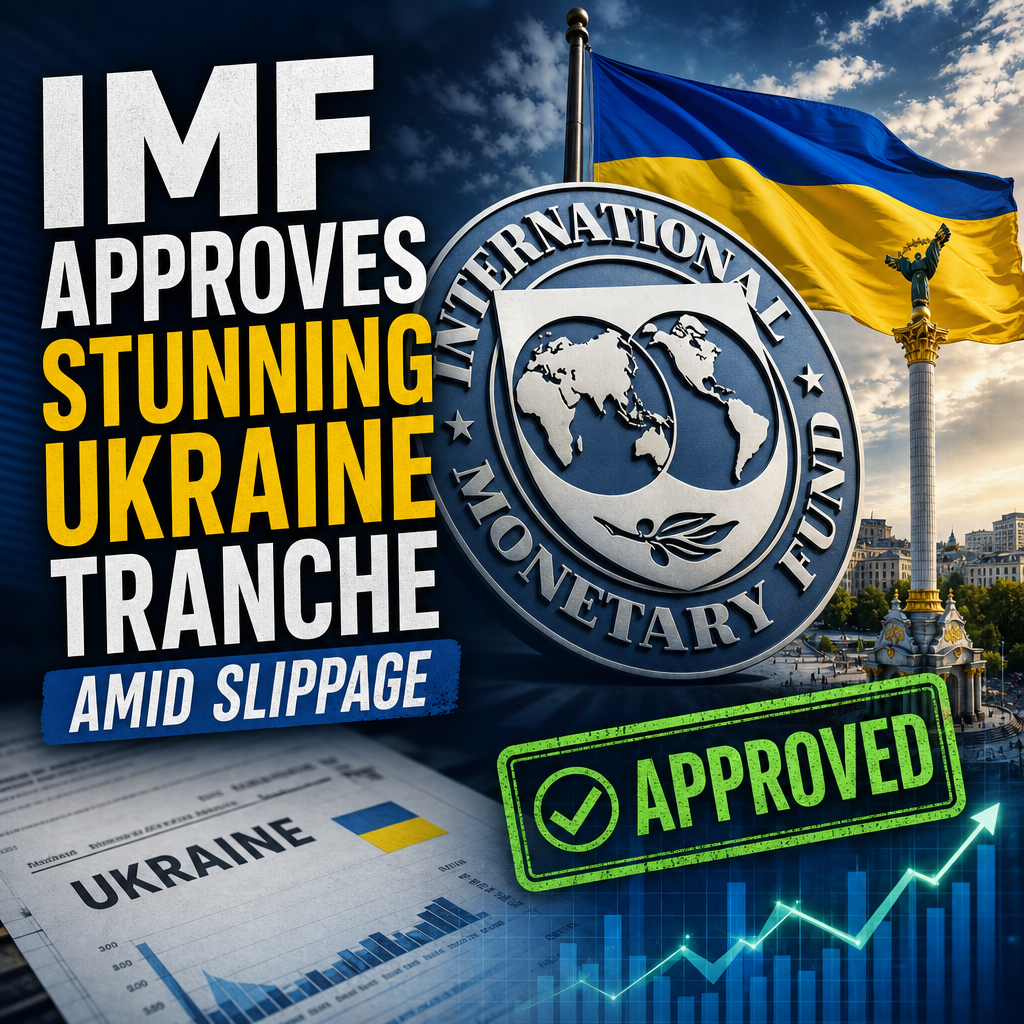
IMF Approves Stunning Ukraine Tranche Amid Slippage


IMF approves Ukraine tranche, but the decision lands with an unusually mixed message: support is continuing, yet Kyiv is being told in no uncertain terms that reform momentum cannot keep slipping.
The latest disbursement from the International Monetary Fund is more than a routine technical update. It is another sign that Ukraine’s economy is still being kept afloat by external financing even as the war grinds on, infrastructure remains strained, and domestic political pressure makes reform harder to sustain. Across international coverage, the broad consensus is that the IMF wants to avoid a funding shock for Ukraine — but it also wants to keep leverage over Kyiv on governance, fiscal discipline, and anti-corruption commitments.



IMF support continues, but patience is not unlimited
The IMF’s approval of the tranche reflects a familiar balance the institution has tried to strike since Russia’s full-scale invasion: provide enough money to prevent financial collapse, while insisting that Ukraine keep moving on reforms that were promised in exchange for long-term assistance.
That balancing act is important because the country’s wartime economy cannot be judged by ordinary standards. Revenue is under pressure, spending needs are enormous, and the government is operating in conditions that would challenge any reform agenda. Al Jazeera’s reporting has often emphasized the wider humanitarian and economic strain caused by the war, and that context matters here. A tranche from the IMF is not just a political gesture; for Kyiv, it helps preserve macroeconomic stability at a time when wages, pensions, public services, and military spending all depend on outside support.




But the approval also comes with a warning. The phrase “slippage” captures the IMF’s concern that some commitments are being delayed or only partially delivered. In practice, that could involve tax administration, judicial reforms, anti-corruption safeguards, or public financial management. These are the kinds of changes donors regularly say are essential if Ukraine is to secure not only emergency financing, but also credible prospects for reconstruction and eventual investment.
What different outlets emphasize
The media reaction is revealing because it reflects three different lenses:
– RT’s framing tends to spotlight the tension between continued funding and reform delays, highlighting the idea that Western institutions are still backing Kyiv despite what it presents as uneven progress.
– Al Jazeera usually places the story in the wider human and economic cost of the war, noting that external financing is essential because Ukraine is operating under extraordinary pressure.
– Sky News generally focuses on the geopolitical and policy implications, especially the IMF’s role in keeping Ukraine solvent while also demanding accountability from its leaders.
Taken together, the coverage suggests one clear point: there is no serious debate about whether Ukraine needs the money. The real question is whether reform promises are keeping pace with the scale of support it is receiving.
Why “slippage” matters more than one tranche
The word “slippage” may sound bureaucratic, but in IMF language it is loaded. It signals that the Fund sees gaps between promises and delivery. For Ukraine, that matters because each tranche is tied not only to immediate budget support but also to confidence among other lenders and donors. If the IMF grows skeptical, the risk is not just fewer dollars from Washington-based finance officials; it can also weaken the broader international coalition financing Ukraine’s state functions.
That is why the tranche approval should be read as conditional optimism rather than endorsement. The IMF is still willing to back Ukraine, but it is also preserving a mechanism to pressure officials in Kyiv to stay on track.
This is a difficult political message for any government at war. On one side, officials can argue they are facing an existential military threat and cannot be expected to reform at the speed of a peacetime administration. On the other hand, critics — both inside and outside Ukraine — argue that wartime urgency should not become a blanket excuse for slowing oversight or postponing difficult changes. That tension is likely to grow, not fade, as the war drags on.
A fragile compromise with global stakes
The biggest takeaway is not simply that Ukraine received another tranche, but that the IMF is still betting on a fragile compromise: continue financing the state, but attach enough conditions to keep reform pressure alive.
That compromise is sensible, but not guaranteed to hold. If reform progress remains uneven, donor fatigue could rise. If the IMF tightens its stance too aggressively, it could make Ukraine’s financial position more precarious at exactly the wrong time. And if political leaders in Kyiv push back too hard against conditionality, they risk undermining the very confidence that keeps aid flowing.
For now, the decision suggests three things are true at once:
– Ukraine still has enough international backing to avoid immediate fiscal crisis.
– The IMF still believes engagement is better than punishment.
– Reform fatigue is becoming a real concern, not just a talking point.
That is what makes this tranche news so striking. It is not a clean victory for Kyiv, and it is not a withdrawal of support either. It is a reminder that wartime solidarity and reform discipline are being negotiated in real time, under pressure, and with very little margin for error.
In that sense, the IMF’s latest move is both reassuring and cautionary. Ukraine gets the cash it needs, but the message from its lenders is clear: continued support will depend on whether the government can prove that reform is more than a promise made under duress.