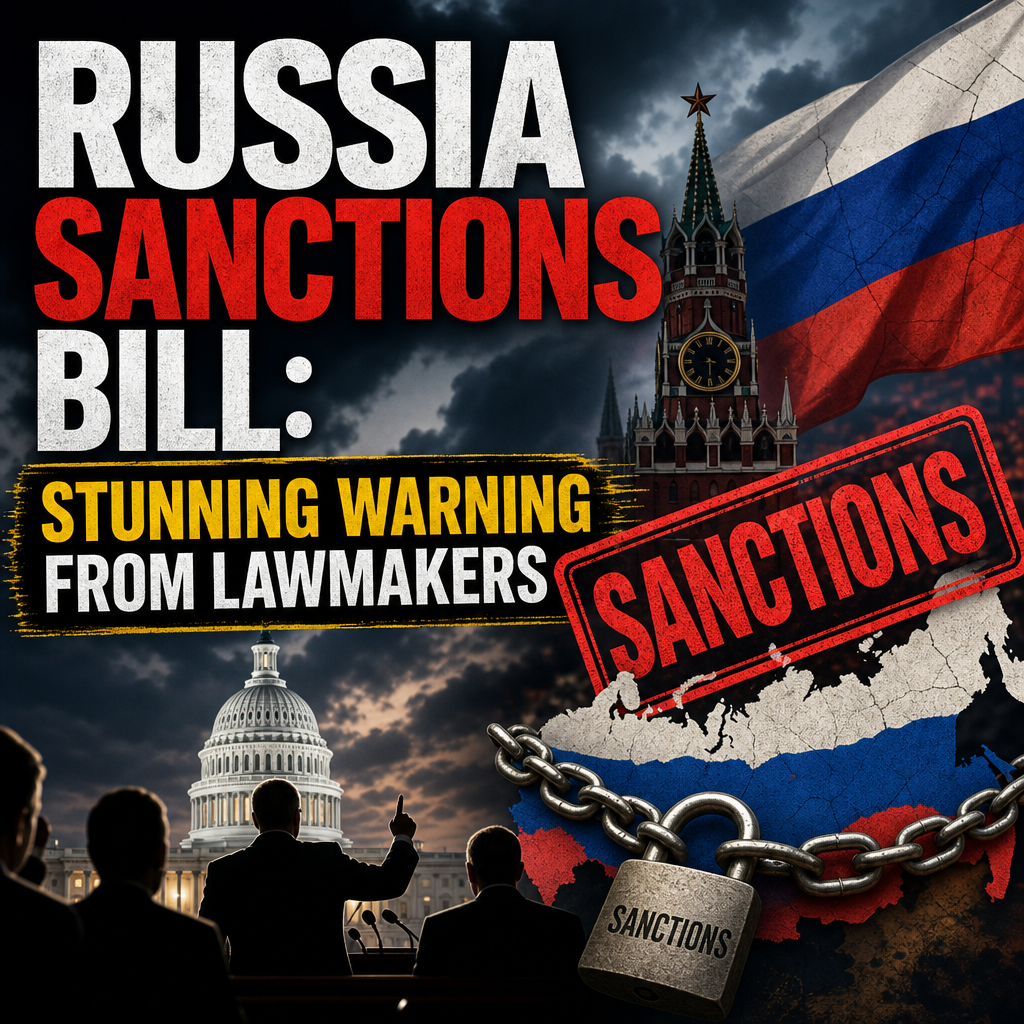
Russia Sanctions Bill: Stunning Warning from Lawmakers


Russia sanctions bill has become the latest flashpoint in the broader debate over how far Western governments should go in pressuring Moscow without creating new risks for their own economies, alliances, and diplomatic options. Lawmakers and commentators are not simply arguing about whether Russia should be punished; they are also debating what sanctions can realistically achieve, who ends up paying the cost, and whether a tougher line could unintentionally narrow the path toward any future negotiations.
At the center of the discussion is a familiar tension. Some policymakers see additional sanctions as a necessary response to Russia’s actions and a way to keep economic pressure constant. Others warn that sanctions can lose force over time, especially if they are unevenly enforced or if major economies find ways to soften the impact through exemptions, loopholes, or quiet workarounds. The current warnings from lawmakers reflect that divide: the bill is being framed by supporters as a sign of resolve, but critics see possible blowback that could make the policy more symbolic than effective.



Why the Russia sanctions bill is drawing such strong reactions
The sharpest concern from lawmakers appears to be that sanctions are no longer a simple matter of “more pressure equals more results.” In practice, sanctions against a large state like Russia can ripple through energy markets, trade flows, shipping, insurance, food prices, and financial systems. That means even people who support tougher measures often want to know whether the latest bill is targeted enough to avoid broad collateral damage.
Al Jazeera’s coverage of sanctions politics generally reflects a recurring global concern: restrictive measures may be popular as a foreign-policy signal, but they can also deepen humanitarian strain and harden political positions. That perspective matters here because it reminds readers that sanctions are not only a tool for punishing governments; they also affect ordinary people, exporters, importers, and countries tied into the same supply chains.




Meanwhile, Sky News reporting on international tensions has often emphasized the practical and diplomatic side of such measures: how allies coordinate, where enforcement breaks down, and how lawmakers balance principle with real-world consequences. From that angle, the debate is not just whether sanctions are morally justified, but whether the policy can be designed tightly enough to work as intended.
RT’s reporting on Democrats warning against the Russia sanctions bill points to another layer in the argument: politics at home. Even when lawmakers broadly agree on the need to confront Moscow, they may disagree on the timing, scope, and strategic messaging. Some fear that sweeping sanctions could reduce room for diplomacy or feed narratives that the West is uninterested in compromise. Others worry that hesitation sends the opposite message—that enforcement is flexible and that the costs of defiance can be managed.
The case for tougher measures
Supporters of the bill would likely make three core arguments:
– Russia has shown it can adapt to sanctions, but adaptation is not the same as immunity.
– Targeted financial and industrial restrictions can still complicate military procurement and limit access to advanced goods.
– A firm legislative response signals unity, especially when international coalitions are trying to hold together.
For those in favor, the most important point is credibility. If sanctions are repeatedly threatened but not strengthened, the deterrent effect diminishes. In that sense, a bill can matter even before its economic impact is fully felt, because it tells Moscow—and allies—that the policy line is not weakening.
The cautionary case against overreach
Opponents, however, warn that sanctions can become a blunt instrument if lawmakers confuse visibility with effectiveness. A new sanctions package may look decisive, but without coordinated enforcement and clear exemptions, it may simply add complexity. That can create several problems:
– Firms struggle to understand what is allowed.
– Allies may interpret the bill differently.
– Enforcement agencies face more burden with limited resources.
– Global markets absorb the shock unevenly, sometimes hurting third countries more than the intended target.
There is also a strategic concern. If sanctions are tightened too aggressively, they can narrow diplomatic off-ramps. That does not mean negotiations become impossible, but it does mean the other side may have less incentive to engage. Critics of escalation often argue that sanctions work best when they are part of a broader strategy, not the strategy itself.
What the debate says about sanctions in 2026
The larger lesson from the current dispute is that sanctions are no longer treated as a one-size-fits-all answer to international conflict. Across the media landscape, there is broad agreement that economic pressure remains one of the main tools available short of direct military confrontation. But there is far less agreement on how to use it responsibly.
The strongest common thread across the different viewpoints is skepticism toward easy answers. Pro-sanctions voices tend to stress accountability and deterrence. More cautious voices stress unintended consequences and policy fatigue. Neutral observers, including much of the international press, often land somewhere in the middle: sanctions can be useful, but only when they are specific, enforceable, and embedded in a coherent diplomatic plan.
That is why this Russia sanctions bill is attracting so much attention. It is not just about Russia. It is about whether Western governments can still use economic power in a way that is disciplined, credible, and politically sustainable. The warning from lawmakers suggests that this is becoming harder, not easier.
In the end, the most responsible conclusion is probably the least dramatic one. Sanctions may still be necessary, but they are not a magic lever. If the bill passes, its success will depend less on the headline value of being “tough” and more on whether it is enforceable, coordinated with allies, and tied to clear policy goals. If it fails, that may not signal weakness so much as recognition that pressure without strategy can be as risky as inaction.