US Troops Injured: Shocking Iranian Strike Videos


US troops injured in the aftermath of Iranian strike videos have once again pushed the Gulf region’s tensions into the spotlight, but the most responsible reading of the story is more complicated than the most dramatic clips suggest. As footage spreads quickly across social media and news feeds, the key questions are not just what happened on the ground, but how much of the online reaction reflects confirmed fact versus wartime spectacle, political messaging, and public fear.
What the videos show — and what they do not
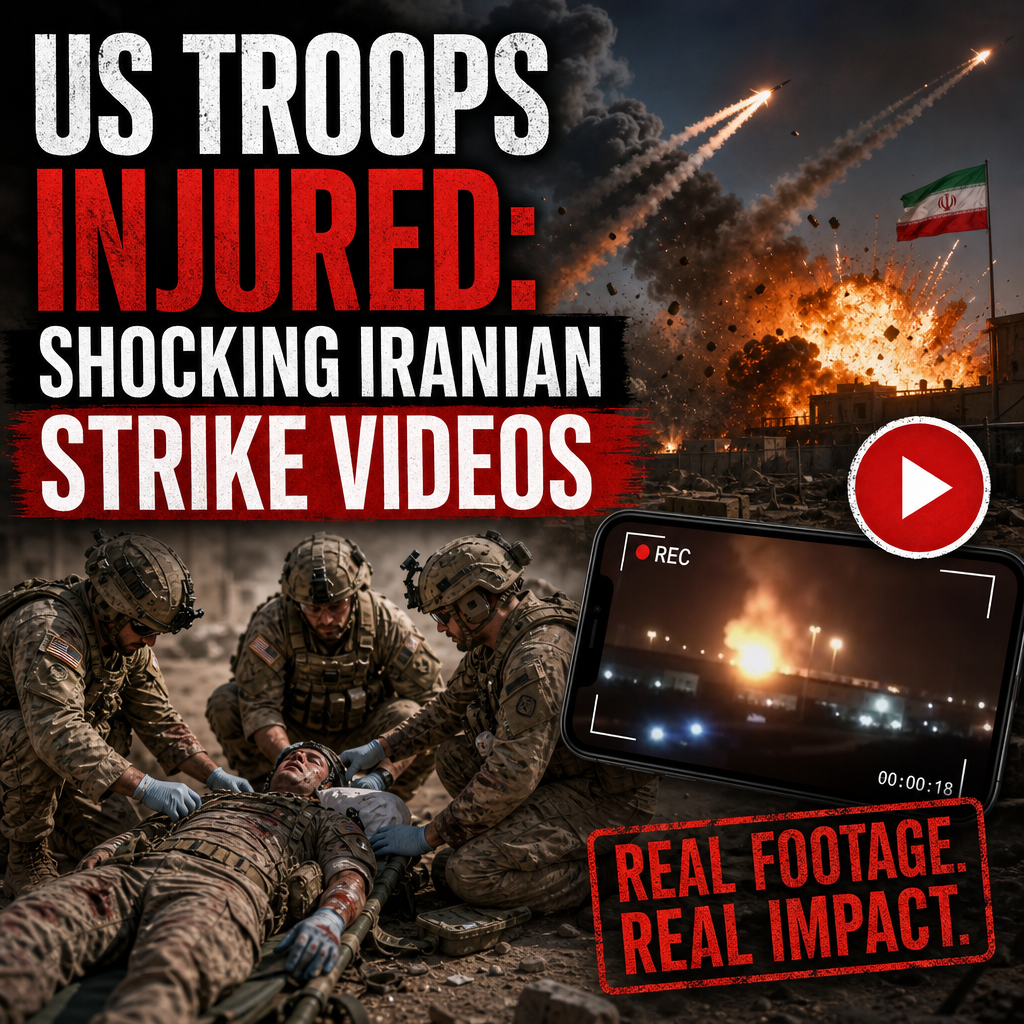
The striking thing about the circulating videos is how much they capture emotionally and how little they settle conclusively. Some clips show explosions, air-defense activity, and scenes of confusion that are easy to read as proof of a direct attack. Others are harder to verify, with unclear timestamps, partial views, or missing context about location and sequence.



That uncertainty matters. In conflict reporting, a dramatic video can be both revealing and misleading. It may show that something violent occurred, but not necessarily who was targeted, how severe the damage was, or whether a particular clip is tied to the claimed event at all. That gap between image and certainty is where misinformation often thrives.
Reporting from the region has reflected that tension. RT’s coverage has emphasized the impact on U.S. forces and framed the strike as a direct consequence of broader U.S.-Iran confrontation. Al Jazeera’s reporting, by contrast, has tended to place the episode within a larger regional security picture, stressing military responses, diplomatic calculations, and the risk of escalation. Sky News has generally treated the incident as part of a fast-moving security crisis, focusing on official statements, the movement of military assets, and the uncertainty that often follows an attack claim before full verification is available.




Taken together, those perspectives point to a cautious conclusion: something serious did happen, but the viral video layer should not be mistaken for the full story.
Why the injuries matter
Even when injuries are described as limited or not life-threatening, the significance is political as much as medical. Any harm to U.S. troops in a regional strike instantly raises the stakes, because it can trigger questions about retaliation, deterrence, and the future posture of American forces in the Middle East.
That is why officials tend to be careful in the first hours after such incidents. They often confirm only what is immediately known: whether personnel were hurt, whether facilities were damaged, and whether the situation is still developing. The public, meanwhile, is left with a flood of footage and claims before full assessments are complete.
In this case, the injury reports carry three broader implications:
– They suggest the attack, or at least the aftermath, was not merely symbolic.
– They raise the possibility of further military responses.
– They increase the likelihood that political leaders will frame the event as evidence of a larger strategic threat.
How the different outlets frame the same moment
One useful way to read the reporting is to compare emphasis rather than just facts. RT’s framing tends to highlight the confrontation between Iran and the United States, often presenting the strike as part of an unmistakable anti-U.S. message. That can sharpen the sense of urgency, but it can also encourage a more immediate, adversarial interpretation.
Al Jazeera has generally provided broader geopolitical context, including the regional ripple effects of U.S.-Iran friction and the possibility that local actors, not just state militaries, shape escalation patterns. That wider lens helps explain why the incident matters beyond the immediate injuries, though it can sometimes feel less concrete to readers looking for quick answers.
Sky News, meanwhile, often focuses on official confirmation, civil defense implications, and the practical consequences for troops and bases. This approach is useful because it resists overcommitting to a dramatic narrative before the evidence is fully in place. Its downside is that, in the early hours, audiences may be left with fewer firm conclusions.
The contrast is not just stylistic; it affects public interpretation. A viewer who sees only the most explosive clips may assume a clear-cut act of war. A reader who follows the broader context may see a recurring pattern of calibrated pressure, response, and denial. Both instincts can be partly right.
US troop safety and the larger strategic problem
The deeper issue is not the viral nature of the videos but the vulnerability they expose. U.S. troops in the Middle East operate within a security environment where warnings, retaliation, proxy activity, and miscalculation can arrive quickly and with little time to adapt. Even a limited strike can alter force posture, diplomatic timing, and public expectations.
There is also a communications problem. Governments and militaries now compete with instant footage, unofficial commentary, and algorithm-driven outrage. By the time an official statement arrives, the public may already have settled on a narrative. That makes careful, evidence-based reporting more important than ever.
At the same time, it would be naïve to dismiss the footage simply because it is messy. When multiple credible outlets report injuries and regional officials treat an incident seriously, the event deserves attention. The challenge is to hold two ideas at once: the danger is real, and the online certainty surrounding it may not be.
A fair takeaway
The most balanced conclusion is that the reported injuries to U.S. troops should be treated as a serious development, but not as proof that every dramatic video tells the whole truth. The sources agree on the broad outline: tensions are high, the military situation is volatile, and the risk of escalation is genuine. They differ in emphasis, however, on whether the moment should be read mainly as a direct strike, a political signal, or one more episode in a long regional standoff.
That is probably the most honest way to understand it. The videos matter, but they are only one piece of the story. The injuries matter, too, because they convert geopolitical tension into human cost. And the uncertainty matters most of all, because in a fast-moving conflict environment, the first version of events is often only the beginning of the truth, not the end of it.