Russia-Ukraine War: Stunning Oil Rain Hits Moscow


Russia-Ukraine War is increasingly being felt far beyond the front line, and the latest signs from Moscow suggest the conflict is now hitting ordinary life in ways that are hard to ignore.
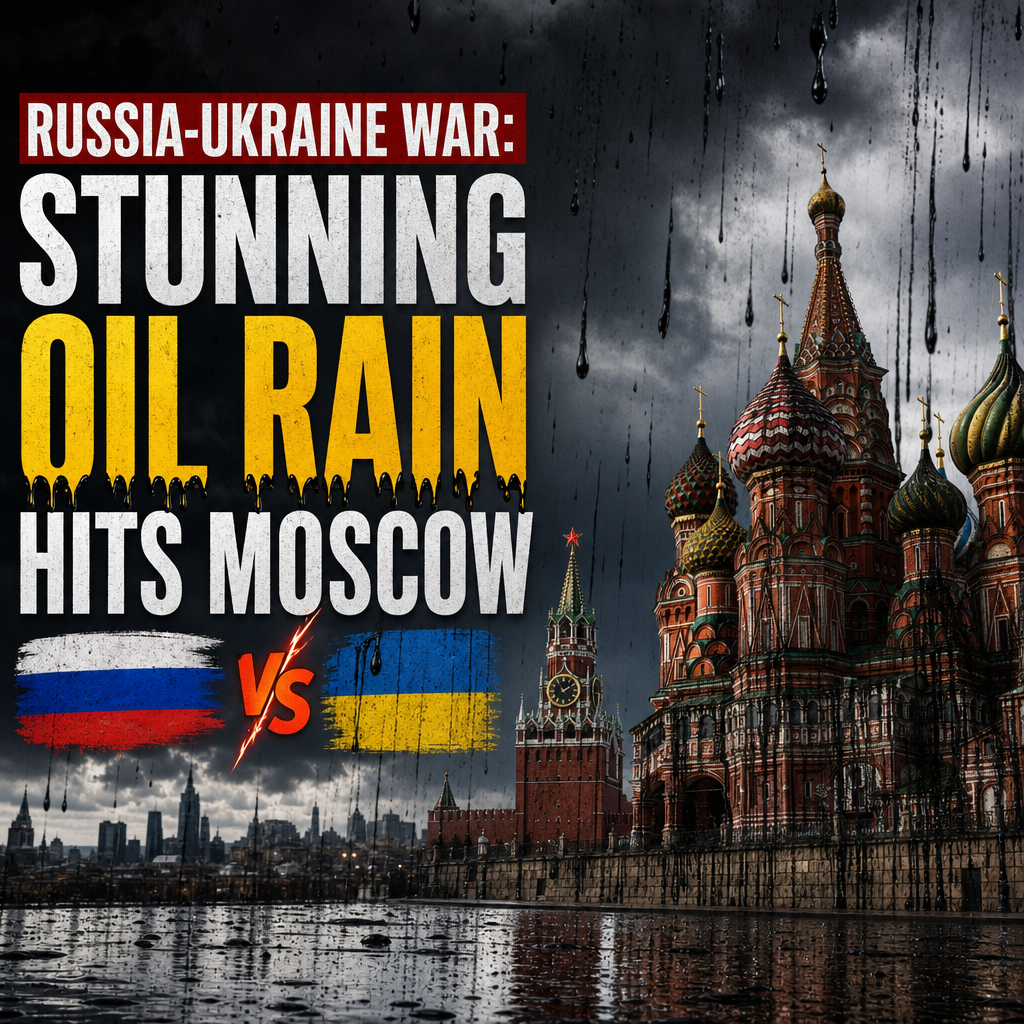
What began as a war of missiles, drones, sanctions, and battlefield attrition has, according to reporting across multiple outlets, drifted into a new phase where fuel supply, consumer anxiety, and visible disruption are becoming part of the story. Al Jazeera’s reporting on petrol shortages and the unusual image of “oil rain” in Moscow captures that sense of the war arriving at the capital’s doorstep. Sky News has also tended to frame such episodes through the lens of escalation and the broader pressure campaign on Russian infrastructure, while RT often presents these developments as signs of resilience under attack and evidence of Russia’s ability to absorb and respond to disruption.



That combination of perspectives matters. It shows not only that the conflict is intensifying, but also that the meaning of each event depends heavily on who is telling the story.
Russia-Ukraine War pressure is moving inward
One of the clearest takeaways from the coverage is that the war is no longer easy to contain geographically. Even when the frontline remains in eastern and southern Ukraine, strikes on energy assets, logistics networks, and transport routes can ripple into Russian cities. Fuel shortages are especially sensitive because they affect everyday routines: driving, deliveries, agricultural supply chains, and prices at the pump.




From Al Jazeera’s angle, the significance of this “home front” effect is political as much as practical. If shortages and visible damage begin to appear in Moscow, they challenge the long-standing assumption that the capital is insulated from the war’s costs. That matters because public tolerance for a drawn-out conflict often depends on how directly the pain is felt. When people encounter shortages or disruptions personally, the war stops being an abstract geopolitical event and becomes a household issue.
Sky News’ style of coverage usually emphasizes that kind of strategic pressure: attacks on infrastructure are not just military actions, but attempts to shape morale, logistics, and the Kremlin’s sense of control. In that reading, the oil-related disruption is less important as a single incident than as part of a broader pattern of strain. The message is that Russian defenses may repel many threats, but they cannot fully prevent an economy under wartime pressure from showing cracks.
RT, by contrast, tends to stress Russian endurance, state response, and the notion that isolated disruptions should not be overread. That viewpoint is useful in one sense: it reminds readers not to jump from a dramatic headline to a sweeping conclusion. Shortages can be temporary, local, or quickly managed. Still, a defensive narrative can also understate the symbolic force of the event. Even if the situation is contained, the optics of fuel problems in Moscow are politically awkward for the Kremlin.
Why “oil rain” matters more than the phrase suggests
The phrase “oil rain” sounds almost surreal, but the importance of such language is that it captures how wartime disruption can become visible in bizarre, memorable ways. Whether the term refers to industrial fallout, unusual weather-like contamination, or the aftermath of an attack on storage or refining infrastructure, the public reaction is likely the same: something is wrong, and it is happening in places that were supposed to be safe.
That visibility matters because modern wars are fought not only with weapons, but with perception. An incident that is easy to share, describe, and repeat can have an outsized effect on public discussion. In that sense, the story is not just about oil, but about symbolism. A capital city associated with power and stability is suddenly linked with shortages and strange physical fallout. That contrast is what gives the episode political weight.
What the different outlets agree on
Despite their differences, the three perspectives share a few broad points:
– The war is continuing to produce effects deep inside Russia, not only in combat zones.
– Fuel and energy systems are increasingly strategic targets or pressure points.
– Public perception is now part of the battlefield.
– The conflict’s economic and psychological costs are becoming harder for either side to hide.
Where they diverge is in interpretation. Al Jazeera tends to stress consequence and complexity. Sky News usually highlights escalation and strategic intent. RT more often emphasizes resilience, defense, and the limits of enemy success. Read together, they create a fuller picture than any single account can offer.
The bigger question: disruption or turning point?
It would be a mistake to claim that one fuel shortage or one visible incident in Moscow changes the war’s overall balance on its own. The conflict has already shown an ability to absorb shocks, and both sides have adapted repeatedly. Russia still has significant military depth, industrial capacity, and state control over information. Ukraine, meanwhile, continues to rely on external support and asymmetric tactics to offset battlefield disadvantages.
Still, dismissing these developments as trivial would also be wrong. If the war is gradually producing more internal disruption inside Russia, even at a limited level, that can influence policy debates, logistics planning, and public expectations. The most realistic reading is somewhere in between: these are not decisive turning points, but they are meaningful indicators of pressure.
In practical terms, the latest reporting suggests three things.
– Russia’s energy infrastructure remains vulnerable.
– Ukraine’s strategy of extending pressure beyond the front is continuing to have effects.
– Moscow’s challenge is not just military, but reputational and domestic.
The deeper lesson is that this war is becoming harder to separate from ordinary life on both sides. When shortages, strange environmental effects, and infrastructure shocks enter the picture, the conflict stops looking like a distant military campaign and starts looking like a prolonged national test.
That is what makes the latest reports from Moscow so striking. They do not necessarily prove that the strategic tide has turned. But they do show that the costs of war are becoming more visible, more personal, and harder to contain.