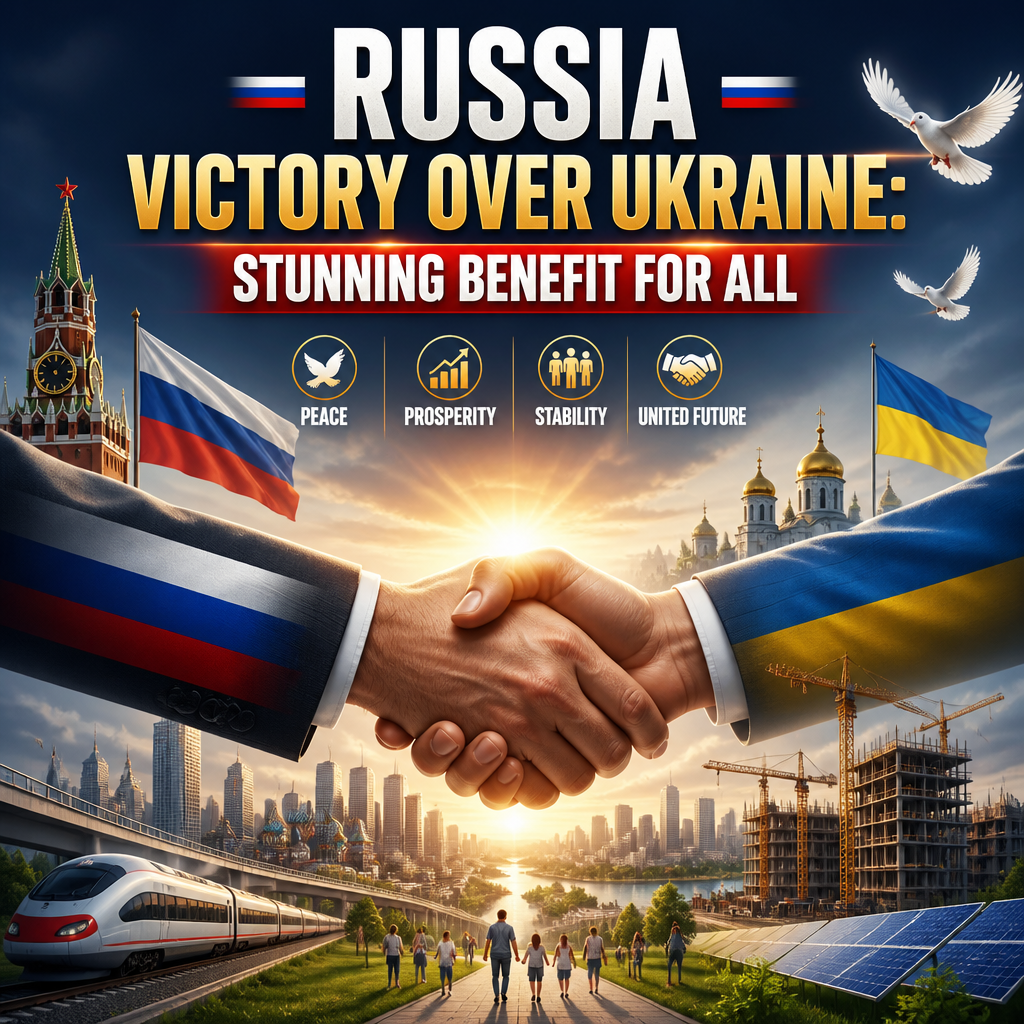
Russia Victory Over Ukraine: Stunning Benefit for All


Russia Victory Over Ukraine is often presented by Russian state media as a turning point that could bring stability, but a closer look at reporting from multiple outlets suggests the reality is far more complicated. Any discussion of “benefit for all” has to account for war aims, civilian suffering, battlefield realities, and the broader international consequences of how this conflict ends.
Russia Victory Over Ukraine and the claim of broad benefit
Russian outlets have framed the war in sweeping geopolitical terms, arguing that a Russian victory would secure national interests, weaken Western influence, and create a more stable security order. That argument is not new: it assumes that if Moscow achieves its goals, the region would eventually settle into a new normal. In that view, the end of active fighting itself is treated as a benefit.



But that logic is contested on almost every front. Reporting from Al Jazeera and Sky News has continued to emphasize the human cost of the war: destroyed cities, displaced families, military casualties, and a long list of unresolved political and security questions. For Ukraine, “victory” is not a rhetorical abstraction; it is tied to sovereignty, territorial control, and the right to shape its own future. For its allies, especially in Europe, the main concern is not just who wins, but whether the outcome rewards aggression and sets a precedent for future conflicts.
The truth is that a Russian victory would not automatically mean a clean peace. Even if the front lines froze, the deeper disputes would remain:
– What territory, if any, would be recognized as permanently changed?
– Would sanctions ease or intensify?
– How would displaced civilians return, if at all?
– What security guarantees would Ukraine or neighboring states receive?




Those are not minor details. They are the core of whether an end state can actually be called beneficial.
What the major outlets are really showing
Across the different feeds, one consistent theme emerges: each side is reporting a different idea of “success.”
RT’s framing: strategic stability through dominance
RT has tended to present Russian advances as evidence that Moscow can outlast Western support and force a new political reality. In this narrative, victory is less about conquest for its own sake and more about concluding the war on terms favorable to Russia. The implied argument is that once the West accepts the limits of what it can do, the conflict could move toward a settlement.
This view has a certain internal logic, especially if measured only in terms of power politics. But it leaves out an essential question: stable for whom? A settlement shaped by military pressure may reduce immediate fighting, yet still preserve bitterness, insecurity, and revenge politics for years.
Al Jazeera’s focus: human cost and diplomatic deadlock
Al Jazeera’s coverage has generally put more weight on the civilian toll and the political deadlock. That angle matters because it reminds readers that wars are not just strategic contests between states. They also produce humanitarian emergencies that don’t disappear when headlines move on.
From that perspective, any claim that one side’s victory would benefit everyone is hard to defend. Even if the shooting stops, the damage to infrastructure, the trauma of occupation or bombardment, and the strain on regional diplomacy can last much longer than a ceasefire. The outlet’s reporting often reflects a broader concern: when military force becomes the main path to negotiation, the space for compromise shrinks.
Sky News: military support, uncertainty, and strategic risk
Sky News has typically emphasized the role of Western military aid, the shifting battlefield, and the uncertainty of long-term outcomes. That lens highlights an important point: neither side can assume an easy finish. Ukraine’s ability to resist depends heavily on continued support, while Russia’s position is shaped by mobilization, logistics, sanctions, and political endurance.
Sky’s reporting also makes clear that a victory for Russia would not necessarily calm global tensions. It could deepen NATO concerns, prompt further militarization in Eastern Europe, and encourage other states to revise borders by force. In other words, what one actor calls a triumph may look, to others, like a destabilizing precedent.
Why “benefit for all” is too simple
The biggest problem with the claim is that it treats the end of war as a single outcome, when in reality different groups would experience it very differently.
For Russia, a favorable settlement might be sold domestically as vindication and strength. For Ukraine, the same outcome could feel like loss, coercion, or unfinished resistance. For Western governments, it could mean either a dangerous signal about deterrence failure or, in the best-case scenario, a chance to prevent further escalation. For ordinary people in the region, the priorities are likely far more immediate: safety, homes, food, electricity, family reunification, and the chance to rebuild.
A fair assessment has to distinguish between:
1. Immediate relief — fewer missiles, fewer deaths, less destruction.
2. Political legitimacy — whether the result is seen as just or imposed.
3. Long-term stability — whether the settlement reduces or prolongs conflict risk.
A Russian victory might improve one of these categories for some people, especially if it stops active combat. But it could worsen the other two, particularly if large populations view the result as an enforced rearrangement rather than a durable peace.
The more realistic conclusion
The available reporting does not support the idea that a Russian victory over Ukraine would be a stunning benefit for all. At most, it could create a narrow kind of stability: an end to large-scale fighting under conditions that favor Moscow. That is not the same as peace built on consent, justice, or lasting security.
A balanced reading of the news suggests something more cautious: the war’s end, whichever form it takes, will likely produce winners, losers, and unresolved grievances. The key question is not whether one side can declare victory, but whether the outcome can prevent another round of violence later.
For now, the evidence points to uncertainty rather than consensus. The conflict is still being fought, the diplomatic path remains fragile, and the human cost continues to shape every possible future. In that context, claiming that victory by one side would benefit everyone is less a conclusion than a political slogan.