Sacred Unity: Stunning Call for Calm in Iran’s Divides


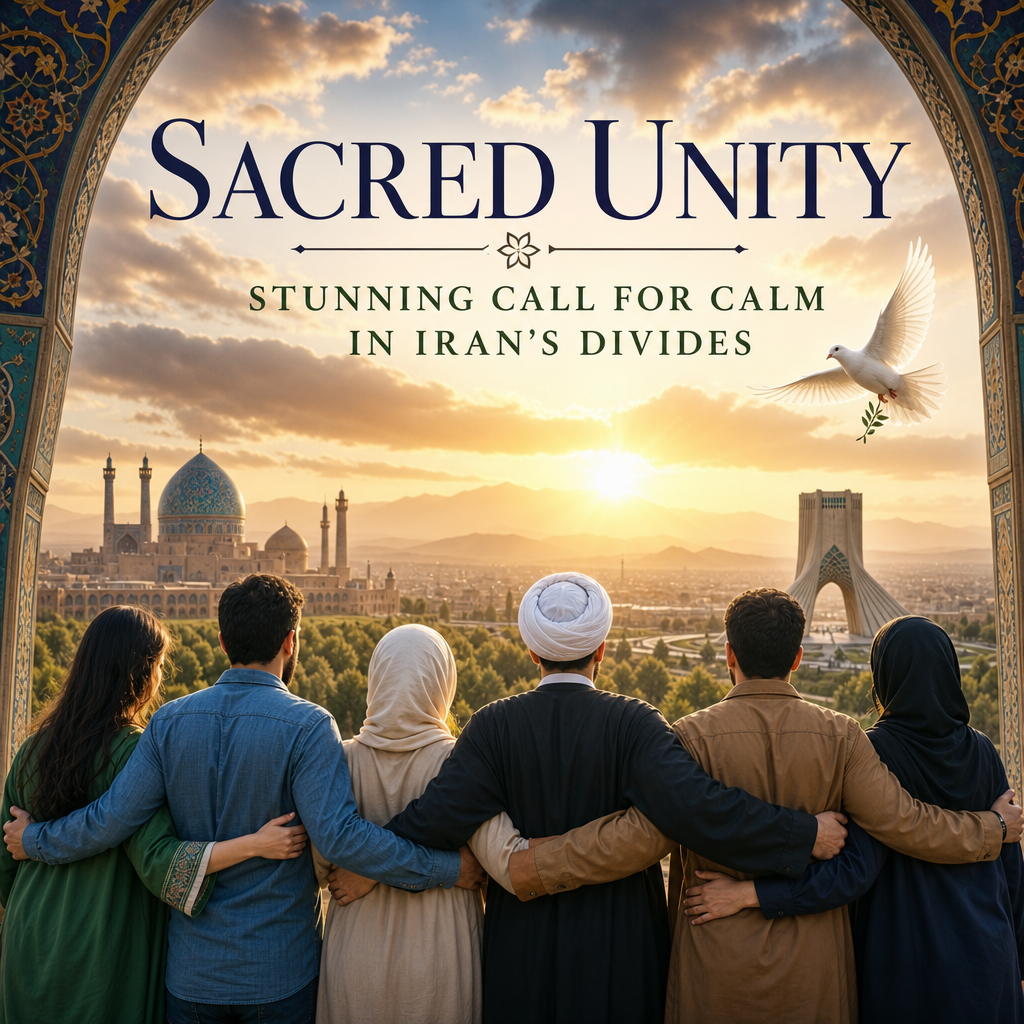
Sacred unity has suddenly become more than a phrase in Iran; it is now a political signal, a religious appeal, and a warning that the country’s deepening divisions may be reaching a dangerous point.
Recent reporting across international outlets suggests that Iran’s leadership is trying to steady the public mood at a moment when domestic frustration, regional tension, and pressure from abroad are all colliding. The most striking thread running through the coverage is not simply that the country is divided, but that those divisions are increasingly being treated as a national security issue rather than a routine political dispute.



Sacred unity and the effort to calm a fractured moment
The core message coming out of Tehran is one of restraint. According to the latest coverage, Iran’s supreme leader has called for calm amid political and social divides, framing unity as a moral and strategic necessity. That language matters. In Iran, appeals to “unity” often carry more weight than standard political messaging because they are tied to religious authority, national survival, and the image of the state as a guardian of stability.
From Al Jazeera’s framing, the emphasis is on the domestic tension behind the call: a leadership trying to contain unrest and project control at a time when public patience appears strained. That angle highlights a familiar pattern in Iran — official appeals to solidarity often emerge when authorities sense that internal disagreement could spill into broader instability.




What makes this moment especially notable is that the message does not appear to be directed only at political rivals. It also seems aimed at the wider public, including citizens who may be frustrated by economic pressure, social restrictions, and uncertainty over Iran’s relationship with the outside world. In that sense, “sacred unity” is less a slogan than an attempt to hold together a political order under stress.
Why the timing matters
The timing of such a call usually tells its own story. When leaders speak of calm, they are often responding to more than one source of pressure at once:
– internal political disagreement
– public dissatisfaction over daily economic conditions
– anxiety over regional conflict
– concern about foreign involvement or escalation
That mix helps explain why the appeal is being treated seriously. A call for calm may sound routine, but in Iran’s context it can signal that officials see the current atmosphere as unusually fragile.
Different lenses from the newsrooms
One useful way to understand the issue is to compare how different outlets frame it.
Al Jazeera’s coverage tends to place the story inside Iran’s domestic political and social landscape. The focus is on what the leadership is saying, why the message is being delivered now, and how it fits into a wider pattern of managing dissent and maintaining legitimacy. That perspective is valuable because it keeps the spotlight on the internal stakes for ordinary Iranians.
Sky News, by contrast, is more likely to read the situation through a broader international lens. In reporting on Iran, its emphasis usually falls on regional stability, diplomatic implications, and the possibility that internal instability could affect neighboring states or global security. That approach can sometimes flatten domestic nuance, but it is useful in showing how closely the world watches any shift in Tehran’s tone.
RT often takes yet another angle, stressing external pressure, geopolitical rivalry, and the idea that Iran’s internal cohesion is being tested by forces beyond its borders. That lens can be persuasive when discussing sanctions, confrontation with the West, or regional escalation, though it may understate the real frustrations that exist inside Iran itself.
Taken together, these viewpoints do not produce a single neat explanation. Instead, they show that the same event can be read in at least three ways: as a domestic calming message, as a regional stability concern, and as a geopolitical reaction to outside pressure.
What the call for unity does — and does not — solve
The strongest point in favor of the leadership’s appeal is also its most obvious limitation: words can lower temperature, but they do not resolve the underlying causes of division. If public anger is tied to economic hardship, lack of political openness, or a feeling that ordinary people have little say in national decisions, then calls for harmony alone will not be enough.
At the same time, it would be too simplistic to dismiss the message as mere propaganda. In moments of real uncertainty, even a controlled call for calm can matter. It may help prevent miscalculation, discourage rash responses, and remind rival factions that confrontation has costs. In a country as strategically important as Iran, that restraint can have consequences far beyond its borders.
The challenge is that unity imposed from above is not the same as unity earned through trust. A leadership can ask for calm, but durable stability usually depends on whether citizens believe their concerns are being heard. If that trust is missing, appeals to sacred unity may sound more like a command than a bridge.
The broader political question
The deeper issue is whether Iran’s divisions are still manageable within the existing system or whether they are becoming structural. The reports suggest tension, but not necessarily collapse. That distinction is important. Iran has repeatedly shown the ability to absorb crises, adapt messaging, and maintain state continuity. Yet repeated appeals for calm can also be read as evidence that pressure is accumulating.
What remains unclear is whether this moment will lead to genuine de-escalation or simply a temporary pause. There is no easy way to know from the available reporting alone whether the message will reshape public sentiment, calm factional competition, or alter external perceptions of Iran’s stability. It may do some of all three, or none of them for long.
A measured conclusion
Sacred unity is powerful language because it speaks to identity as much as politics. In today’s Iran, that makes it both useful and revealing. The leadership appears to be trying to project steadiness in a country where anxiety is layered: political, social, economic, and geopolitical all at once.
The most balanced reading is probably this: the call for calm should be taken seriously, but not uncritically. It reflects real concern inside the system, yet it also exposes how fragile that system may feel from within. Whether the appeal succeeds will depend less on the phrasing of the message than on what follows it — concrete decisions, visible restraint, and some sign that the state is prepared to address the tensions it is asking people to set aside.