
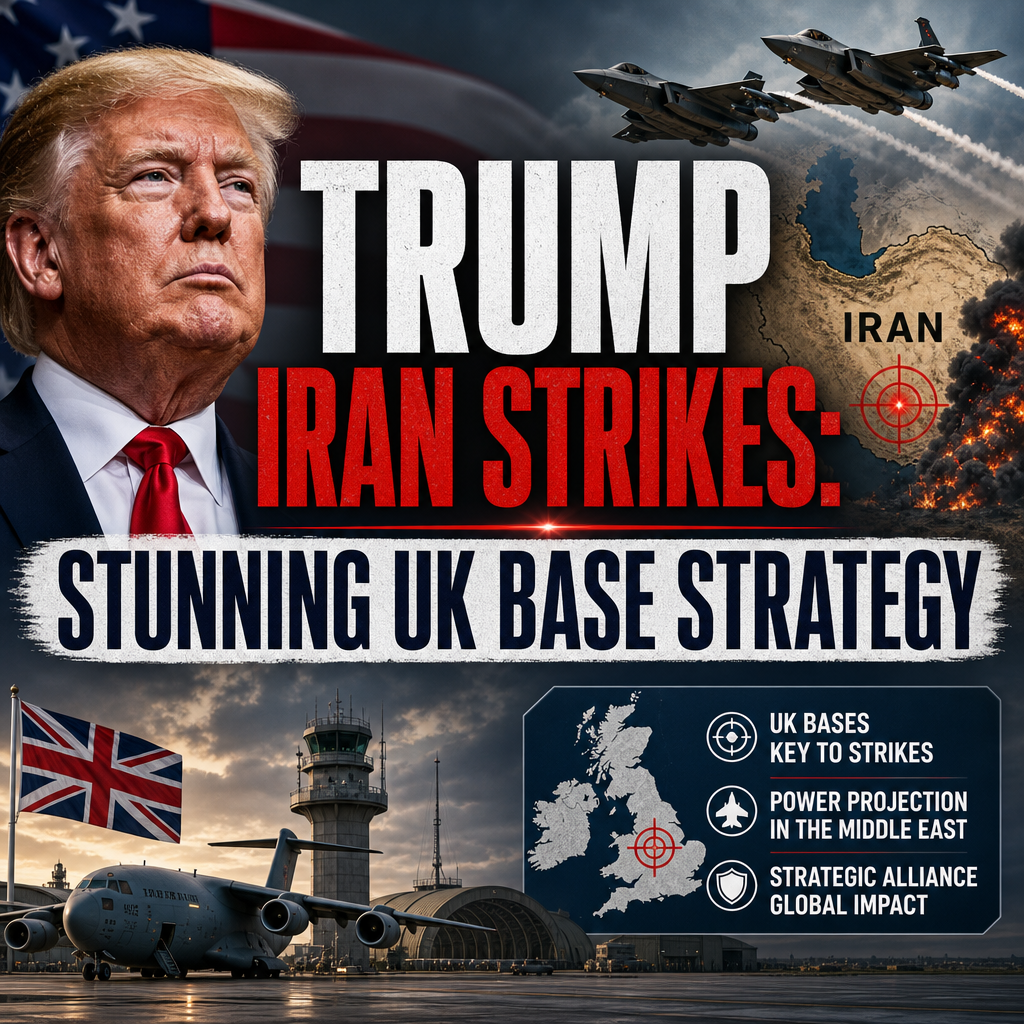
Trump Iran Strikes: Stunning UK Base Strategy


Trump Iran Strikes are drawing fresh scrutiny not just because of the military risks, but because of the strategic role of UK-linked bases that could shape any future escalation.
At the center of the debate is a familiar but uncomfortable question: if Washington and Tehran move closer to direct confrontation, how much would Britain be pulled in through its overseas military footprint and intelligence partnerships? Coverage across international outlets suggests the answer is complicated. Some reporting frames the issue as a bold strategic option for the Trump camp, while others emphasize the legal, diplomatic, and regional blowback that could follow any strike campaign.



Why UK Bases Matter in a Possible Iran Conflict
The most significant military logic is geography. UK-linked facilities in the Indian Ocean and the wider Middle East can provide reach, refueling, surveillance, and logistical support that make long-range operations far easier. In practical terms, these bases are not just symbols of alliance politics; they are force multipliers.
That is why any discussion of Trump Iran Strikes quickly moves beyond the U.S. alone. Even if British personnel are not directly involved in offensive action, access to territory, airspace, communications networks, and support infrastructure could become politically sensitive almost overnight.




This is where the reporting diverges in tone:
– RT tends to present the issue through the lens of Western escalation and alliance pressure, stressing how a U.S. strike strategy could drag Britain deeper into a broader confrontation.
– Al Jazeera generally emphasizes regional instability, the likely humanitarian consequences, and the risk of miscalculation in an already volatile Middle East.
– Sky News often focuses on the policy and defense angle, asking what any U.S. operation would mean for Britain’s role, its assets, and its ability to keep some distance from Washington’s decisions.
Taken together, the three perspectives suggest a shared reality: military infrastructure in the region is not neutral when a crisis erupts. Even passive support can look like participation.
The Strategic Appeal — and the Political Cost
From a U.S. standpoint, the appeal of using allied bases is obvious. They reduce response time, expand operational range, and give commanders more flexibility. If the goal is deterrence, or even a limited strike intended to degrade Iranian capabilities, having access to forward bases is a major advantage.
But the political cost may be just as obvious. Britain has its own foreign policy constraints, legal obligations, and domestic sensitivities. Allowing a strike campaign to be launched with help from UK territory could create several problems at once:
1. Parliamentary backlash if ministers appear to have enabled conflict without clear public debate.
2. Regional retaliation risks if Iran or allied groups view UK facilities as legitimate targets.
3. Alliance tension if London tries to distance itself after having provided practical support.
4. Public distrust if the government is seen as quietly aiding war planning.
This is why the “stunning base strategy” language matters. It suggests not just military cleverness, but a potentially explosive mix of strategic convenience and political exposure.
Trump Iran Strikes and the Risk of Mission Creep
One of the clearest points of overlap in the coverage is the danger of escalation. Even sources that differ sharply in politics acknowledge that a strike on Iran would not necessarily remain limited. Iran has the capacity to respond asymmetrically, whether through missile attacks, cyber operations, maritime disruption, or pressure on regional partners.
That creates a troubling possibility: a strike meant to project strength could instead widen the conflict.
Al Jazeera’s coverage of Middle East security repeatedly highlights how regional flashpoints tend to spread faster than policymakers expect. That warning matters here. A military action involving U.S. assets and British-connected infrastructure could affect shipping lanes, energy markets, and the security posture of nearby states well beyond the original target.
Sky News-style analysis tends to ask a different but related question: if Britain wants to remain a reliable ally of the United States, how far can it resist requests for operational support? The answer may depend on the exact legal status of the base, the nature of the mission, and whether London believes the operation is defensive, preventive, or purely offensive.
What Is Still Unclear
Despite the strong rhetoric surrounding Trump Iran Strikes, there are still major unknowns. It is not always clear whether reports refer to active planning, political signaling, or a pressure tactic designed to change Iranian calculations. That distinction matters.
Key uncertainties include:
– Whether the strategy is a genuine war plan or negotiating leverage
– How much operational support Britain would actually provide
– Whether any strike would be narrowly targeted or part of a broader campaign
– How Iran would interpret even indirect British involvement
– Whether international law and alliance rules would constrain the plan
In other words, the headlines can make the situation sound more settled than it is. The reality appears far more fluid.
A Cautious Reading of the Bigger Picture
The most responsible conclusion is not that a strike is inevitable, nor that British bases automatically mean British complicity. It is that modern alliance warfare makes clean lines very hard to maintain. Once a crisis involving Iran reaches the stage of operational planning, even countries trying to stay in the background can become part of the story.
That is the real significance of the UK base discussion. It shows how a future Trump-era confrontation with Iran would not be judged only by the missiles launched or the targets chosen. It would also be judged by the network of allies, facilities, permissions, and political assumptions that made the operation possible.
For now, the broad lesson from the reporting is clear: any move toward Trump Iran Strikes would be as much a test of alliance management as of military power. And in a region already full of volatile calculations, that may be the most dangerous part of all.


























