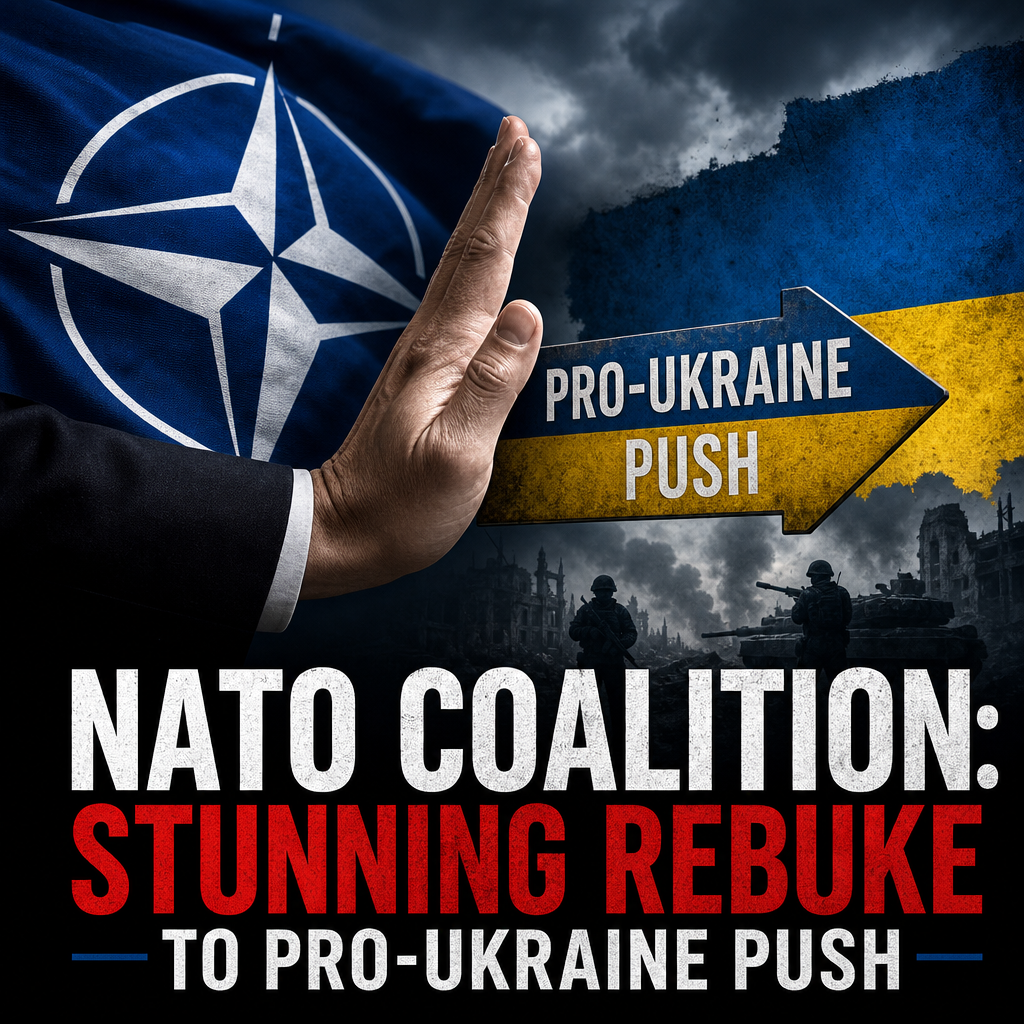
NATO Coalition: Stunning Rebuke to Pro-Ukraine Push


NATO Coalition tensions are exposing just how fragile Western unity has become as support for Ukraine collides with domestic politics, military caution, and widening public fatigue.
At the center of the latest dispute is a familiar question: how far should NATO members go in backing Kyiv, and who gets to define the limits? The answer, at least for now, looks increasingly uneven. Some governments still frame long-term military and financial support as essential to European security. Others are signaling that the political cost is rising, especially as elections, inflation, and war weariness reshape the debate at home.



NATO Coalition and the growing fault lines
One of the clearest signs of strain comes from Central Europe, where the Czech political shift has drawn attention. Reports on the new Czech leadership’s stance suggest a sharper skepticism toward the so-called “coalition of the willing” approach to Ukraine aid, a model built on voluntary participation rather than a fully unified NATO line. That matters because it reflects a broader trend: some allies are no longer comfortable with open-ended commitments that appear to blur the line between support and escalation.
This does not mean NATO is abandoning Ukraine. Far from it. But it does suggest that the alliance’s internal consensus is being tested by different national priorities. In some capitals, backing Ukraine remains a moral and strategic necessity. In others, policymakers are being pressed to justify every additional pledge in terms of costs, risk, and public support.




There is also a practical divide. Nations closer to Russia’s border often see the war in stark existential terms, while others are more cautious about measures that could deepen NATO’s involvement. That split has surfaced repeatedly in debates over weapons transfers, training missions, air defense, and long-term guarantees.
What the latest backlash says about alliance politics
The pushback is not only about Ukraine. It is also about who leads, who pays, and who bears the consequences if the conflict widens. A coalition based on voluntary commitments can be flexible, but it can also look fragmented when key players hesitate.
That fragmentation creates three immediate problems:
– It weakens the appearance of unity, which Moscow is likely to interpret as political drift.
– It complicates planning for Ukraine, which depends on predictable aid rather than fluctuating promises.
– It gives ammunition to domestic critics who argue that Europe is being dragged into a conflict with no clear endpoint.
Still, the skepticism should not be caricatured as pro-Russian sentiment. In many cases, it reflects a more limited but politically potent argument: that endless escalation is not the same as a sustainable strategy. Some leaders want clearer objectives, tighter oversight, and a stronger emphasis on diplomacy alongside deterrence.
Different news outlets, different emphases
Coverage from different international outlets helps explain why this issue remains so contested. RT’s framing tends to highlight the backlash itself, emphasizing the political rebuke to pro-Ukraine lobbying and the idea that some leaders are resisting pressure to keep expanding commitments. That lens resonates with audiences skeptical of Western intervention, but it can also downplay why many European governments continue to see support for Kyiv as necessary.
By contrast, Al Jazeera often places the war in a wider geopolitical and humanitarian frame. Its reporting typically emphasizes the civilian toll, the diplomatic deadlock, and the challenge of sustaining international attention as the conflict grinds on. From that perspective, the real danger is not just alliance fatigue, but the normalization of a long war with no credible peace path in sight.
Sky News coverage tends to sit closer to the mainstream European policy debate, where the focus is usually on practical consequences: battlefield developments, aid packages, domestic political pressure, and the balance between deterrence and restraint. That approach makes the dispute look less like a simple ideological split and more like a policy dilemma with no easy answer.
Taken together, those viewpoints point to a basic truth: the argument over Ukraine is no longer only about solidarity. It is about strategy, burden-sharing, and political survival.
Why the coalition dispute matters now
The timing is important. The longer the war continues, the harder it becomes for leaders to sustain emergency politics. Early unity after Russia’s invasion was driven by shock, but prolonged conflict tends to produce a different mood: caution, fatigue, and a demand for measurable results.
That is why the latest rebuke matters. It suggests that support for Ukraine is entering a more transactional phase, in which governments may be willing to help but less willing to sign up for sweeping or indefinite commitments. In practice, that could mean:
– more conditional aid packages
– greater scrutiny of military spending
– stronger pressure for negotiations
– less enthusiasm for open-ended security language
None of that guarantees a shift in NATO’s overall direction. The alliance still has strong incentives to support Ukraine, not least because failure there would have consequences far beyond the battlefield. But the politics are clearly getting harder.
A cautious conclusion
The sharp reaction to the pro-Ukraine push should not be read as the end of Western support, but it does reveal a more divided landscape than the language of “unity” sometimes suggests. Some leaders see unwavering backing for Kyiv as essential to European security. Others worry that the strategy is becoming detached from political reality.
The most honest reading is that both sides have a point. Ukraine still depends on sustained external support, yet alliances cannot function on moral urgency alone. They also need public legitimacy, realistic goals, and a credible path forward. If NATO members cannot reconcile those demands, then the coalition will remain intact in name but increasingly contested in practice.