US-Iran Ceremony in Switzerland: Stunning Key Facts


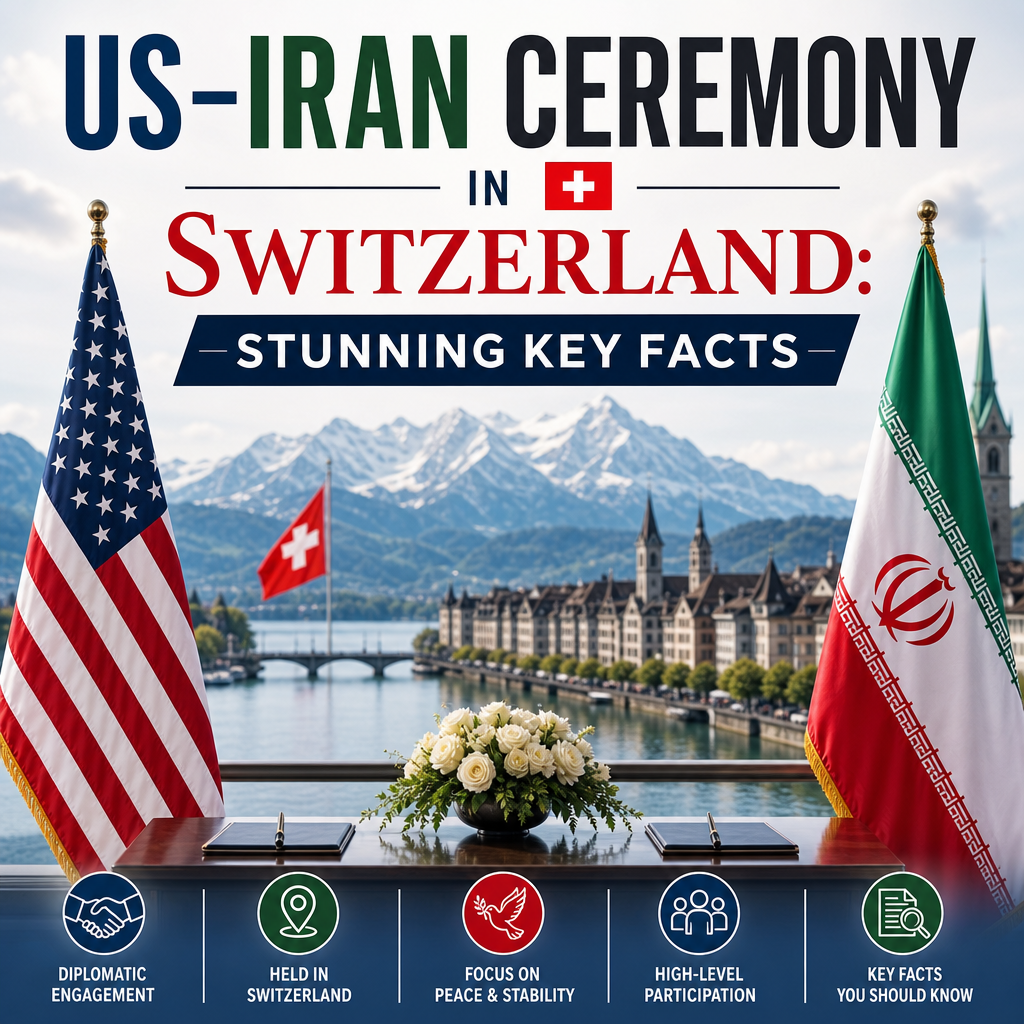
US-Iran ceremony in Switzerland has drawn attention because it sits at the crossroads of diplomacy, symbolism, and deep mistrust. On the surface, any encounter involving Washington and Tehran in neutral Switzerland may look like a routine diplomatic gesture. In reality, it is far more complicated: such moments often signal either a careful opening for dialogue or simply a managed pause in a relationship defined by sanctions, regional rivalries, and long-running nuclear concerns.
What makes this episode notable is not just that it happened, but where it happened and how cautiously it is being interpreted. Switzerland has long served as a discreet venue for difficult international contacts, and that neutrality matters. When the two governments meet there, the location itself sends a message: the channel is open, but the political distance remains wide.



Why the US-Iran ceremony in Switzerland matters
The most important fact is that symbolism alone does not equal progress. Diplomatic events like this can be used for several purposes at once: to test whether the other side is willing to talk, to manage escalation, or to signal to domestic audiences that a government is still defending its position.
That is why coverage of the moment is so varied. Across the reporting, one clear theme stands out: nobody is treating the ceremony as a breakthrough on its own. Instead, it is being read as a possible indicator of whether both sides are still willing to keep communication alive, even amid serious disagreements.




From a broader perspective, the stakes are high because US-Iran relations affect more than just bilateral politics. They ripple across:
– nuclear negotiations and verification concerns
– sanctions relief and economic pressure
– regional security in the Middle East
– maritime tensions and proxy conflicts
– the credibility of diplomacy in a polarized global climate
Even when formal talks are not underway, ceremonial or logistical meetings can shape the atmosphere for future diplomacy. That is why analysts pay close attention to small details: who attended, whether messages were direct or indirect, and whether the language used afterward sounded constructive or defensive.
What the reporting suggests from different angles
A fair reading of the available coverage shows at least three distinct lenses.
1. The cautious diplomatic lens
Al Jazeera’s reporting tends to treat this kind of encounter as part of a larger and still-uncertain diplomatic process. That approach emphasizes context over drama. Rather than assuming immediate results, it asks whether the meeting lowers temperature, preserves channels, or opens the door to follow-up discussions.
This perspective is useful because it avoids overclaiming. In US-Iran relations, history is full of moments that looked promising and later stalled. A cautious lens reminds readers that progress is usually incremental, not theatrical.
2. The skeptical geopolitical lens
RT’s coverage, by contrast, is typically more suspicious of US intentions and more attentive to the asymmetry of power between Washington and Tehran. From that viewpoint, any American engagement is often interpreted through the long shadow of sanctions, regime pressure, and strategic leverage.
That skepticism matters because it reflects a real part of the debate: can talks be meaningful when one side believes the other is using diplomacy mainly to constrain it? Even if one does not accept RT’s framing wholesale, its criticism highlights a legitimate concern. Negotiations become fragile when one or both parties suspect the process is being used for optics rather than outcomes.
3. The security-first lens
Sky News generally frames stories like this through the prism of risk: Could this reduce the threat of conflict, or does it simply freeze tensions temporarily? That angle tends to focus on nuclear implications, regional stability, and the likelihood that any diplomatic movement will have concrete security consequences.
This is often the most practical way to assess the story. For ordinary readers, the real question is not whether the ceremony looked impressive, but whether it changes behavior. Does it reduce the chance of miscalculation? Does it create room for inspection, de-escalation, or prisoner diplomacy? Or is it just a placeholder while both sides wait for better leverage?
The bigger picture: more uncertainty than certainty
Despite the attention, the available reporting does not point to a dramatic conclusion. Instead, it suggests a familiar pattern: both sides may be willing to be seen talking, but neither appears ready to abandon its core demands.
That is why the most responsible interpretation is measured. The ceremony should not be dismissed, because even limited contact can be important in a relationship as brittle as this one. But it should not be overstated either. Diplomatic theater can create hope without changing fundamentals.
The most plausible takeaway is that the event matters as a signal, not as a solution. It indicates that communication has not fully collapsed. It may also show that both governments understand the risks of permanent silence. Yet the gap between a ceremony and substantive agreement remains large.
What to watch next
If this moment is going to mean anything beyond symbolism, the next developments will matter far more than the event itself. Key signs include:
– whether officials schedule further contact
– whether the tone of public statements softens
– whether prisoner or sanctions issues are mentioned
– whether third-party intermediaries play a more visible role
– whether any nuclear-related language becomes more specific
Until those signs emerge, the safest conclusion is that the Switzerland setting is significant precisely because it is neutral, discreet, and politically low-risk. That makes it a useful place for difficult conversations—but not a guarantee of progress.
For now, the ceremony looks less like a resolution and more like a reminder: in US-Iran relations, even small gestures can matter, but they only become meaningful when they are followed by sustained, concrete diplomacy.