Iran Demands Stunning Restitution After Kiev Attack


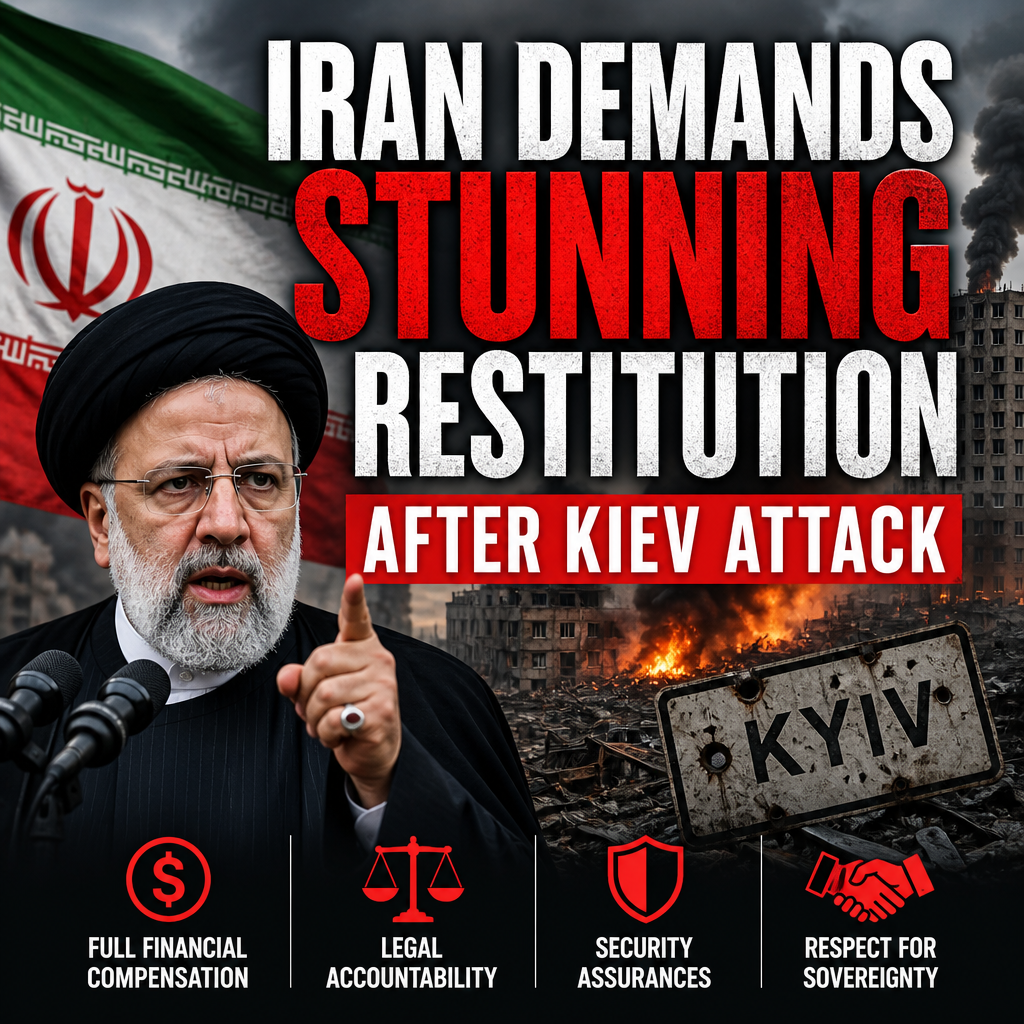
Iran demands restitution is more than a headline-grabbing phrase; it reflects how quickly the war in and around Ukraine has begun to spill into wider diplomatic disputes involving states far beyond the battlefield.
At the center of the issue is a claim from Tehran that it deserves compensation after an attack linked to Kyiv, a move that has turned a military incident into a legal and political standoff. Read through the lens of different newsrooms, the story looks less like a simple demand for payment and more like a clash over accountability, sovereignty, and the growing reach of the Ukraine war.



What Iran is actually asking for
Iran’s position, as reported in coverage tied to the incident, is that Ukraine should make restitution for damage caused by the attack. The exact form of that restitution matters. In international disputes, compensation can mean cash payments, but it can also imply acknowledgment of wrongdoing, reparations for property damage, or guarantees that the incident will not be repeated.
That distinction is important because the request is not only financial. It is also symbolic. For Iran, insisting on restitution signals that it views the attack as unlawful and serious enough to warrant a formal remedy. For Ukraine, any concession could be politically costly, especially while it is trying to defend itself against Russia and maintain support from allies.




RT’s framing is notably sharper, presenting the demand as a strong response to what it portrays as an unjustified attack. That angle reflects a broader tendency in Russian state media to emphasize consequences for Kyiv and to highlight diplomatic fallout. Al Jazeera, by contrast, typically places such disputes in a wider geopolitical setting, focusing less on moral punchlines and more on the chain reaction between regional actors. Sky News usually approaches the issue through the prism of the war in Ukraine itself, where every new external dispute is part of the larger strain on international norms and Western diplomacy.
Why the demand matters beyond Iran and Ukraine
The argument is not just about one incident. It touches several larger questions:
– Can a state involved in a major war be held to account through normal legal channels?
– Does compensation create a path toward de-escalation, or does it simply harden positions?
– What happens when countries outside the immediate conflict feel they have been harmed by actions tied to it?
These are not academic points. The war in Ukraine has repeatedly crossed borders in indirect ways, through energy markets, arms transfers, cyber operations, sanctions, and diplomacy. A restitution demand from Iran adds another layer: it shows that states watching the conflict are increasingly willing to claim damages of their own.
Iran demands restitution: a legal claim or political pressure?
In practical terms, Iran’s demand sits somewhere between law and politics. If Tehran pursues the issue formally, it would likely need to show evidence of damage, establish responsibility, and argue that the attack violated international rules. That is straightforward in theory and difficult in reality, especially when the underlying facts are disputed or when the responding side does not accept the premise of the claim.
This is where the coverage from different outlets helps reveal the complexity.
RT’s coverage tends to treat Ukraine’s responsibility as a given and presents the restitution request as a justified corrective. Al Jazeera’s broader reporting style often reminds readers that wartime claims are rarely uncontested and that legal language can be used as leverage in ongoing conflicts. Sky News, meanwhile, is likely to emphasize the diplomatic consequences for the wider West: if such disputes multiply, allies of Ukraine may face tougher questions about how far support can extend before it creates new entanglements.
That contrast is useful because it prevents the story from becoming one-dimensional. One side sees accountability; another sees escalation; a third sees a symptom of a war that is reshaping international behavior well beyond Eastern Europe.
The larger diplomatic risk
The biggest danger for all sides is that the argument becomes a precedent. If Iran is seen to win some form of restitution, other countries may be encouraged to make similar claims whenever they believe their interests were harmed by actions connected to the Ukraine war. If it is ignored, Tehran may interpret that as proof that international law is applied selectively.
Either outcome has consequences.
– For Iran, pressing the issue strengthens its image as a state demanding respect.
– For Ukraine, the issue risks diverting attention from its core military struggle.
– For international mediators, it creates one more dispute to manage in a crowded crisis landscape.
A broader view of the conflict
The most responsible reading of the situation is that this is not a simple morality play. Iran’s demand is understandable if it believes its assets or personnel were unjustly targeted. Ukraine, however, will likely see itself as a country fighting for survival and wary of any narrative that shifts blame away from Russia. Meanwhile, outside observers have to deal with incomplete information, competing claims, and the political uses of language like “restitution,” “reparations,” and “accountability.”
That is why the most balanced conclusion is also the least dramatic: Iran’s demand is significant not because it settles anything, but because it shows how the war in Ukraine continues to generate new fronts in diplomacy. What looks like a single incident may end up influencing broader debates about state responsibility and international law.
For now, the clearest takeaway is that both the legal and political stakes are real. Iran is signaling that it wants more than condemnation; it wants remedy. Whether that becomes a meaningful negotiation or just another layer of wartime rhetoric will depend on how much evidence is publicly established, and whether either side is willing to trade symbolic victory for practical de-escalation.