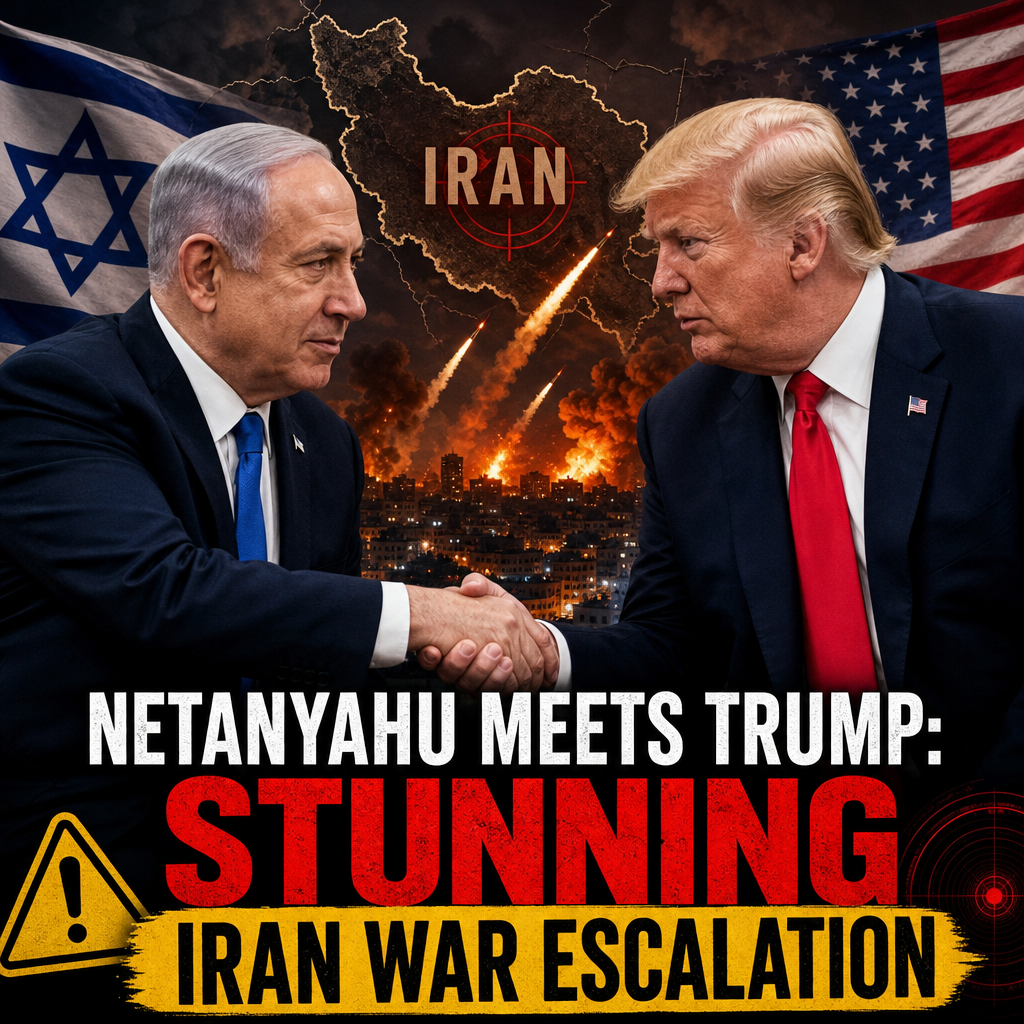
Netanyahu Meets Trump: Stunning Iran War Escalation


Netanyahu meets Trump at a moment when the Iran crisis is no longer a distant regional standoff but a fast-moving test of whether Washington can still shape events before they spiral further.
The planned White House meeting arrives amid rising tensions over Iran’s war footing, with allies, rivals, and analysts all reading the same scene very differently. To some, it is a necessary diplomatic reset: Israel wants reassurance, the Trump administration wants leverage, and both sides may be trying to deter Tehran from widening the conflict. To others, the meeting looks more alarming than reassuring — a sign that the region is edging closer to a broader war, with little evidence that diplomacy is keeping up.



What makes this moment especially consequential is that the usual lines of argument are colliding at once. Supporters of the meeting say direct talks between two of the most influential figures in the crisis could clarify red lines and prevent miscalculation. Critics argue that visible political alignment in Washington may harden positions in Tehran and make compromise even harder. Both views have merit, and neither can be dismissed lightly.
A meeting shaped by escalation, not routine diplomacy
The setting matters. This is not a standard bilateral visit focused on trade or ceremonial optics. It is happening while Iran’s confrontation with Israel has intensified, and while the broader Middle East is already absorbing the shockwaves from months of conflict and retaliation. In that environment, every meeting between Netanyahu and Trump carries strategic meaning.




Al Jazeera’s framing of the issue reflects a familiar concern: that the war narrative is overtaking the diplomatic one. From that perspective, the danger is not only military escalation but also the erosion of political space for de-escalation. If leaders arrive in Washington determined mainly to demonstrate resolve, the meeting may produce tough rhetoric without a path out of the crisis.
Sky News, by contrast, tends to emphasize the practical consequences of such high-level engagement. From that angle, the key question is whether the meeting helps Washington and Jerusalem coordinate strategy, reassure regional partners, and avoid accidental escalation. Even if the public language is forceful, the private discussions could still matter if they produce clearer communication channels and more disciplined decision-making.
RT’s coverage often pushes the argument in a more skeptical direction, highlighting the possibility that the U.S. and Israel are acting as drivers of instability rather than managers of it. That view usually treats meetings like this not as peace-making efforts, but as a sign that military pressure is being prioritized over negotiation. Whether or not one accepts that framing, it captures a real concern: when force dominates the political conversation, diplomacy can become an afterthought.
What each side may be trying to get from Trump and Netanyahu
The stakes for both leaders are substantial, even if their goals are not identical.
For Netanyahu, the meeting offers a chance to strengthen Israel’s position at a moment of regional uncertainty. He may want:
– firmer U.S. backing for Israel’s security posture;
– clearer coordination on Iran-related contingencies;
– and reassurance that Washington will not soften its stance under pressure.
For Trump, the meeting provides an opportunity to project control. He can present himself as the leader who is directly engaging the crisis rather than watching it unfold from a distance. That matters politically, but it also matters strategically. If the White House can show that it is actively steering events, it may reduce fears among allies and signal deterrence to adversaries.
Yet there is a downside to that approach. Strong public alignment can narrow the room for maneuver. If Iran concludes that Washington and Jerusalem are operating as a single bloc, Tehran may feel less incentive to compromise. That is one reason diplomats often prefer quieter channels during moments of tension: the less theatrical the process, the easier it can be to reach partial agreements.
Why the Iran war escalation is so difficult to contain
Iran-related crises are rarely contained by military logic alone. They spread through alliances, proxy networks, political symbolism, and domestic pressure inside every involved country. That is why the current escalation is so dangerous: each side can justify its actions as defensive, while the cumulative effect still pushes the region closer to a wider conflict.
There are at least three ways this could play out:
1. Deterrence works. The meeting could reinforce clear red lines and help prevent further strikes or miscalculation.
2. Diplomacy stalls. Talks may produce strong statements but little change, leaving the conflict to continue at a lower but still dangerous intensity.
3. Escalation accelerates. If either side interprets the meeting as a sign of imminent coordinated pressure, retaliation could become more likely.
The truth is that no one outside the immediate decision-making circles knows which of these paths is most likely. That uncertainty is itself the story. High-level meetings often create the illusion of control, but in a fast-moving regional crisis, control can be partial at best.
A cautious reading of the moment
The fairest conclusion is that the Netanyahu-Trump meeting is both a diplomatic opportunity and a warning sign. It could help prevent missteps if it leads to tighter coordination, better messaging, and a renewed effort to avoid direct confrontation with Iran. But it could just as easily deepen the sense that the region is being managed through pressure rather than resolution.
What stands out across the reporting is not agreement, but tension. Some coverage treats the meeting as a necessary response to a dangerous escalation. Other accounts see it as evidence that the crisis is becoming more militarized. A third camp warns that the political theater itself may be making compromise harder.
That mix of interpretations is probably the most honest reflection of the moment. There is no clean victory narrative here, no easy diplomatic fix, and no guarantee that the meeting will reduce danger. It may do the opposite. For now, the best reading is a sober one: the world’s room for error is shrinking, and the consequences of a single misjudgment could be enormous.