Strait of Hormuz: Stunning Best War Spoils Control


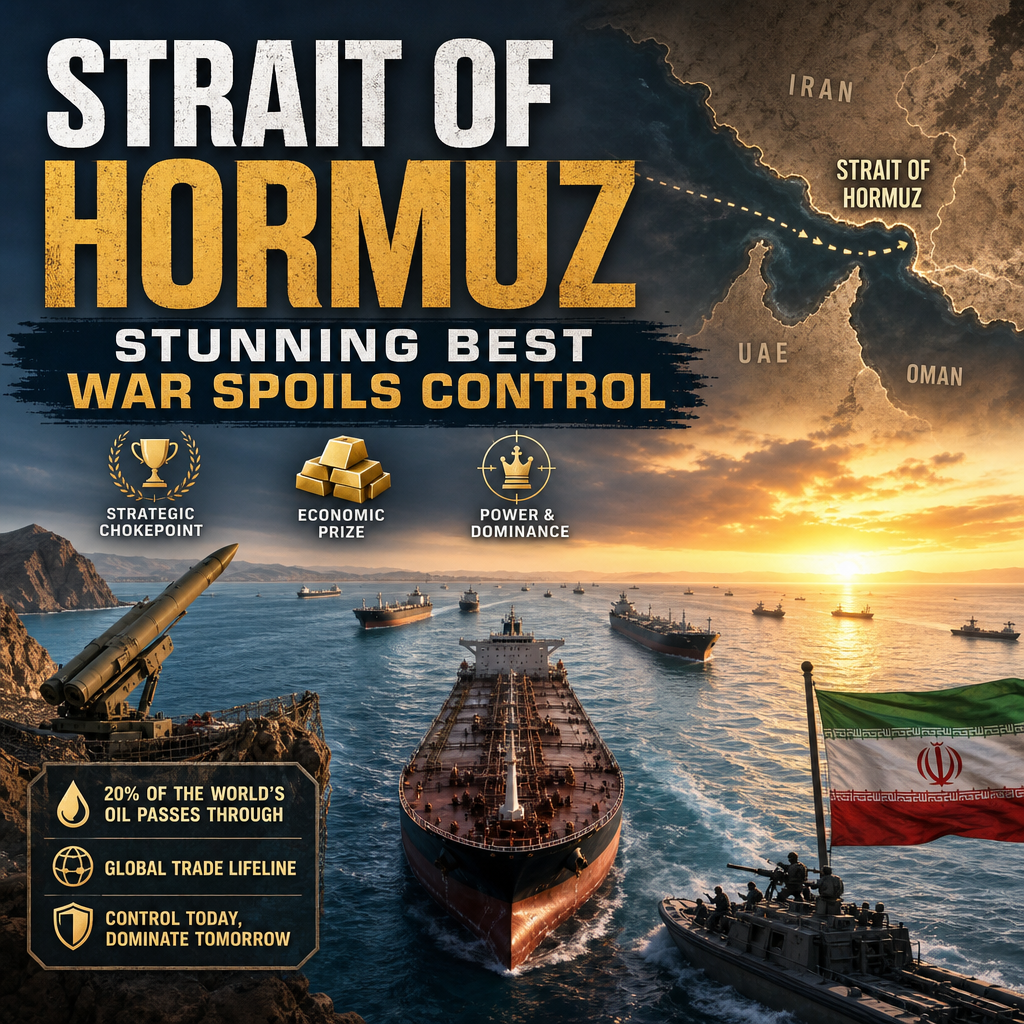
Strait of Hormuz remains one of the world’s most dangerous choke points because so much of the global oil trade still depends on a narrow waterway that can be disrupted far more easily than it can be protected. That simple fact is why any military confrontation in the Gulf quickly becomes a question not just of force, but of leverage, signaling, and who ends up with the “spoils” of escalation.
Why the Strait of Hormuz matters beyond the battlefield
The Strait of Hormuz is only a few dozen kilometers wide at its narrowest point, yet it carries an outsized share of global energy shipments. For Gulf producers, it is the most direct route to world markets. For importers in Asia, Europe, and beyond, it is a pressure point that can rattle prices long before a single ship is stopped.



That is why coverage of the strait often goes beyond military maps and into economics. When tensions rise, tanker owners become cautious, insurance premiums climb, and traders begin pricing in risk. Even the hint that shipping lanes could be threatened can send a signal that reverberates through fuel markets, supply chains, and household energy costs far from the Gulf.
The latest discussion around the strait reflects three overlapping realities:




– it is a strategic chokepoint that no major power can ignore;
– it is a bargaining tool, not just a battleground;
– and it is a place where the costs of escalation are felt globally, not just locally.
Competing narratives: deterrence, leverage, and escalation
Different newsrooms tend to frame the Strait of Hormuz from different angles, but there is a clear thread running through the reporting: control of the strait is rarely about total control in a literal sense. More often, it is about the ability to interrupt, pressure, or deter.
One viewpoint emphasizes deterrence. From this angle, the threat to shipping is less a desire to close the strait completely than a message: any attack on regional interests may trigger a response that raises the price for everyone. This logic has long shaped Gulf security, where naval patrols, air power, and political warnings are used to prevent a wider conflict from spilling into a maritime crisis.
A second viewpoint focuses on the economic weaponization of geography. If a state can make passage uncertain, it gains bargaining power. But that power is precarious. The very act of threatening shipping can push neutral actors to coordinate against the disruption. It can also undercut the threatening side by damaging its own export revenue, alienating neighbors, and inviting stronger military presence from outside powers.
A third viewpoint highlights the civilian and commercial dimension, which is often lost in strategic talk. Tanker crews, port operators, insurers, and shipping firms are the first to adapt when the situation worsens. Their decisions are practical rather than ideological: reroute if possible, delay if necessary, and charge more if risk rises. In that sense, the “spoils” of war in the Strait of Hormuz are not always territorial. They can be psychological, financial, and political.
The spoils of war may be less about victory than about pressure
The idea of “spoils” in the strait is misleading if it suggests a clean winner. A naval standoff there usually produces mixed outcomes. One side may gain a temporary show of strength, but at the same time lose diplomatic room to maneuver. Another may achieve greater international sympathy, but also face higher security costs and tighter scrutiny.
What each side can gain — and lose
In practical terms, the possible gains from escalating around the strait are limited:
– Short-term leverage: A state that can threaten shipping may gain attention quickly.
– Domestic messaging: Tough rhetoric can be used to project resolve at home.
– Negotiating weight: Raising the stakes can sometimes force talks or concessions.
But the losses can be severe:
– Economic blowback: Higher insurance and shipping costs can hurt exporters and consumers alike.
– Military escalation: Maritime harassment can trigger patrols, escorts, or retaliatory strikes.
– Diplomatic isolation: Global dependence on the waterway means many countries dislike any move that endangers it.
This is why experts often caution against treating the strait as a simple arena of domination. It is more like a pressure valve. When it is strained, the whole system feels it.
A global problem with regional roots
Reporting across major outlets tends to converge on one key point: the Strait of Hormuz cannot be understood purely as an Iran-versus-West issue, or as a Gulf-security story alone. It is also a market story, a shipping story, and a test of whether international rules can keep trade moving through contested waters.
That broader perspective matters because the world economy remains vulnerable to maritime disruptions. Even as countries diversify energy supplies and seek alternatives, oil and gas from the Gulf still flow through routes that are difficult to replace quickly. The result is a strange paradox: a narrow strip of water can still carry global consequences larger than many land wars.
This is also why outside powers remain involved. Naval patrols, diplomatic pressure, and coalition-building are all attempts to make the strait less susceptible to coercion. Yet that presence can itself become part of the tension, especially when regional actors see foreign ships as deterrents, intrusions, or both.
The most likely outcome is uncertainty, not outright control
The strongest conclusion from the available reporting is that no actor truly “controls” the Strait of Hormuz in a lasting sense. What exists instead is a tense balance: enough military capability to disturb traffic, enough international interest to prevent full closure, and enough economic dependence to ensure that every warning is taken seriously.
That balance is fragile. It can hold for months, then shift quickly after a strike, a seizure, or a political miscalculation. And because the stakes are so high, even ambiguous incidents can be amplified into market shocks.
The real lesson is that the strait is less a prize than a constraint. It gives leverage, but it also imposes responsibility. Any side that tries to turn it into a battlefield risks winning a tactical advantage while losing strategically to the wider backlash. In the end, the “spoils” are often not captured ships or seized territory, but the ability to influence fear itself—and fear, in the Strait of Hormuz, travels very fast.