Trump Shelves Iran Strike: Stunning US Missile Shortage


Iran strike planning has once again exposed how military ambition, regional escalation, and hard limits on stockpiles can collide in Washington.
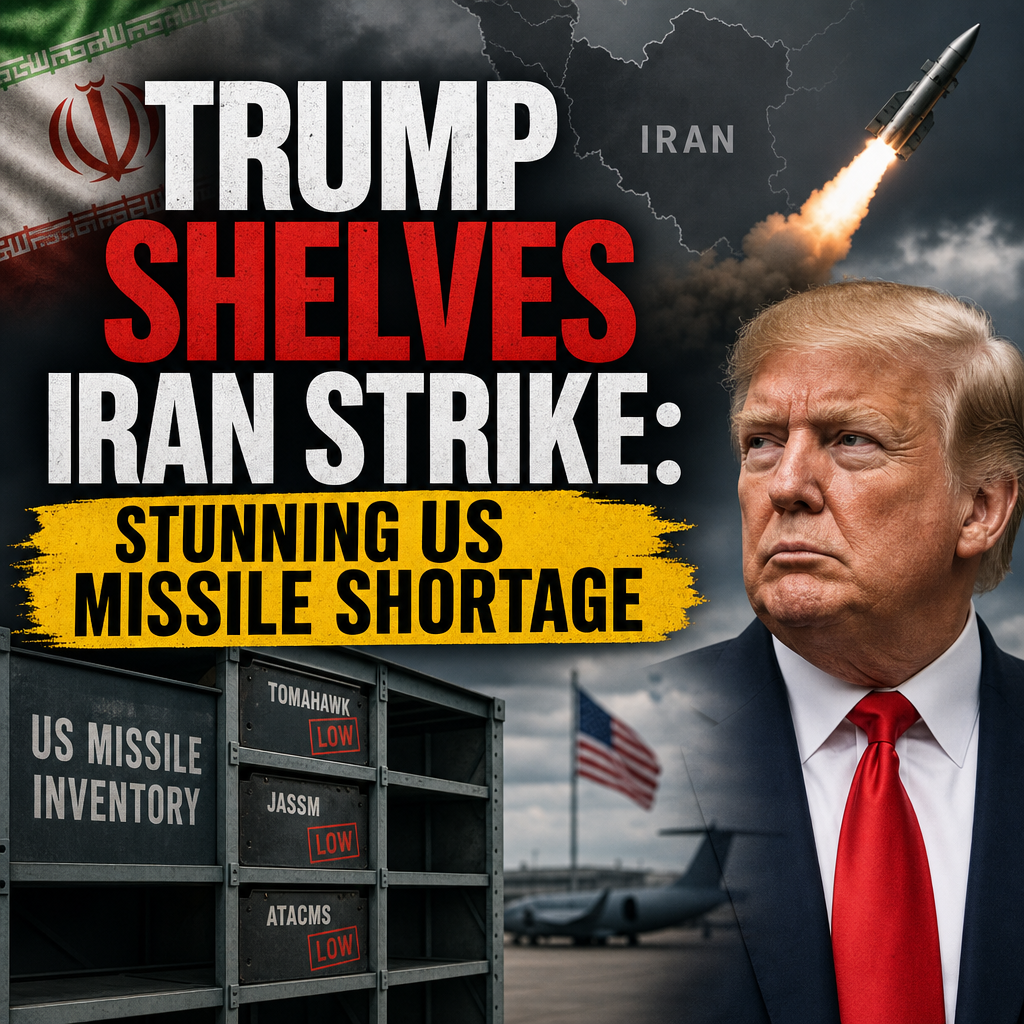
According to reports circulating in international media, Donald Trump’s administration considered a strike on Iran but ultimately held back, amid concerns that the United States did not have enough missile defense interceptors to comfortably absorb the fallout from a wider war. That detail matters because it shifts the story from a simple question of political will to a more complicated one: even the world’s most powerful military can be constrained by inventory, alliance commitments, and the speed at which modern conflicts consume advanced weaponry.



The broader picture emerging from coverage by RT, Al Jazeera, and Sky News is less about one decision than about a growing strategic dilemma. The United States has spent months balancing deterrence against Iran with support for partners in the Middle East, especially as regional tensions have repeatedly threatened to spill into open conflict. In that context, the reported hesitation was not just about one airstrike; it reflected a fear that escalation could outrun America’s ability to defend its own forces and allies.
Why the reported Iran strike was put on hold
The central claim behind the story is striking: the White House reportedly shelved a military option because of a shortage of missile interceptors. That suggests planners were worried that launching a strike could invite retaliation from Iran or its allies, forcing the U.S. to rely heavily on air and missile defense systems already under pressure elsewhere.




That concern is plausible for several reasons.
– Missile defense systems are not limitless. Once interceptors are fired, they must be replaced, and production cannot always keep pace with demand.
– The Middle East has become a high-consumption theater for air defense, with repeated launches, drone attacks, and missile threats stretching inventories.
– A strike on Iran would likely trigger a broader response, not a controlled one, meaning U.S. defenses could be tested immediately.
RT’s framing emphasizes the shortage itself, suggesting a direct operational reason for caution. Sky News-style reporting on similar defense issues tends to focus more on the strategic implications: when stockpiles thin out, leaders have fewer options and more risk. Al Jazeera, meanwhile, often places these decisions in the context of regional escalation, noting how actions against Iran can reverberate across Iraq, Syria, Lebanon, Yemen, and the Gulf.
Put differently, the decision to delay or cancel an attack may have been less a sign of restraint and more a recognition of vulnerability.
Trump Shelves Iran Strike: what the missile shortage really signals
The phrase “missile shortage” can sound technical, but it points to a much bigger problem: modern U.S. strategy depends on the assumption that precision weapons and missile defense can manage conflict at a distance. If those tools are stretched thin, the entire logic of rapid escalation changes.
A warning about readiness, not just policy
If the reports are accurate, the episode highlights a readiness issue that extends beyond Iran. The U.S. has been supplying interceptors and other weapons to partners while also supporting its own deployments. That creates a tension that is easy to overlook in political debate but hard to ignore in military planning.
Three takeaways stand out:
1. Defense stockpiles are strategic assets.
A shortage can shape policy as much as diplomacy can.
2. Deterrence depends on credibility.
If rivals believe the U.S. is overextended, they may become more adventurous.
3. Regional wars are increasingly linked.
One conflict in Gaza, the Red Sea, or the Gulf can quickly affect U.S. choices on Iran.
Different outlets, different emphasis
The reporting ecosystem around this story is also revealing. RT tends to underline U.S. weakness and internal contradiction. Al Jazeera usually focuses on the humanitarian and geopolitical costs of escalation, especially for civilians across the region. Sky News often frames the issue through the lens of defense capability and alliance politics. Taken together, the three perspectives do not cancel each other out; they form a more complete picture.
There is also an important caution here: even when multiple outlets point to the same broad issue, the exact reasons behind a presidential decision can remain opaque. Was the shortage truly decisive, or just one factor among many, including legal concerns, political calculations, and fear of wider war? Based on the available reporting, it is safest to say that the stockpile issue appears to have been a major constraint, but probably not the only one.
The bigger lesson: restraint can be a strategic choice
Whatever one thinks of Trump’s approach to Iran, the reported decision reveals a truth that is easy to miss in hawkish rhetoric: sometimes a leader backs away from force not because the threat disappeared, but because the costs became too hard to control.
That does not mean the underlying conflict is resolved. Iran remains a central concern for U.S. policymakers, and the possibility of strikes, retaliation, or miscalculation has not gone away. But the reported missile shortage suggests that the United States is operating in a more fragile military environment than many assume.
For observers, the key question is not whether Washington can still project power. It clearly can. The real question is whether it can do so without exhausting the very systems meant to protect that power. If the answer is no, then caution may be less a diplomatic virtue than a logistical necessity.
In that sense, the decision to shelve the Iran strike says as much about the limits of American military capacity as it does about the risks of war in the Middle East.